

























































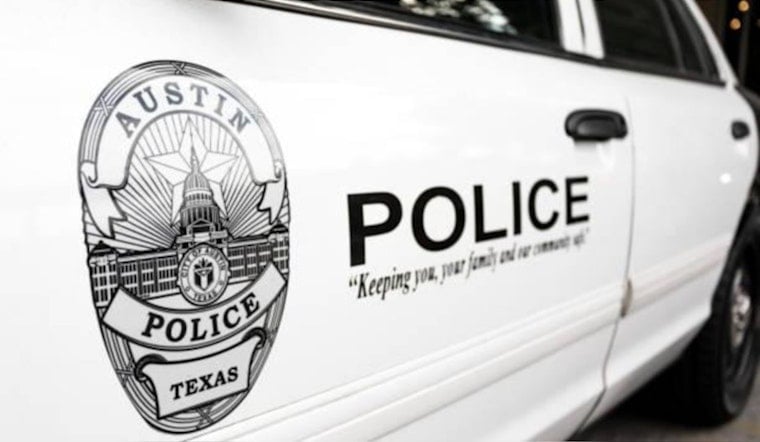
Anthoneil Williams II was 17 years old when he died on the ground of a northeast Austin community park at 4:25 a.m., after three responding Austin police officers fired their weapons multiple times. He was holding a water bottle. Police Chief Lisa Davis has said the teenager's death was a suicide by cop — a label that is now dividing his family, civil rights attorneys, and national police accountability groups from the department itself.
According to surveillance footage released by the Austin Police Department and reported by KVUE, Williams arrived at the Baden Lane park at 3:55 a.m. and sat on a low wall near the playground. A 911 call had come in at 3:51 a.m. reporting that a teenager at the park may have had a gun, and that the person was messing with his waistband, according to the San Antonio Current's telling of the incident. Officers approached him at 4:02 a.m. He appeared to lift his shirt and reach for his waistband, and two officers emptied and reloaded their chambers before he went down — with officers continuing to fire even after he had hit the ground, according to the San Antonio Current. Austin-Travis County Emergency Medical Services was called to the scene only after officers determined no one else was present. It was Williams himself who had placed the 911 call.
Police Chief Points to the 911 Call as Proof
Davis, who has served as Austin's police chief since 2024, said following the shooting that “all points are indicating that this was a suicide by police,” per the Current's reporting. She and other department defenders point to the fact that Williams placed the 911 call himself and to his hand movement toward his waistband as evidence he deliberately provoked a fatal police response. What turned out to be in his waistband, though, was a water bottle — not a weapon.
Williams' family has rejected that framing entirely. Cluren Williams called the suicide-by-cop characterization irresponsible and dehumanizing. Ameer Alogaili, a 16-year-old former classmate of Williams, remembered him as a little kid at the park who could put a smile on everybody's face — a portrait sharply at odds with the department's account of a teenager bent on forcing his own death.
Civil Rights Groups Call the Label Junk Science
Black Lawyers for Justice announced an independent civil rights investigation on August 5 into the shooting, calling for a local grand jury indictment and a U.S. Department of Justice probe, according to KVUE. The organization argued officers acted like a firing squad against an unarmed teenager. The following day, the National Police Accountability Project issued a public statement arguing that the department's immediate suicide-by-cop designation was a rush to judgment that bypassed de-escalation tactics and attempted to shield officers from liability, noting that officers cannot determine mental intent without a professional psychiatric evaluation.
Chas Moore, who founded the Austin Justice Coalition, said he could not believe a 17-year-old Black boy knew about suicide by cop, according to the Current's reporting. Moore and other critics have called the theory junk science outright. The skepticism has spilled into the streets and city hall: protesters rallied outside Austin City Hall, interrupted a city council meeting after Williams' death, and at one point entered the Travis County District Attorney's office.
What Suicide by Cop Actually Means — And What It Doesn't
The term itself is contested territory. Per the FBI's 2014 bulletin, suicide by cop describes situations in which individuals deliberately place themselves or others at grave risk in a manner that compels police to use deadly force — a definition focused on actions that force a response, not on assumed intent after the fact. The Current notes the term was reportedly coined by a police officer-turned-psychologist in the 1980s, and researchers say it remains a divisive and poorly defined label decades later.
A 1998 study of officer-involved shootings by the Los Angeles County Sheriff's Department, indexed on PubMed, found that 11 percent of incidents met suicide-by-cop criteria, with 70 percent of those shootings occurring within 30 minutes of officers arriving on scene. More recent research cited by the Current estimated that 10 percent to one-third of annual police shootings nationally were suicides by cop, though an Observer analysis of 100 such incidents over the previous 20 years found police confirmed the person actually had a gun in only just over one-third of cases — and some cases involved replica guns, BB guns, or misidentified objects such as water bottles. The same analysis found police used the suicide-by-cop label in the majority of cases reviewed but were not always clear about why the label applied, and the United States has no national database tracking how often it's invoked.
Medical research complicates the police determination further. A National Institutes of Health-republished American Psychiatric Association journal article stated in 2020 that it is clinically impossible to predict whether a specific individual will die by suicide, noting that psychiatric evaluations assess risk factors rather than foretell outcomes — a finding critics say undercuts officers making that call in real time, without training, based on a few seconds of behavior.
National Guidelines Call for Patience, Not Gunfire
The Police Executive Research Forum created the first training guide for potential suicide-by-cop incidents in 2019, a 12-page protocol instructing officers to take cover, make small requests, avoid pointing weapons, and exercise patience to resolve incidents safely. Chuck Wexler, the organization's executive director, has said the label's underlying goal is to prevent tragedies and better understand police shootings — not to close the book on them. Critics argue that in Williams' case, the label was applied to do the opposite: shift blame for a police shooting onto the victim and insulate officers from liability, a strategy the suicide-by-cop theory has been used for in several past trials, according to the Current's reporting.
Austin's Broader Reckoning With Crisis Response
Williams' shooting was logged as a police call rather than a mental health call, even though the city has maintained a dedicated mental health police unit since 1999. The case has become entangled with Austin's ongoing effort to restructure emergency dispatch, including separating dispatch operations from the Austin Police Department — a reform Hoodline previously reported is meant to route mental health calls to more appropriate, non-lethal responses. The Austin City Council approved a budget including more than $1 million to fund that restructuring following Williams' death.
In the shooting's immediate aftermath, the Austin Police Oversight office emphasized a Know Your Rights campaign, as reported by FOX 7 Austin, aimed at educating residents on navigating encounters with law enforcement. Williams' death was also part of a wider pattern this summer: it was the second of three officer-involved shootings in Austin between July 11 and August 12, Hoodline's earlier coverage of a later I-35 standoff noted, with the Austin Police Oversight office maintaining an online dashboard that logs all local use-of-force cases. No charges or findings have resolved whether officers followed PERF's de-escalation protocols that night, and that question remains open as investigations continue.





