

























































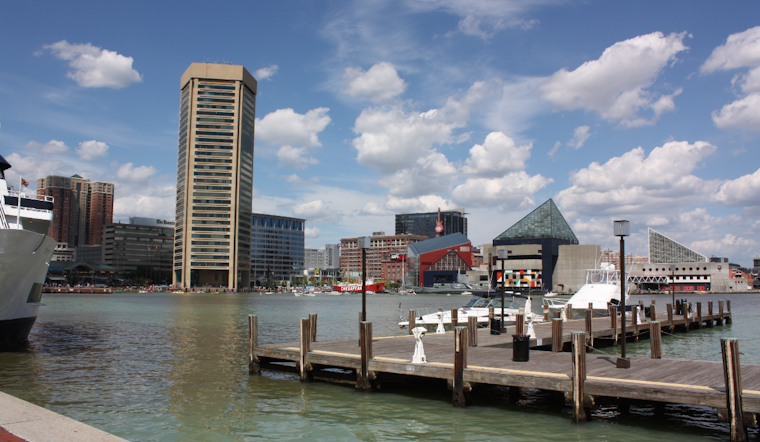
Baltimore's free harbor ferry system is getting a major federal boost. The Federal Transit Administration has awarded $10,935,000 to the Baltimore City Department of Transportation to replace three aging diesel vessels with hybrid-electric ferries, add a fourth boat to the fleet, and upgrade dock accessibility for riders across the harbor.
The award, announced August 21, was granted under the FTA's Passenger Ferry Grant Program for what officials are calling the Harbor Connector ADA Accessibility and State of Good Repair Program, according to the Federal Transit Administration. As CBS Baltimore reports, the funding will replace three diesel ferries with new hybrid vessels and add a fourth boat to the Harbor Connector fleet, which currently ferries passengers across the harbor between neighborhoods including Locust Point, Fells Point, and Canton.
Maryland lawmakers announced the funding, with U.S. Sen. Chris Van Hollen saying the Harbor Connector brings thousands of riders a year to businesses and activities around Baltimore's harbor, per the same report. Van Hollen added that the upgrade will bring more sustainable and accessible transportation options to Baltimore. Rep. Kweisi Mfume called the Harbor Connector an invaluable part of the city's transportation network, saying the funds will modernize the ferry fleet and ensure it is accessible to all Marylanders.
Ridership at Its Highest Since 2017
The new hybrid ferries are expected to be more accessible for riders who use wheelchairs and other mobility devices, according to the outlet's report. That matters because Harbor Connector ridership has climbed to its highest level since 2017, with the service carrying nearly 350,000 passengers last fiscal year. Van Hollen noted the funding is an example of infrastructure modernization law dollars at work.
The Baltimore award was not an isolated case. It formed part of a broader $664.8 million allocation the U.S. Department of Transportation made in August across 23 ferry projects in 14 states and the U.S. Virgin Islands, according to WorkBoat, which reported that the money was split across three separate FTA passenger ferry programs aimed at modernizing aging vessels and port facilities nationwide.
Building on Years of Federal Investment
This is not the first time Washington has helped bankroll Baltimore's water taxis. The city previously secured $5,086,250 from the FTA's Fiscal Year 2022 Passenger Ferry Grant Program to begin purchasing hybrid-electric vessels and upgrade ADA dock accessibility across harbor landings, per FTA records. The Harbor Connector itself launched in 2010 with a single route and had already grown to average 1,013 daily boardings by 2015, prompting earlier federal rebrand grants that folded the boats into the Charm City Circulator network, the FTA has noted.
Today the Harbor Connector runs as a free maritime extension of that Circulator system, operating three routes known as HC1, HC2 and HC3, according to the Baltimore City Department of Transportation. The new federal money follows operational changes the department made earlier this year, including a March reconfiguration of Route 2 into a triangular loop connecting Canton, Locust Point, and Maritime Park in Fells Point, letting riders travel between Canton and Fells Point without switching boats, as Hoodline previously reported.
A Decade-Long Water Transit Vision
The city's transportation department also finished an updated Water Transit Strategic Plan in February, laying out maritime investment and infrastructure priorities through 2035, including potential long-term expansion into the Middle Branch of the Patapsco River, according to department planning documents. City officials tested weekend appetite for expanded service during a two-weekend pilot in December 2025, when Baltimore City DOT partnered with local organizations to run weekend Harbor Connector service and drew more than 3,000 riders across stops in Locust Point, Fells Point, Harbor East, Harborplace, and Federal Hill, per Streets of Baltimore.
The ferry system has not been without disruption. A 5,000-gallon diesel fuel spill in Harbor East in June 2025 temporarily suspended Route 1 service between Maritime Park and Locust Point, forcing the city to deploy Charm City Circulator shuttle buses to carry displaced commuters, as Hoodline reported at the time. Reliance on the municipal ferry has grown since, particularly after City Cruises permanently ended all Baltimore sightseeing and dining cruise operations in the Inner Harbor in April, a departure Hoodline covered separately.
With private cruise operators pulling back and public demand for water transit rising, the Harbor Connector's fare-free integration into the Charm City Circulator network has become an increasingly central piece of Baltimore's waterfront mobility. Questions remain about when the new hybrid vessels will actually arrive, what charging infrastructure will need to be built along harbor piers, and whether the growing ridership numbers will eventually push the city to make weekend service permanent rather than a pilot program.



