

























































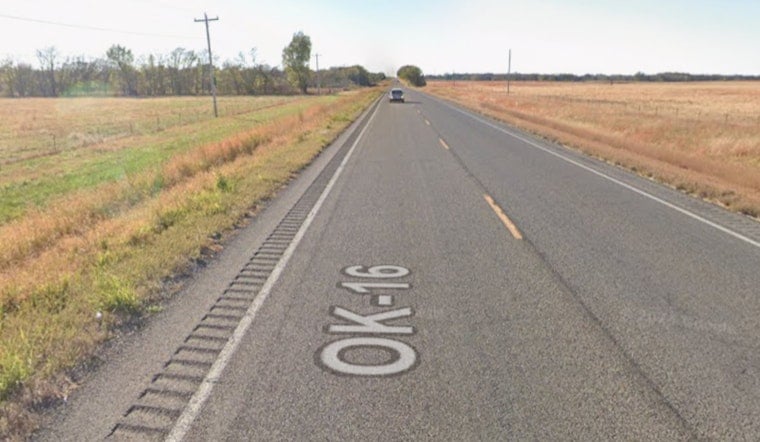
A 32-year-old Beggs man died after his car crossed the center line on State Highway 16 in Muskogee County, left the roadway, struck a concrete culvert and rolled three times through a pasture before coming to rest on its wheels. Christopher C. Caldwell was heading east on the rural highway around 5:05 p.m. when the crash unfolded near South 204th East Avenue.
According to the News On 6 report, Caldwell's vehicle left Highway 16 after drifting across the center line, then hit the culvert positioned north of the roadway. The impact sent the car through a hay bale sitting in a nearby pasture before it plowed into a barbed-wire fence and rolled three times, ultimately landing back on its wheels. The Oklahoma Highway Patrol identified Caldwell as the driver and said he died in the crash.
State troopers indicated in their report that Caldwell was not wearing a seat belt at the time of the collision, per the same account. That detail matters in a state where 47 O.S. § 12-417 requires drivers and front-seat passengers to buckle up on public roads, a rule Oklahoma enforces as a primary offense carrying a $20 fine, according to Safe Ride 4 Kids.
A Corridor With a History of Fatal Run-Offs
State Highway 16 is an undivided, 99.2-mile rural route that runs from Drumright in Creek County eastward through Beggs to Wagoner, according to Wikipedia's entry on the highway. Beggs itself is a small town of 1,179 residents as of the 2020 census, sitting along that same highway roughly 13 miles northwest of Okmulgee, per Wikipedia's page on the community.
The stretch has seen tragedy before. Just twelve days earlier, an 88-year-old Okmulgee man died after his vehicle drifted off the same highway in Okmulgee County, struck a culvert, and rolled airborne, as Hoodline previously reported. Both crashes shared a common thread: a single vehicle running off the same rural corridor and striking a roadside culvert, underscoring how these fixed obstacles turn routine run-offs into rollovers.
Why Culverts and Timing Make Rural Crashes Deadlier
Fixed roadside hazards like concrete culverts and drainage ditches contribute to more than 10 percent of fatal run-off-road collisions nationwide, according to AASHTO guidelines cited in Hoodline's earlier coverage. Culverts often act as ramps that launch or flip vehicles rather than simply stopping them, which helps explain why both recent Highway 16 crashes ended in rollovers rather than straightforward collisions.
The timing of Caldwell's crash also fits a broader pattern. Crash data compiled by the Oklahoma Highway Safety Office shows the afternoon window between 3 p.m. and 6 p.m. accounts for roughly 26 percent of all traffic collisions statewide, a period when rural highway traffic tends to swell.
Seat Belt Use Remains a Persistent Gap
Caldwell's lack of a seat belt echoes a wider trend in Oklahoma crash data. State records show 256 people killed in 2023 traffic collisions were not wearing seat belts, with drivers aged 18 to 34 recording the lowest overall restraint usage rates, according to Graves McLain Injury Lawyers. National Highway Traffic Safety Administration research has found that unbelted occupants in rollover crashes face a vehicle ejection rate near 40 percent, a factor that dramatically raises the odds of a fatal outcome.
Statewide, traffic fatalities have trended downward, falling from 711 in 2023 to 645 in 2024 according to National Highway Traffic Safety Administration data cited by Addison Law Firm. Still, rural two-lane highways like Highway 16 continue to produce the kind of high-speed, run-off-road crashes that are often the deadliest on Oklahoma roads. Oklahoma law requires law enforcement agencies to submit official written collision reports to the Department of Public Safety within 10 days of any crash resulting in injury or death, meaning the full official record of Caldwell's case is still moving through that process.


