

























































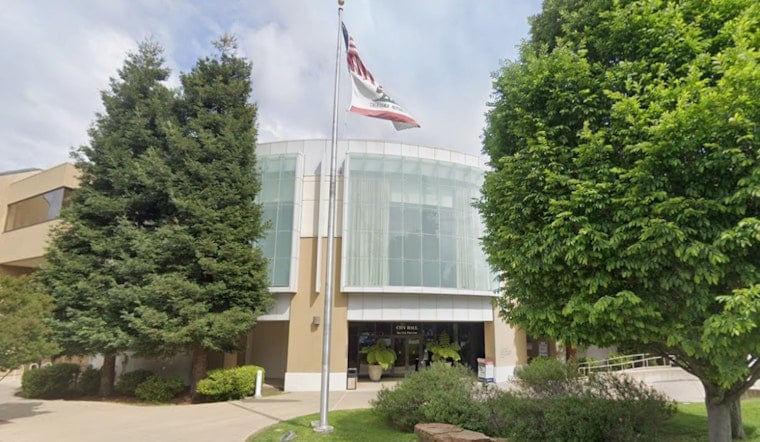
Belmont is throwing itself a hundredth birthday party, and the guest list includes a car parade down Alameda de las Pulgas, a time capsule burial, and the city's only craft brewery pouring beer in the park. The Peninsula city will mark its centennial on October 24, with a full day of events built around Twin Pines Park, the same civic campus that has anchored the community for more than a century.
According to the City of Belmont, CA, the celebration kicks off at 1:30 PM with a car parade starting at Chula Vista Drive and Alameda de las Pulgas. The parade will roll into a car show at Sixth Avenue and Ralston, giving residents a chance to see vintage and classic vehicles on display before the day shifts into its more ceremonial phase. Belmont's official account, which posts under the handle mybelmont, described the schedule in a pair of posts detailing the day's lineup.
at 3:30 p.m. in front of the Twin Pines Senior Center and Parks and Recreation Office. Directly following, join us in Twin Pines Park for the festival portion of the day filled with live music, food trucks, Alpha Acid, games, and more! (2/2)
— City of Belmont, CA (@mybelmont) August 13, 2026
At 3:30 PM, the focus moves to a time capsule ceremony in front of the Twin Pines Senior Center and Parks and Recreation Office. From there, festivities continue directly into a festival inside Twin Pines Park itself, featuring live music, food trucks, games, and beer from Alpha Acid Brewing Company, the city's only craft brewery.
A Century Since Incorporation
The date isn't arbitrary. Belmont officially incorporated as a municipality in San Mateo County on October 29, 1926, after local residents voted to gain municipal control over zoning and public infrastructure, according to the County of San Mateo. Before that vote, the area had already been growing for decades as a stagecoach stop and railroad depot serving San Francisco commuters and the Gilded Age estates that once dotted the hillsides.
Today the city is home to 28,335 residents packed into 4.6 square miles, per Wikipedia's citation of 2020 U.S. Census data. Belmont sits on the San Francisco Peninsula roughly halfway between San Francisco and San Jose, bordering San Mateo and San Carlos. The Belmont Police Department, which currently operates with 31 sworn officers, was established the same year as the city's incorporation and has grown alongside it for the full century.
Twin Pines Manor's Own Backstory
The venue chosen for the ceremony has a history of its own. Twin Pines Manor, inside Twin Pines Park, was built in 1908 by banker George Center not long after the 1906 San Francisco earthquake, according to background compiled by The San Francisco Peninsula tourism site. The property now houses the Twin Pines Art Center along with the Belmont Historical Society's archive room, making it a fitting spot for a city to bury a time capsule meant to be opened by future residents.
The name Belmont itself predates the 1926 incorporation by more than 70 years. It was officially designated in 1853, derived from the Italian phrase bel monte, meaning beautiful mountain, in reference to a nearby symmetrically rounded hill. The area had originally been part of Rancho de las Pulgas, a Spanish land grant whose name still survives in Alameda de las Pulgas, the very road the centennial car parade will travel down.
From Flower Fields to Smoke-Free Housing
Belmont's economic history includes a chapter that predates the suburb it is today. Before World War II, the city was nationally recognized as the chrysanthemum-growing capital of the United States, an industry largely built by local Japanese-American flower growers, according to Encyclopædia Britannica. That dominance ended in the early 1940s when Japanese-American nursery families were forcibly relocated during World War II internment.
Decades later, Belmont made headlines for a different reason. In January 2009, the city implemented one of the strictest municipal smoking bans in the country, prohibiting smoking inside all multi-unit apartments and condominiums that share common floors or ceilings. The ordinance declared secondhand smoke a public nuisance in shared residential buildings and went on to inspire similar smoke-free housing rules elsewhere in the country.
Gilded Age Landmarks Still Standing
Belmont's most famous architectural landmark, Ralston Hall Mansion, offers another link to the city's 19th-century roots. The 55,000-square-foot Victorian-Italianate estate was completed in 1868 for Bank of California founder William Chapman Ralston and is designated a National Historic Landmark. The Sisters of Notre Dame de Namur acquired the mansion in 1923 to serve as the campus for Notre Dame de Namur University.
Ralston's estate also left its mark on Belmont's open spaces. Waterdog Lake, now a central feature of the city's 260-acre open-space trail system, was built around 1870 as a 100-million-gallon reservoir to supply water to the Ralston property. The lake's informal name comes from the abundance of local larval salamanders, commonly called mudpuppies or waterdogs, that once filled its waters.
A Modern Local Favorite Joins the Party
Rounding out the centennial festival's local flavor is Alpha Acid Brewing Company, founded in fall 2014 by brewer Kyle Bozicevic. It remains Belmont's only craft brewery and is known for releasing up to two new small-batch beer recipes each week from its home in the city's Harbor Industrial Area. Its presence at the festival, pouring alongside food trucks and live music, gives the centennial celebration a taste of the Belmont that exists today alongside the history being commemorated.





