

























































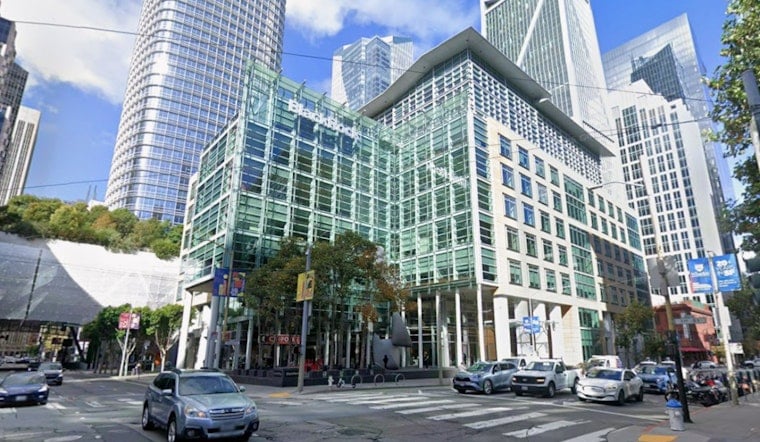
A 27-year-old BlackRock portfolio specialist has built a San Francisco newsroom that runs almost entirely without human reporters, publishing 30 to 40 articles a day through AI agents that scan social media, public filings, and other outlets for stories. Dakota Carrasco, who moved to San Francisco from Albuquerque in 2025, launched the outlet, called The Dissent, in March. It gets about 5,000 page views a month.
Carrasco says the project was inspired by shrinking local news deserts and by young voters increasingly getting their local information from Instagram rather than traditional outlets, according to The San Francisco Standard. He has written that local journalism has been “bought up, consolidated, and quietly hollowed out,” pointing to Northwestern University data cited in the report that San Francisco now has 35 publications covering local news. Carrasco serves as the site's founder and publisher, and he says he is the only person actively working on it, checking in on the AI agents from time to time.
An AI Newsroom With Synthetic Bylines
The Dissent organizes its coverage into six virtual desks — City Hall, Tech, Food, Neighborhoods, Sporting, and Things to Do — each staffed by a named AI beat reporter and powered primarily by a team of coding agents built on Anthropic's Claude models, according to the outlet's own about page. Those beats mirror a traditional newsroom structure, covering city hall, sports, food, technology, neighborhoods, and events, even though no person is actually filing the stories. Draft articles are routed through an editor agent for revision before anything is published, and the site includes a dropdown explaining the AI's decision-making, per the Standard's reporting.
The operation runs cheap. The Dissent costs between $300 and $750 a month to operate, bankrolled by Carrasco's girlfriend, Maddie Frost, who works in finance, the Standard reports. Despite the low overhead, the site has managed some real scoops: it reported that Paul's Hat Works, a 108-year-old business on Geary, had closed before other media outlets caught up.
A Fabricated Source and a Confused City Official
The Dissent has also stumbled. According to the Standard, the outlet hallucinated a claim that it had reached out to the owner of Paul's Hat Works for comment on the closure — an outreach that never happened. The site also published a false story claiming moviegoers were confusing Christopher Nolan's The Odyssey with Stanley Kubrick's 2001: A Space Odyssey, and a since-corrected claim about an August 19 Imax 70mm query that, per the Standard's review, no Reddit thread actually supported.
The confusion extends beyond content errors. In July, City of Vallejo Public Information Officer Robert Briseño contacted a Dissent reporter identified as “Devon Park” to request a correction on a graffiti removal article, not realizing Park was a synthetic persona, according to Mission Local. Briseño only learned he had been emailing a bot when Carrasco responded directly. The Dissent ultimately made the correction Briseño had requested.
Experts Question Thin Sourcing
The Standard reports that The Dissent has thin to nonexistent sourcing in many of its articles and scrapes content from the Standard itself, along with Mission Local and the San Francisco Chronicle. It did publish a report on a July boating accident off Alcatraz that left three people dead, but its overall pattern of sourcing has drawn criticism from researchers who study media accuracy.
Jessica Sparks, an assistant professor of journalism at Auburn University who researches misinformation and trust in media, criticized the absence of human oversight on the site, per the Standard's reporting. Nick Diakopoulos, a professor of communications and computer science at Northwestern University, described The Dissent as an experiment pushing AI technology forward, according to the same account. Diakopoulos has separately said AI-generated newsletters should be rechecked and verified by a person before publication, and his research team found in May that roughly one in six sources cited by AI chatbots were likely AI-generated themselves. Anthropic's Claude model, when asked about the practice, said it would be cautious about citing a factual claim solely from The Dissent when a human-staffed source was available, the Standard reports.
Job Listings Reveal a Contradiction
Despite marketing itself as a fully automated AI newsroom, The Dissent has posted job listings seeking human staff writers for local politics and culture, a newsletter editor, and full-stack engineers to direct and edit the AI agents, according to the site's own careers page. The Dissent discloses that it is an AI newsroom on its masthead, but the hiring push suggests even its founder recognizes limits to what agents alone can do.
San Francisco's media contraction is not new. Between 2016 and 2026, the city lost print alt-weeklies including SF Weekly and the Bay Guardian, along with hyper-local blogs like Mission Mission and Uptown Almanac, according to a Media Alliance post. Statewide, the picture is similarly grim: Northwestern University's 2025 State of Local News report found that 16 of California's 58 counties qualify as news deserts or near-deserts, with two counties having no dedicated local news source at all and 14 relying on a single outlet, per the 2025 California Local News Fellowship Impact Report.
Hoodline's Own AI History
Hoodline has faced its own reckoning with automated content. In April 2024, Gazetteer SF revealed that Hoodline, acquired by parent company Impress3 Media in 2020, had been generating the majority of its hyper-local articles using undisclosed generative AI paired with fake author personas — bylines with fabricated biographies and AI-generated headshots. Hoodline separately drew scrutiny after it falsely named San Mateo County District Attorney Stephen Wagstaffe as a murder suspect in one such automated report. Impress3 Media responded with a public letter and added AI disclosure badges to its site, and Hoodline now says it uses a team of human editors to curate content.
The Dissent is not an isolated case nationally. In August 2026, an automated AI news outlet called RuntimeWire, run by entrepreneur Ryan Merket, published a report on OpenAI's Black Hat security conference presentation within six minutes of a livestream transcript, beating WIRED's coverage by more than three hours, according to The Media Copilot. The Tampa Bay Times has taken a more limited approach, disclosing in February 2026 that it published roughly 50 automated real estate and weather items over six months under the byline “Times AI News Engine,” a step Hoodline covered in its own reporting on the Tampa Bay experiment. Meanwhile, U.S. Senator Mark Warner introduced the AI AGENT Act in July 2026, proposing disclosure standards and a Federal Trade Commission registry for consumer-facing autonomous AI agents — a sign that federal regulators are beginning to take notice of platforms like The Dissent.
Underlying all of this is a question about how readers respond when they cannot easily tell a human reporter from a machine. A January 2026 Wharton School study found that nearly 80 percent of participants adopted AI-generated answers even when the system was deliberately programmed to give inaccurate information, a pattern researchers called “cognitive surrender.” For a newsroom with thin sourcing and a history of hallucinated outreach, that tendency may be the biggest risk of all.





