

























































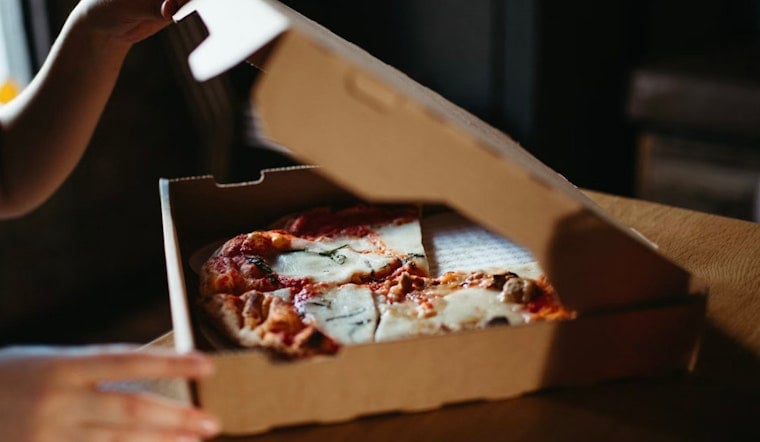
A brother-and-sister team from Boca Raton has turned leftover pizza into a lifeline for hungry families across Palm Beach County. Anish and Aashrita Kaza built an app called Pizza for a Purpose that connects local pizzerias with community non-profits, scheduling pickups and deliveries of surplus pies before they ever hit the trash.
The siblings' project was recently featured on Miami Proud, a CBS News Miami segment highlighting local do-gooders, with reporter Najahe Sherman detailing how the app helps deliver fresh food to people in need, according to CBS News Miami. The app itself was first spotlighted by Points of Light, which describes it as a youth-led platform pairing pizzerias with regional non-profits to schedule and deliver surplus pies to food-insecure families.
Among the local partners already using the app to receive donated pizzas are Boca Helping Hands in Boca Raton and The Soup Kitchen in Boynton Beach, both of which serve low-income residents and unhoused individuals across the county, according to the Dhanam Foundation. The pairing gives small pizzerias a straightforward way to route unsold pies to people who need them rather than letting them go to waste at closing time.
A Food Bank Visit Sparked the Idea
Anish Kaza's interest in food rescue technology traces back to a single volunteer shift. Per the same Points of Light account, he taught himself mobile application development after volunteering at a local food bank at age 11, where watching families with children struggle to access meals inspired him to build a digital solution. He reportedly spent years learning software design through online tutorials before the platform came together.
The Kaza siblings' effort lands in a region where the need is substantial. More than 1.2 million people across Miami-Dade, Broward, Palm Beach, and Monroe counties face food insecurity, including roughly 1 in 9 residents overall and 1 in 5 children, according to 2025 reporting cited by the South Florida Sun Times. Persistent living costs have kept those numbers elevated above national averages.
Why Restaurants Rarely Donate Leftovers
Restaurants nationally are a major source of preventable waste. U.S. restaurants generate between 22 and 33 billion pounds of food waste every year, and roughly 85% of that unused food in typical dining establishments ends up in landfills instead of being donated or recycled, according to Move For Hunger. Short shelf-lives and fast-paced kitchen turnover have historically made restaurant food recovery harder to organize than donations from grocery stores or farms.
That waste sits inside a much larger national picture. An estimated 30% to 40% of the entire U.S. food supply is wasted each year, amounting to roughly 133 billion pounds of food worth $161 billion, according to U.S. Department of Agriculture data. Food remains the single largest category of material entering American municipal landfills.
Federal Law Clears the Path for Pizzerias to Give
One reason small pizzerias can hand over unsold pies without hesitation is a decades-old federal statute. The Bill Emerson Good Samaritan Food Donation Act of 1996 shields restaurants, businesses, and individual food donors from civil and criminal liability when they donate wholesome food in good faith to non-profit feeding programs, according to Feeding America. The law set a national floor protecting donors against claims short of gross negligence.
Those protections were widened more recently. The Food Donation Improvement Act of 2023 expanded coverage to include direct business-to-individual donations and protected non-profits that charge nominal handling fees to distribute recovered food, per Food Rescue Hero. The 2023 revision was aimed at making newer, direct-to-consumer donation models like Pizza for a Purpose easier to run without added legal risk.
A Bigger Safety Net, and a Growing Teen Trend
Grassroots efforts like the Kaza siblings' app operate alongside a much larger institutional food bank system. Feeding South Florida serves 25% of the state's total food-insecure population, rescuing tens of millions of pounds of food annually through a network of more than 200 non-profit partner agencies, according to Feeding Florida. That organization runs food pantries, mobile markets, and school food programs across the region.
The Kazas are not the only South Florida teenager applying coding skills to hunger relief. Sixteen-year-old Asher Belfer developed an app called VolunHelp last year to streamline client scheduling and volunteer management for the Dorit and Ben J. Genet Cupboard food pantry in Davie, a project detailed by CBS Miami. Together, the two efforts point to a broader pattern of local high schoolers turning computer science skills toward the region's persistent hunger problem. Open questions remain about how well evening pizza pickups can scale for smaller non-profits and how teen founders manage food-safety compliance during transport, details that have yet to be fully reported.



