

























































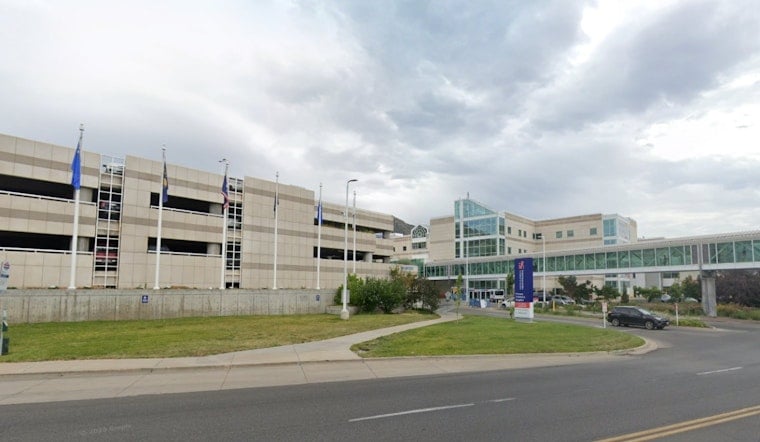
Sarah Kimmel expected to spend three to six months in Utah while her daughter Quinn underwent treatment for a serious congenital heart condition. Instead, Kimmel has now spent 482 days at Intermountain Primary Children's Hospital in Salt Lake City, watching her savings dwindle, her marriage end, and her housing situation grow increasingly precarious while she waits for a donor heart that has yet to arrive.
Kimmel was airlifted from Idaho to Utah in May 2025, according to a fundraiser created by her family, after Quinn's condition required the specialized pediatric cardiac care available at Primary Children's. As reported by FOX 13 News Utah, Quinn has spent seven of those months in intensive care and now relies on a Berlin Heart ventricular assist device, a mechanical pump that circulates her blood outside her body while she waits for a transplant. Kimmel said Quinn cannot go home while using the device because it remains part of an FDA trial.
The U.S. Food and Drug Administration granted full Premarket Approval for the Berlin Heart EXCOR Pediatric Ventricular Assist Device back in June 2017 as a bridge to transplant for children, replacing an earlier temporary approval issued in 2011. That regulatory status is part of why children supported by the device must remain under close inpatient or near-hospital supervision rather than returning home to wait.
A Marriage Strained, A Job Left Behind
The prolonged separation from home has taken a toll well beyond the hospital walls. Kimmel and her husband separated after 10 years together, and Kimmel stopped working and has been unable to return to her job while Quinn remains hospitalized, per the station's report. She now pays market rent while unable to earn income, after moving into an apartment near the hospital once her time in temporary lodging ran out.
For nearly a year, Ronald McDonald House Mountain West provided Kimmel and her other daughter, Harper, with free lodging near the hospital. But temporary lodging programs like this one often limit stays to up to one year, a cap that left the family searching for other options once Quinn's hospitalization stretched well past that mark. Intermountain Health eventually offered Kimmel and Harper a vacant apartment normally reserved for an adult transplant patient, a stopgap the family used while continuing to search for something sustainable.
Utah's Growing Draw for Pediatric Heart Care
Kimmel's story reflects a broader pattern facing families across the region. Carrie Romano, CEO of Ronald McDonald House Mountain West, said Utah's growing pediatric medical reputation has increased pressure on organizations that house families, and the nonprofit has been full on some nights while families waited for rooms, according to the same account. Utah has become a destination for lifesaving pediatric medical care, drawing patients not just from the Mountain West but from across the United States and, at times, from outside the country.
Intermountain Primary Children's Hospital is the only pediatric organ transplant center in the Intermountain West, serving a six-state catchment area across roughly 400,000 square miles that includes Utah, Idaho, Wyoming, Montana, Nevada, and parts of Colorado, according to the University of Utah School of Medicine. That territory covers close to 10% of the continental United States' landmass, meaning families like the Kimmels often have nowhere closer to turn. In 2025, the hospital performed 18 pediatric heart transplants — the third-highest total in the country — and 21 pediatric liver transplants, setting a facility record of 39 pediatric organ transplants in a single year, per KSL.
Not Enough Beds for the Wait Ahead
Tyler Payne, Intermountain Health's director of heart transplant, said long-term housing is needed for out-of-state pediatric patients and that there are not enough resources for families in Kimmel's position. Patients may require care in Utah for as long as 18 months, and families often sacrifice savings, homes and other parts of their lives to obtain that care, Payne said. Utah's transplant programs have comparatively short waiting lists compared to other regions, which is part of why families travel here in the first place, but that relative speed offers little comfort to a mother stretching a year-plus stay into an open-ended one.
Nationwide, more than 2,000 pediatric patients were actively awaiting organ transplants in 2026, with children under age one primarily waiting for donor hearts or livers, according to Intermountain Health. Pediatric organ matching is complicated by strict donor-to-recipient weight and volume compatibility requirements, which can make the wait for a properly sized heart unpredictable even at a high-volume center. DonorConnect, the federally designated organ procurement organization serving Utah and parts of Idaho, Nevada, and Wyoming, recovered 125 donor hearts across its service region in 2025 after screening 1,800 potential donors, per Cause IQ.
Rental Costs Compound the Strain
The financial math has only gotten harder for families forced into Salt Lake City's private rental market once assistance runs out. Renting households in the metro area spent a median of $1,583 per month on rent from 2020 through 2024, with 30.2% of income going toward housing — pushing the average renter above the federal cost-burden threshold, according to USAFacts. As of August 2026, average market rents in Salt Lake City stood at $1,427 for a one-bedroom apartment and $1,845 for a two-bedroom, per Apartments.com, even as rents dipped roughly 1.9% year-over-year.
The primary children's transplant team has contacted Intermountain Health's adult transplant program about housing solutions, and Ronald McDonald House Mountain West says it plans to develop a second house in Salt Lake City while raising millions of dollars to expand its existing South Temple facility. That facility already underwent an $11 million expansion in 2014 that grew it from 25 to 72 guest rooms, according to The Salt Lake Tribune, yet demand has continued to outpace capacity. Social workers may connect families like the Kimmels with government, religious, or privately funded assistance, though for now Kimmel and her family rely partly on an online fundraiser seeking help with rent, food, transportation, diapers, and other expenses. The family also operates a merchandise store, Quinn's Heart Journey, selling Team Quinn and congenital heart disease awareness items to help cover costs while they wait.





