

























































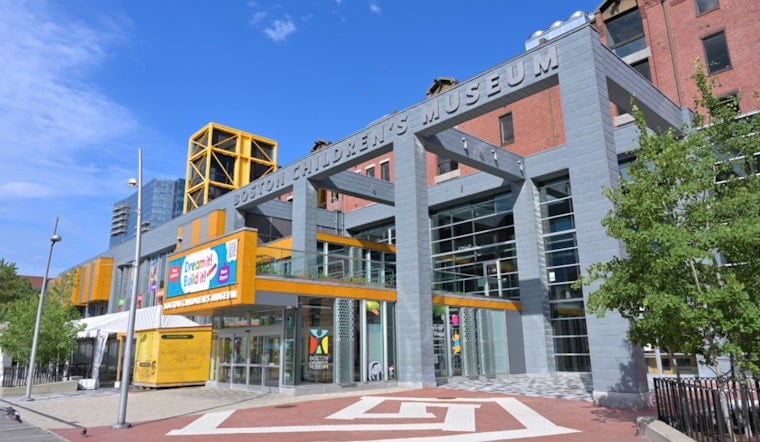
Boston Children's Museum has agreed to send eight Native Hawaiian objects, including a traditional octopus lure, a poi pounder, and two wooden bowls, back to a Hawaiian cultural organization that says the items are sacred. The pieces were acquired by the museum between the early 20th century and 1968, and one of them, the octopus lure, had been sitting in a collections drawer in the museum's Investigate exhibit until it was pulled from display.
The repatriation follows a request from Hui Iwi Kuamoʻo, a Native Hawaiian organization that made its ask after reviewing the museum's inventory, according to The Boston Globe. Museum officials reviewed and honored that request. Melissa Higgins, speaking to the Globe, said the museum is not the arbiter of what is culturally significant for a Native Hawaiian group, adding that the institution should listen carefully to groups with more direct connection and expertise regarding the objects.
Federal records add texture to how these particular items ended up in Boston in the first place. According to a notice from the U.S. Department of the Interior, one of the two wooden bowls was donated in 1949 by a Cambridge resident, while a poi pounder and a net holder were purchased in 1968 from a vendor in Opa-Locka, Florida. The eight objects being returned include the water container, the two wooden bowls, the octopus lure, a poi pounder called pōhaku kuʻi ʻai, a net holder for a bowl called koko, a tapa beater called iʻe kuku, and a traditional Hawaiian bowling stone called ʻulu maika.
What the Law Requires
The objects fall under the Native American Graves Protection and Repatriation Act, a federal law Congress passed in 1990 that governs the return of Native American ancestral remains, funerary objects, sacred objects, and other culturally important items, per the Globe's reporting. Federal regulations define sacred objects specifically as ceremonial items needed by traditional Native American or Native Hawaiian religious leaders for present-day adherents to practice traditional Native religions, according to the Electronic Code of Federal Regulations. The law obligates institutions to complete an inventory of Native American remains and associated funerary and cultural objects, and it applies to museums, universities, state agencies, local governments, and federally funded institutions, with the National Park Service administering the act under the Department of the Interior.
Once the Hawaiian objects leave, the museum plans to replace their display with a label explaining the repatriation process, the Globe reported. This is not the museum's first repatriation. Boston Children's Museum returned objects to the Onondaga Nation and the Muscogee (Creek) Nation in 2024, and to the Choctaw Nation of Oklahoma and the Quapaw Nation in 2023.
A Compliance Record That Stands Out
That track record puts Boston Children's Museum in different company than some of its neighbors. ProPublica's repatriation database has shown the museum previously reported zero unreturned Native American human remains and had made 100 percent of its inventoried ancestral remains available for return under NAGPRA. Statewide federal tracking reported by ProPublica indicates Massachusetts institutions have historically held more than 10,000 Native American human remains, with Harvard University holding the vast majority. The Globe noted that Harvard's Peabody Museum of Archaeology and Ethnology has separately transferred a kayak to the Alutiiq Museum in Alaska and transferred ownership of a pipe-tomahawk to the Ponca Tribe of Nebraska, while the Founders Museum in Barre has repatriated dozens of items. Nationally, Native American artifacts held by U.S. colleges, museums, and government institutions are estimated at 870,000, with human remains among those holdings estimated at 110,000, according to the Globe.
The scrutiny on slower-moving institutions has intensified. In June, U.S. Senator Brian Schatz of Hawaii issued letters to 15 major U.S. museums and universities demanding status updates and 30-day responses regarding unreturned Native Hawaiian and Native American ancestral remains and sacred objects, as Hoodline previously reported. Against that backdrop, Boston Children's Museum's history of swift returns and fully compliant inventory sets it apart from institutions still facing congressional pressure.
The Group Receiving the Objects
Hui Iwi Kuamoʻo, the organization that requested the Hawaiian items back, was established in 2015 as the successor to Hui Mālama I Nā Kūpuna O Hawaiʻi Nei to fulfill the cultural duty, or kuleana, of caring for, repatriating, and reburying ancestral Hawaiian human remains and sacred objects, according to the group's own account of its mission. Higgins told the Globe that the organization provided extensive background context in its request to the museum.
The Boston case fits into a wider pattern across Massachusetts. In May, the Martha's Vineyard Museum agreed to return a wooden canoe, grass skirt, tapa cloth, and poi pounder to Hui Iwi Kuamoʻo under NAGPRA, marking that museum's first repatriation to an origin community, as reported by the Vineyard Gazette. Updated federal NAGPRA regulations that took effect in January 2024 require institutions to obtain free, prior, and informed consent from Indigenous groups before displaying or conducting research on sacred cultural items or human remains, a shift that prompted museums across Massachusetts and nationwide to audit their collections and open consultations with origin communities.
Hui Iwi Kuamoʻo's reach extends well beyond New England. The organization has retrieved ancestral remains and sacred items from European institutions, including an April 2025 agreement with National Museums Northern Ireland and handovers from German state museums in 2022. For the group, the Boston Children's Museum objects mark another step in a global campaign to bring Hawaiian ancestral belongings home, one that now spans small regional museums in Massachusetts to major institutions overseas.





