

























































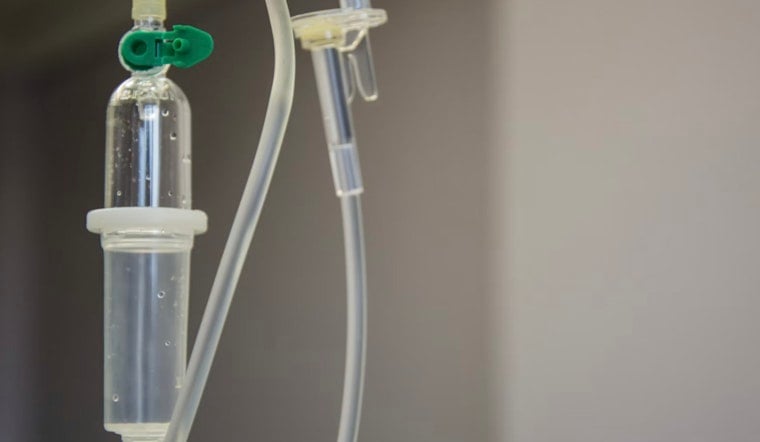
A Boynton Beach man came within a hair of losing both of his arms, and his life, after a flesh-eating bacterial infection took hold during a landscaping job. He spent 101 days in the hospital fighting to survive, and he says he now considers himself lucky just to be alive.
According to WPTV, the infection began with what likely seemed like a routine injury while he was working outdoors, but it quickly spiraled into a life-threatening emergency that put both of his arms at risk. The station's report on the case underscores a detail that often gets overlooked in coverage of flesh-eating bacteria in Florida: not every case starts in the ocean.
A Threat That Doesn't Require Saltwater
Public attention around flesh-eating infections in Florida tends to focus on Vibrio vulnificus, the bacteria associated with warm coastal waters and raw shellfish. But necrotizing fasciitis, the broader medical term for flesh-eating disease, can also be triggered by land-based bacteria like Group A Streptococcus, which commonly enters the body through minor cuts, punctures, or skin abrasions, according to the CDC. Soil and plant contact during manual labor, such as landscaping, can introduce exactly that kind of bacteria into an open wound.
Group A Streptococcus is in fact the most common cause of necrotizing fasciitis nationwide, generating between 700 and 1,100 cases each year, per CDC surveillance data. And the threat has been growing: a CDC surveillance study published in JAMA found that invasive Group A Streptococcus infections in the United States more than doubled between 2013 and 2022, as reported by CIDRAP.
Why the Recovery Took More Than Three Months
Treating necrotizing fasciitis requires immediate, aggressive surgical debridement to cut away dead tissue, paired with broad-spectrum intravenous antibiotics to stop septic shock from setting in, CDC medical protocols indicate. Delayed surgical intervention significantly raises the risk of death and limb loss, which helps explain why the Boynton Beach man's hospitalization stretched to 101 days, likely involving repeated operations and prolonged rehabilitation before he could go home.
The stakes of that kind of infection are stark. The CDC estimates that roughly 1 in 5 people infected with Vibrio vulnificus die, sometimes within just 24 to 48 hours of falling ill, a statistic reported by CBS News. While the Boynton Beach case has not been identified in available reporting as Vibrio-related, the speed and severity described in national data illustrate why any flesh-eating infection, marine or terrestrial, is treated as a medical emergency requiring immediate action.
Palm Beach County's Broader Bacterial Picture
The Boynton Beach survival story arrives amid a year of heightened attention to severe bacterial infections across Florida. As of August 20, the Florida Department of Health had recorded 17 confirmed Vibrio vulnificus cases and three deaths statewide for 2026, according to the Boca Raton Tribune. Within Palm Beach County specifically, state health officials confirmed two Vibrio vulnificus cases in 2026 through mid-August, including an elderly resident between 80 and 84 years old who died in June, as reported by CBS News.
That fatality marked Florida's first confirmed Vibrio vulnificus death of the year. Hoodline has separately reported on Florida's second fatal case in Marion County and a third confirmed death in Bay County, part of a year that state health records show has run well below the historic peak. Florida documented 82 Vibrio vulnificus cases and 19 deaths in 2024, a toll driven by storm surge flooding from Hurricanes Helene and Milton, compared with 33 cases and 5 deaths in 2025, per CIDRAP.
Who Faces the Greatest Risk
Florida Department of Health data shows that people with pre-existing health conditions, particularly chronic liver disease, diabetes, or weakened immune systems, are up to 80 times more likely to develop severe bloodstream infections from soft-tissue bacteria than healthy individuals, according to Outbreak News Today. Even so, healthy individuals can and do experience severe wound infections, as the Boynton Beach case appears to demonstrate.
Warming coastal waters have also been reshaping where these infections show up. A 2023 study published in Scientific Reports found that Vibrio vulnificus infections shifted northward along the U.S. East Coast at a rate of 48 kilometers per year between 1988 and 2018, a trend Hoodline has previously covered in the context of Florida's climate-driven bacterial risks. Researchers point to elevated water and air temperatures creating extended seasonal windows for bacterial reproduction.
It remains unclear from available reporting exactly which bacteria caused the Boynton Beach man's infection, since Vibrio cases are tracked separately by the Florida Department of Health while land-contracted strep infections follow different reporting channels. What is clear, according to WPTV, is that he survived a fight that nearly cost him both arms, and 101 days later, he walked out of the hospital calling himself lucky to be alive.



