

























































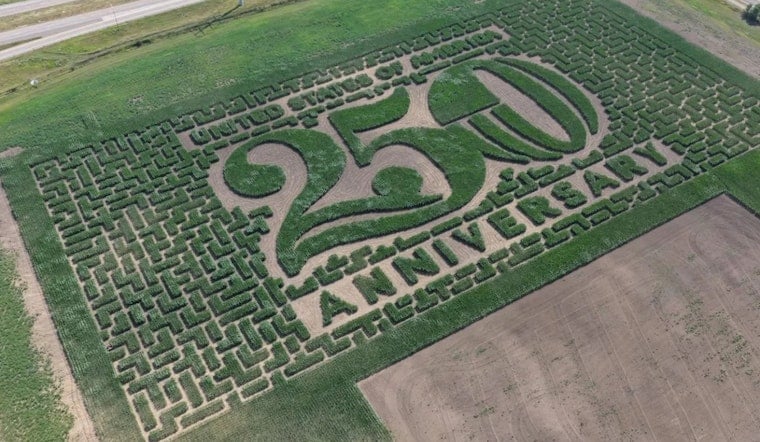
A corn maze that vanished last year because warehouses swallowed its field is coming back this fall — just down the road. The Twin Cities Harvest Festival and Maze will reopen in October at a new Brooklyn Park location, according to organizer Shirley Bouwman, after the family behind it spent the past year hunting for land and nursing a stubborn crop through a hot, dry summer.
The festival has moved to 8901 101st Avenue North, roughly a mile south of its longtime home, Bouwman told 5 EYEWITNESS NEWS. The new site sits near Highway 169 and Highway 610, a stretch of northern Hennepin County that has been rapidly redeveloped from farmland into industrial space, as reported by CCX Media.
Last fall, the maze itself was missing entirely. Expanding warehouse and manufacturing development around the festival's old 109th Avenue site eliminated the space needed for a full-scale maze, CCX Media reported at the time, and organizers were limited to corn pits and inflatables while they searched for new ground. This year, per the same account, a hot and dry Minnesota summer added a second obstacle, threatening the corn crop before it reached maturity in time for the season.
A Hand-Drawn Design, Not GPS
Bouwman said the maze will be back in full corn maze glory, and that it will definitely be open for its fall season this year. Unlike many commercial mazes that rely on GPS-automated tractor planting, the Bouwman family sketches its designs by hand on graph paper at the kitchen table, then spends a week cutting stroller- and wheelchair-accessible paths with hoes and construction paint, according to a 2024 report from Alpha News. This year's design marks the nation's 250th anniversary.
The festival carries a family history that predates the maze itself. It was founded in June 2010 by vegetable farmer Bert Bouwman, who had run roadside produce stands across the Twin Cities metro for more than two decades, according to Better Business Bureau records. His son, Bear Bouwman, now manages operations.
Dates, Hours and Ticket Prices
The festival will run for five weekends, covering every weekend in October plus November 1, and will also open October 15-16 for the MEA school break, per the original report. Hours will run from 10 a.m. to 6 p.m., with tickets priced at $20 per person and free entry for children under three feet tall. Bouwman said the festival's website would be updated soon with new information.
The maze has traditionally paired each year's theme with a local nonprofit partner; past designs have honored first responders and featured Minnesota sports logos like the Wild and Vikings, Alpha News reported in 2024. Since opening in 2010, the festival says it has raised and donated more than $250,000 to Minnesota nonprofits, including Children's Minnesota hospitals and the Minnesota Military Family Foundation.
Once the season wraps, the field doesn't just sit idle. Organizers told Alpha News in 2024 that the maze is harvested with a combine each year and sold to a local grain elevator, since the stalks are functional feed corn rather than sweet corn grown for eating.
Warehouses Keep Closing In
The festival's displacement reflects a broader shift along the Highway 169 and 610 corridor, where industrial space has grown sharply amid low vacancy rates driving speculative logistics construction across the northwest metro. United Properties' 750,000-square-foot 610 Junction industrial business park, tracked in project records from ARCO/Murray, is among the developments reshaping the area once occupied by the Bouwman family's fields.
Agritourism attractions like the harvest festival make up a small but meaningful slice of Minnesota agriculture. USDA Census of Agriculture data compiled by Penn State Extension shows 473 Minnesota farms generate revenue from agritourism and recreational services, part of a farm sector the Minnesota Department of Agriculture values at more than $100 billion in total economic impact statewide. For now, the Bouwman family has found a way to keep its 16-year tradition alive, even as the fields around it keep giving way to warehouses.




