

























































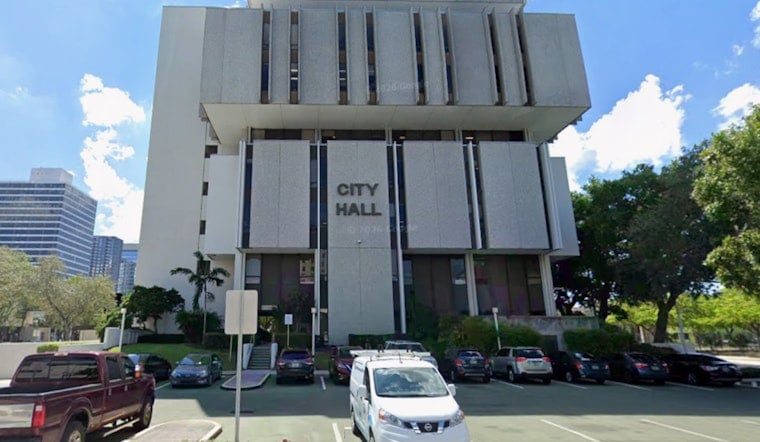
Three of Broward County's most prominent local leaders gathered at the Tower Club in Fort Lauderdale on August 12 to deliver a blunt warning: if Florida voters approve a statewide property tax amendment this November, city and county budgets could take a hit severe enough to threaten police and fire services. Fort Lauderdale Mayor Dean Trantalis, State Rep. Andy Thomson and Broward County Commissioner Marty Kiar spoke to a room of more than 40 business leaders, attorneys and real estate agents about what a tripled homestead exemption could mean for local government finances.
Trantalis told the crowd that the homestead exemption could increase to $150,000 by tripling from its current level, and warned that doing so immediately could have what he called a catastrophic impact on local governments across Florida, according to the South Florida Sun Sentinel. He argued that the exemption formula needs a reset rather than an abrupt jump, pointing to how deeply Fort Lauderdale already relies on property tax revenue to keep basic services running.
Property taxes fund 45% of Fort Lauderdale's day-to-day operations, Trantalis said, according to the same report. That reliance is echoed in the city's own budget figures: public safety consumes 60.4% of Fort Lauderdale's general fund, with the city allocating $186.5 million to police and $128 million to fire rescue in its fiscal year 2026 budget, according to City of Fort Lauderdale records. Of every local property tax dollar collected, only 24 cents actually goes toward city services, while 35 cents flows to the school board and 31 cents to Broward County government.
What Amendment 3 Would Actually Change
The measure at the center of the debate is Amendment 3, placed on the November 3 ballot after the Florida Legislature passed House Joint Resolution 1-F during a June special session, according to Ballotpedia. It needs at least 60% voter approval to take effect on January 1, 2027. Under the amendment, Florida's non-school homestead exemption would expand from $50,000 to $150,000 in 2027 and then to $250,000 in 2028, with future increases indexed to inflation starting in 2029, per The Real Deal.
The same measure would also lower the annual assessment growth cap on non-homestead properties, including commercial real estate and rental units, from 10% down to 5%. That provision means the fiscal impact would extend well beyond individual homeowners and into the budgets of landlords and businesses whose properties are assessed differently than primary residences.
Statewide Dollar Figures Behind the Warning
State economists and the Florida Policy Institute estimate Amendment 3 would cut local government property tax revenues statewide by roughly $5 billion in its first year, growing to nearly $12 billion annually by its fifth year, according to the Florida Policy Institute. For Broward County specifically, state projections point to an annual revenue loss of approximately $326 million, with Miami-Dade County facing an estimated $445 million shortfall, according to Florida Politics.
Those projected losses have pushed major first-responder organizations into open opposition. The Florida State Fraternal Order of Police, the Florida Fire Chiefs' Association and the Florida Sheriffs Association have all announced formal opposition to Amendment 3 since July, warning that resulting budget cuts could jeopardize public safety funding statewide. The concern lines up with what Trantalis, Thomson and Kiar discussed at the Tower Club, where the trio focused specifically on the impact of property tax cuts on local government operations.
Why Broward Homeowners Feel the Squeeze Either Way
Broward County already carries one of the state's heavier property tax burdens, with an effective rate of 0.94% and a median annual property tax bill of $4,423, among the highest in Florida, according to SmartAsset data. That backdrop helps explain why an exemption tripling large enough to save homeowners thousands of dollars carries real political appeal, even as local officials warn about the budget side of the ledger.
The ballot language voters will actually see has also been in flux. Leon County Circuit Judge David Frank ruled on August 3 that the original ballot summary was clearly and conclusively defective because its title, Save Our Homes From Excessive Property Taxes, functioned as political rhetoric rather than neutral description, according to WLRN. Florida Attorney General James Uthmeier subsequently released court-ordered revised language on August 13, retitling the measure Increased Homestead Exemption; Lower Cap on Increases in Non-Homesteaded Property Assessments.
Fort Lauderdale is not the only city bracing for the potential fallout. Hoodline previously reported that Orlando Mayor Buddy Dyer warned his city could lose $80 million a year if the amendment passes, part of a broader pattern of Florida municipal leaders sounding alarms ahead of the November vote. Whether local governments respond to any shortfall by raising fees elsewhere, and whether the rewritten ballot language shifts how voters perceive the measure, remain open questions as the state approaches the 60% approval threshold required for passage.





