

























































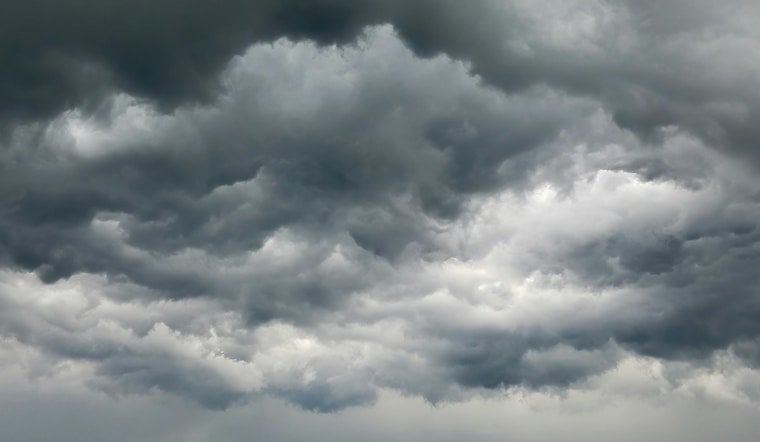
A severe monsoon storm tore across the Phoenix metro area Sunday night, slamming Buckeye with wind gusts up to 80 mph and inch-diameter hail while cutting power to more than 18,000 customers and forcing the evacuation of a concert crowd in Scottsdale. The storm system moved steadily westward through the evening, leaving standing water on freeways, downed power lines, and a swath of property damage in its wake.
According to a radar update from the National Weather Service Phoenix office, retweeted by the Arizona Department of Transportation just before 10 PM, wind gusts of 60 to 80 mph were observed as the storm cell moved through Buckeye, and forecasters said the storm there had produced extensive damage. NWS Phoenix also reported hail measuring 1 inch in diameter in Buckeye, and advised residents in the storm's path to stay indoors and away from windows.
The dangerous storm cell continued to slowly progress westward Sunday evening as it moved across the Valley, per the same NWS Phoenix update relayed through ADOT's social channels. Buckeye, which sits roughly 30 miles west of downtown Phoenix along Interstate 10, frequently absorbs the worst of these outflow-driven microbursts as storm cells descend from higher terrain to the east, according to the National Weather Service.
Concert Evacuated, Thousands Lose Power
Around 9:40 PM, the same storm system forced the evacuation of a John Mellencamp concert at Talking Stick Resort Amphitheatre, as reported by 12News. The outlet reported the storm knocked out power to more than 18,000 combined SRP and APS customers across Glendale and Phoenix, with downed lines and trees among the likely culprits behind the widespread outages.
Heavy downpours also overwhelmed drainage on at least one major freeway. 12News and state transportation officials reported that accumulated standing water forced ADOT to close the southbound Interstate 17 on-ramp at Dunlap Avenue around 9 PM. The closure added to a chaotic night for Valley commuters already contending with reduced visibility and gusty winds.
What It Takes To Trigger a Severe Warning
The winds and hail reported in Buckeye were not just intense by casual standards — they crossed the National Weather Service's official threshold for a severe thunderstorm warning, which requires winds of at least 58 mph or hail of at least 1 inch in diameter. Storms with winds above 80 mph or hail larger than 2.75 inches are tagged as destructive, a designation that automatically triggers Wireless Emergency Alerts to nearby smartphones. Those thresholds exist because that is roughly the point at which structural and roof damage begins, according to the same weather service guidance.
With gusts reported in the 60 to 80 mph range, Sunday's Buckeye cell sat squarely within severe territory, helping explain the extensive damage NWS Phoenix described. Arizona's monsoon season, which the weather service designates as running from June 15 through September 30, typically delivers 40% to 50% of the state's total annual rainfall, with peak storm intensity across the lower desert usually concentrating between mid-July and mid-August.
Driving Safety and Utility Guidance
State officials continue to urge drivers to treat sudden dust and low-visibility conditions with extreme caution. The Arizona Department of Transportation's Pull Aside, Stay Alive protocol calls for drivers caught in blinding dust to fully exit travel lanes, park, set the emergency brake, and turn off all lights — including brake lights and hazards — since trailing vehicles can otherwise crash into a car whose lights suggest it is still moving. ADOT has also deployed an automated dust detection system with sensors, cameras, and variable speed-limit signs along a 10-mile stretch of Interstate 10 near Eloy.
For residents facing extended outages, Arizona Public Service guidelines note that while the utility is exempt from liability for storm-caused power loss, it does offer an ice reimbursement program and a claim review process for customers whose outages exceed 10 hours — a relevant safeguard given the food-spoilage and health risks of losing air conditioning during peak Arizona heat.
Part of a Bruising Monsoon Summer
Sunday's storm adds to a string of disruptive monsoon events across the Valley this summer. Just three weeks earlier, on July 20, a separate storm brought 68 mph winds to metro Phoenix and knocked out power to nearly 12,000 SRP and APS customers, as reported by The Cool Down. And in July, Hoodline reported blinding dust grounded flights at Phoenix Sky Harbor International Airport after the FAA enforced a temporary ground stop.
As of Monday morning, the full extent of structural damage in Buckeye had not yet been assessed, and it remains unclear exactly when SRP and APS crews completed grid restoration across the affected areas. Those details are expected to emerge as daylight allows inspectors to survey the hardest-hit neighborhoods.





