

























































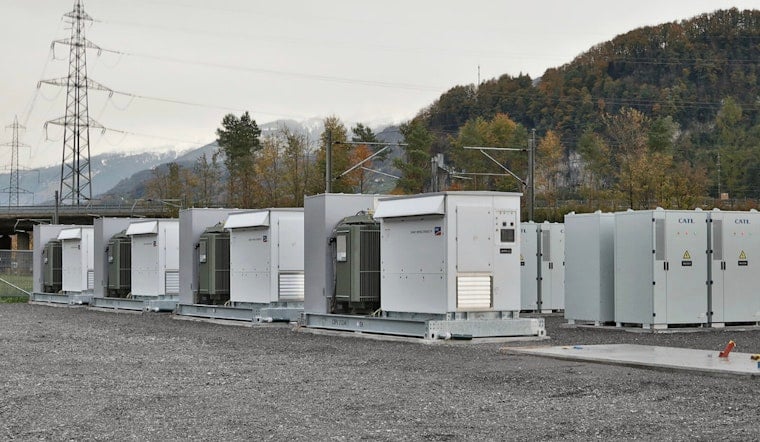
NineDot Energy will break ground later this year on a 4.9-megawatt battery energy storage facility at 421 Bushwick Ave., directly across from the Bushwick Houses, with the goal of storing enough electricity to power 5,000 nearby homes when demand peaks. The project is slated to come online in 2027, giving the neighborhood a buffer against the kind of summer blackouts that have plagued the area in recent years.
The facility will operate for a few hours each summer afternoon, charging overnight when demand and costs are low and discharging stored power back onto the grid when the city needs it most, according to Brooklyn Paper. Battery energy storage systems like NineDot's connect directly to the electrical grid and increase local electrical capacity by storing energy generated by traditional power plants or offshore wind, then routing it back out when demand spikes. The Bushwick project's outlook stands in sharp contrast to the blackouts residents have already endured — in 2019, Con Edison cut power to 50,000 people across southern Brooklyn, and earlier this year the utility intentionally cut power to nearly 10,000 households in Queens.
A Neighborhood That Knows the Cost of Outages
Those outages have real consequences at the Bushwick Houses, where blackouts have knocked elevators out of service and left residents stranded on high floors. Some residents in the complex also depend on refrigeration for medications, making reliable power a matter of daily safety rather than convenience. NineDot conducted extensive community outreach, including directly with Bushwick Houses residents, according to the same Brooklyn Paper report, and the neighborhood was largely supportive of the planned facility.
That support marks a notable difference from the fierce resistance NineDot has run into elsewhere in the city. In Middle Village, Queens, parents and civic leaders protested a proposed battery site across from PS/IS 128, pushing state Senator Joseph Addabbo to float legislation requiring larger setback distances from homes and schools. Bushwick's more welcoming reception is partly rooted in the neighborhood's history of opposing fossil fuel infrastructure — in 2021, New York State halted the North Brooklyn Pipeline, also known as the National Grid Metropolitan Infrastructure Reliability Project, after community opposition.
Racing the Clock on Con Edison's Fee Hikes
The Bushwick project's path forward also owes something to timing. NineDot secured its interconnection agreement before Con Edison raised the cost of opening a battery storage facility to $21 million this year, according to the report. Sam Brill, of NineDot, said the Bushwick project would not be able to get built if it were starting from square one today — a line that underscores just how narrow the window has become for developers trying to bring storage online in the city.
That fee increase sits at the center of a broader standoff. In March, the New York Battery and Energy Storage Technology Consortium and New York Solar Energy Industries Association filed an emergency petition asking the state Public Service Commission to restrict Con Edison's new interconnection framework, arguing it effectively halted storage projects across 85% of the utility's service territory, according to Utility Dive. Con Edison has said New York City battery facilities could overload certain substations, and a January regulatory filing from the utility showed its distributed storage interconnection queue for projects 5 megawatts or smaller had grown 300% in two years to 2.5 gigawatts — roughly a quarter of the city's 2024 peak electric load, with 65% of that queued capacity concentrated at just 10 substations.
Local Officials Push Back on Con Ed
NineDot and elected officials have protested Con Edison's interconnection cost hike, and the pushback has reached the New York City Council. Council Member Sandy Nurse sponsored a resolution in April calling on state regulators to overturn Con Edison's higher fee structure, arguing the increases threaten projects needed to prevent summer heat-wave outages. Battery storage advocates estimate that statewide storage projects could reduce energy costs by $2 billion.
New York State is aiming for 6,000 megawatts of energy storage online by 2030, with New York City expected to contribute around 1,000 megawatts of that total. Kim Fraczek said battery storage is an important part of bringing clean energy and environmental justice to North Brooklyn, adding that residents in the area have experienced blackouts during heat waves that go well beyond simple inconvenience.
Peaker Plants and the Push for Cleaner Power
Part of the case for storage rests on what it could displace. The Narrows Generating Station, located in New York Harbor next to Sunset Park, produced more than 25,000 metric tons of greenhouse gases in 2023, while the Gowanus Generating Station in Brooklyn produced around 9,000 metric tons that same year. These peaker plants also produce nitrogen oxide and other pollutants linked to asthma and other health issues. Despite earlier plans to retire them, Alphagen axed those retirement plans this year after the New York Independent System Operator found the Narrows and Gowanus plants would still be needed for reliability for at least the next three years — a finding NYISO says reflects a serious risk of energy deficiencies statewide.
Looking further ahead, the Champlain Hudson Power Express is expected to bring clean power from Canada into the region, though that project remains separate from the battery buildout underway now. In the meantime, Con Edison and City Hall continue to ask New Yorkers to set thermostats to 78 degrees Fahrenheit during peak summer temperatures to ease strain on the grid — a request that battery facilities like NineDot's are designed to make less necessary.
Built Under a Rigorous Safety Regime
New York State maintains strict safety standards for battery storage facilities, and the Department of Buildings and FDNY work directly with developers like NineDot to ensure exacting specifications are met. Those standards were tightened further after the New York State Fire Prevention and Building Code Council adopted updated energy storage safety codes in July 2025, based on recommendations from an inter-agency working group formed following three upstate battery facility fires in 2023, according to NYSERDA.
NineDot's track record factors into that oversight. The company's first Bronx battery installation, which went live in 2023 as New York City's first operating Tesla Megapack site, was designated by the FDNY as its standard training ground for emergency personnel responding to battery incidents, per NYSERDA. The company has said it expects to reach 400 megawatts of battery storage capacity in operation, under construction, or in active development across the New York City region by the end of this year, part of a broader financing push that included $431 million in debt financing secured in February to build 28 storage projects citywide.
A Broader Reckoning Over Where Batteries Belong
Bushwick's relatively smooth path has not been the norm citywide. Just days ago, Hoodline reported that a zoning panel approved battery storage near homes despite lingering concerns tied to a 2019 explosion that injured eight people, while similar fights have played out from Middle Village to upstate Northampton, where officials imposed a yearlong moratorium on a battery farm near the Great Sacandaga reservoir. Those disputes reflect a citywide and statewide tension between the urgency of hitting storage targets and the reluctance of some communities to host the facilities needed to get there.
For now, NineDot's Bushwick facility stands as a rare instance of a project that cleared both regulatory and financial hurdles before the ground shifted beneath it. Whether other developers can replicate that timing before Con Edison's higher fees fully take hold remains an open question for the dozens of storage projects still waiting in the interconnection queue.





