

























































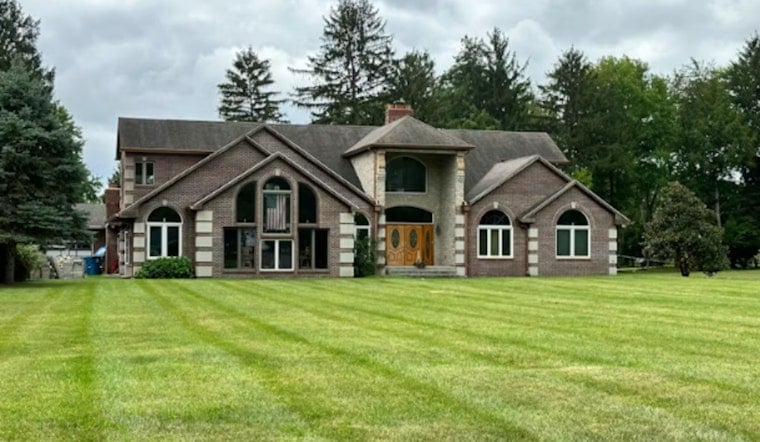
A 26-year-old Falmouth delegate is pushing a plan that would let Cape Cod towns tax million-dollar vacation homes sitting empty most of the year, funneling the money into mortgage help for the teachers, firefighters, and health care workers who can no longer afford to live where they work. Dan Gessen's Home Rule Petition 26-02 would allow individual Cape towns to opt in to an annual surcharge on residential properties assessed above $1 million that are not occupied by their owners as a primary residence for most of the year.
The proposal, first detailed by Boston.com, would set the surcharge at $2.50 for every $500 of assessed value above that $1 million threshold. Gessen has said the goal isn't to force wealthy second-home owners to sell, but rather to capture some revenue from properties that sit largely vacant while local workers get priced out. Communities that opt in could also set their own higher property-value threshold for the surcharge, according to the proposal.
A Housing Market That Left Workers Behind
Gessen has pointed out that the median Cape Cod home price was about $195,000 in the late 1990s; per Boston.com's reporting, he now puts the median above $800,000. Separately, Boston 25 News reports the median climbed from $433,000 in 2019 to $790,000 this month, an 82% jump that now requires roughly $250,000 in annual household income to afford a median Cape home. Cape Cod's year-round workforce — teachers, firefighters, police officers, and health care workers among them — has increasingly been squeezed out by those prices, according to the proposal's backers.
Underneath that affordability crunch sits a housing stock heavily tilted toward second homes. Seasonal, recreational, or second homes make up an estimated 36% to 40% of all housing in Barnstable County, and in Outer Cape towns like Truro, up to 75% of residential properties reportedly sit vacant outside the summer months, per a Cape Cod Commission report relayed by Mass.gov. The county ranks seventh nationally in the sheer number of seasonal housing units, that report notes.
Short-Term Rentals Add to the Squeeze
Short-term rentals have compounded the problem. The number of registered short-term rental property owners in Barnstable County grew 48% between 2021 and 2024, from 12,861 to 19,073, according to Massachusetts Department of Revenue data cited by Boston 25 News. A 2023 University of Massachusetts Donahue Institute study found that revenue from a three-bedroom short-term rental on Cape Cod could surpass a full year of year-round rental income in just two months; that same property type carried a 2021 average daily rate of $403.
Under Gessen's proposal, properties rented to tenants would be exempt if those tenants use the home as their primary residence for more than 183 days a year, mirroring language in Rhode Island's newly enacted surcharge. Government, charitable, and deed-restricted affordable housing properties would also be exempt. Money collected under the surcharge would flow to Barnstable County, which would deposit it into a Cape Cod Year-Round Housing Fund reserved for mortgage assistance programs serving year-round residents.
Rhode Island's Playbook, Applied to the Cape
The model comes directly from Rhode Island, where a Non-Owner Occupied Property Tax — nicknamed the “Taylor Swift Tax” — took effect July 1 this year, levying the identical $2.50-per-$500 surcharge on non-owner-occupied residential properties assessed above $1 million, according to Heavy Sports. The nickname stuck because Swift's oceanfront Watch Hill mansion, assessed at roughly $28 million, could face nearly $136,000 in additional annual taxes under the new law; Swift bought the 11,000-square-foot estate in 2013 for $17.75 million in cash. As Massterlist has framed it, Rhode Island's approach broke new legal ground by targeting vacant, high-value non-primary residences through an annual surcharge rather than a one-time transfer fee on sales.
That distinction matters on Cape Cod, where an earlier push by Gessen and county officials to fund housing through a real estate transfer fee ran into a wall. The Barnstable County Assembly of Delegates approved Home Rule Petition 26-01 by a 10-5 vote in February, seeking a transfer fee on high-value home sales, and it was sent to the Massachusetts Legislature. Per Gessen, that petition has not been taken up by lawmakers. Transfer fee proposals more broadly have stalled on Beacon Hill; state legislators stripped local-option transfer fees from the 2024 housing bill despite home rule petitions filed by Boston, Martha's Vineyard, and Cape Cod communities, facing heavy opposition from real estate industry groups.
Tools Without a Funding Source
Gessen has said the shift from a transfer fee to an annual surcharge reflects lessons learned from that fight. He has also pointed to a gap left by the 2024 Affordable Homes Act, which gave nine Cape Cod towns where seasonal housing exceeds 35% automatic designation as Seasonal Communities — granting them legislative authority to enact year-round occupancy restrictions and local housing preferences. Gessen has said those new municipal tools lacked a dedicated way to pay for many of the programs they were meant to enable.
If towns opt in under Petition 26-02, the resulting funds could support down-payment and closing-cost assistance, mortgage subsidies, interest-rate buy-downs, and foreclosure-prevention programs, with remaining money going toward regional mortgage assistance initiatives and administrative costs for assessors and tax collectors. Gessen has said individual communities should be able to set their own thresholds within the $1 million minimum, giving towns flexibility over how aggressively to apply the surcharge.
A Long Road Through Local and State Government
Alisa Magnotta, CEO of the Housing Assistance Corporation, has said Cape Cod housing measures should be targeted at the local level rather than imposed from the state level — a view that aligns with Gessen's opt-in structure. Gessen has also said the Cape needs investment in attainable missing-middle housing, not just subsidies at the extremes of the market.
The proposal still has a long path ahead. It first needs approval from the Barnstable County Assembly of Delegates, the 15-member body where each Cape town holds a weighted vote based on census population, ranging from Barnstable's 21.36% share down to Truro's 1.07%. Gessen has served on that assembly since he was elected at age 21, including a stretch in 2024 when he continued attending meetings remotely — sometimes at midnight local time — while deployed to Iraq as an infantry platoon leader with the Massachusetts Army National Guard, according to CAI WCAI Radio. Even if the assembly signs off, individual Cape towns would still need to vote at town meeting to opt in, and the Massachusetts Legislature would ultimately need to pass enabling legislation — the same hurdle that has stalled prior local housing tax efforts across the state.





