

























































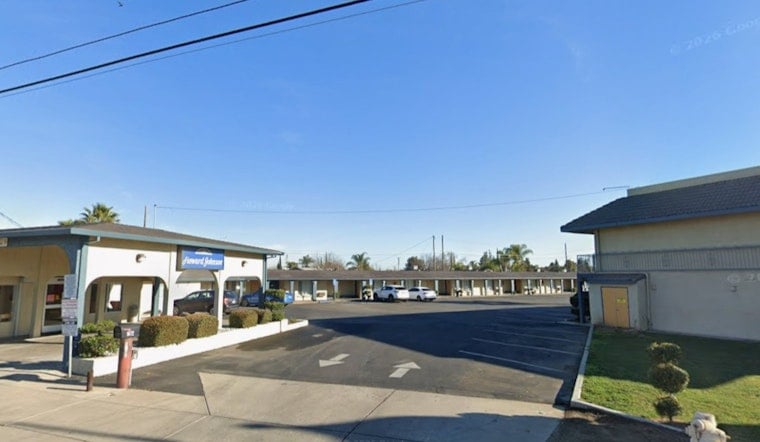
A Stanislaus County jury began deliberating Thursday afternoon in the case of a Ceres motel shooting that left 34-year-old Franklin Martin dead, with defendant Zella Latrice Holmes facing a murder charge and a defense team arguing that the couple's six-year-old son, not Holmes, pulled the trigger. Martin was found dead inside Room 230 of the Howard Johnson Inn on Herndon Road on September 25, 2025, killed by a single gunshot wound to the head.
According to the Modesto Bee, the 12-member jury was sworn in on August 13 and heard closing arguments before beginning deliberations. Prosecutor Harshan Samra told jurors that the physical evidence, Holmes' conduct after the shooting, and her own recorded statements to investigators left no reasonable doubt that she killed Martin, and he argued the killing was not a suicide. Defense attorney Donnell Snipes countered that the couple's young son was the shooter, an argument built around the child's small stature and the mechanics of the gun involved rather than any admission from Holmes herself.
Judge Valli Israels, who presided over the trial in Stanislaus County Superior Court, denied a defense motion for acquittal after the prosecution rested, ruling that legally sufficient evidence supported sending the murder charge and an associated firearm allegation to the jury. That ruling, the Bee's reporting notes, was not itself a finding of guilt. Jurors can return a verdict of first-degree murder, second-degree murder, or voluntary manslaughter, and they were also given misdemeanor alternatives to the separate child-endangerment and evading counts Holmes faces.
What Investigators Say Happened Inside Room 230
Hotel surveillance video showed Holmes, Martin, and their son arriving at the motel shortly after 1:15 a.m., and Martin checked into the room. Investigators later found him lying on the bed with blood around him and no defensive wounds. According to Detective Brian Petersen's testimony as relayed by the Bee, Holmes told investigators she shot and killed Martin, that nobody else was in the room, and that Martin did not have a chance to say anything before the shot was fired. Holmes reportedly told investigators that Martin was on the bed, their son was beside him, and she was standing in front of Martin when she fired, and she said she felt relieved afterward and that she had shot Martin for the Lord.
Investigators recovered a Springfield XD .45-caliber handgun registered to Martin, along with a spent casing and a live .45-caliber round near the bed and nightstand. Four additional live .45-caliber rounds were found in Holmes' purse. Forensic testimony placed the gun's muzzle within about 18 inches of Martin's left eye when it was fired, and firearm DNA testing provided what was described as very strong support that both Martin and Holmes were contributors to DNA on the weapon. A trajectory reconstruction could not be performed because the bullet left insufficient fixed points to work from, according to testimony in the case.
The Child-Shooter Defense and Its Evidentiary Gaps
Central to the defense argument is testimony about the child's physical dimensions: the boy was measured at about 53 inches tall with an arm length of roughly 22.5 inches. The defense has pointed to those measurements alongside the mechanics of the Springfield .45, which has a grip safety that must be depressed before firing and requires several pounds of trigger pressure to discharge. Prosecutors, however, noted that Holmes never told investigators her son fired the gun, and Samra described her recorded interview as a full confession.
The defense theory is also complicated by how gunshot-residue evidence was handled. The child's hands were washed before investigators collected residue samples, and testimony established that gunshot residue can be removed by handwashing, leaving that potential evidence unrecoverable either way. The defense ultimately rested Wednesday without calling a witness, after the prosecution rested that morning following the conclusion of Petersen's testimony. Holmes was advised of her constitutional right to testify and chose to remain silent.
The Chase That Led to Additional Charges
Beyond the murder count, Holmes faces felony charges of evading a peace officer and child endangerment tied to events after the shooting. Holmes left the motel at about 6 a.m. and later drove to a Modesto fire station with her son inside the vehicle, initially flagging down fire personnel to report domestic abuse, according to the Ceres Police Department. When officers asked whether she was connected to the Ceres motel shooting, Holmes fled in Martin's vehicle with her unrestrained six-year-old still inside, according to police.
Police say Holmes drove through a red light and reached speeds of about 70 mph before striking a median in Ceres and then a curb on Mitchell Road, driving what was described as a heavily damaged Nissan. Officers terminated their pursuit out of concern for the child's safety, and Holmes was ultimately arrested in a Food 4 Less parking lot. Her son, found unharmed and not wearing a safety belt, was placed into the protective custody of Child Protective Services, according to the Ceres Courier.
Toxicology testing found no alcohol in Holmes' blood, with her blood-alcohol concentration measured at 0.00%, though testing did detect THC and gabapentin. The Courier's earlier reporting noted that Holmes told police during interrogation that she and Martin, both residents of Atwater, had been in a dating relationship for approximately 18 years, and she alleged she shot him because of ongoing domestic violence. At her October arraignment, Holmes pleaded not guilty and was held at the Stanislaus County Public Safety Center on $2 million bail after waiving her right to a speedy trial.
What Conviction Would Mean Under California Law
If jurors convict on the felony child-endangerment count, California Penal Code Section 273a(a) allows for two, four, or six years in state prison when the offense is committed under circumstances likely to produce great bodily harm or death, according to the Law Office of Daniel Horowitz. Felony reckless evading under California Vehicle Code Section 2800.2 similarly carries potential state prison time and is defined as fleeing a peace officer while driving with willful or wanton disregard for the safety of persons or property.
The case unfolds against a backdrop of falling violent crime across the region. Neighboring Modesto, the largest city in Stanislaus County, recorded zero homicides in all of 2025, marking its first full year without a murder in at least 40 years, according to ABC10. Stanislaus County as a whole still reported six homicides through late August 2025, suggesting fatal violence in the county remained concentrated in surrounding communities like Ceres rather than in Modesto itself. Statewide, California's homicide rate fell 13.5% in 2024 compared to the prior year, part of a broader post-pandemic decline in violent crime tracked by the Public Policy Institute of California.
For now, the outcome rests with the jury weighing two starkly different accounts of what happened inside a Ceres motel room last September: a prosecution case built on a recorded confession and forensic evidence, against a defense theory asking jurors to consider whether a six-year-old could have fired the shot that killed his father.





