

























































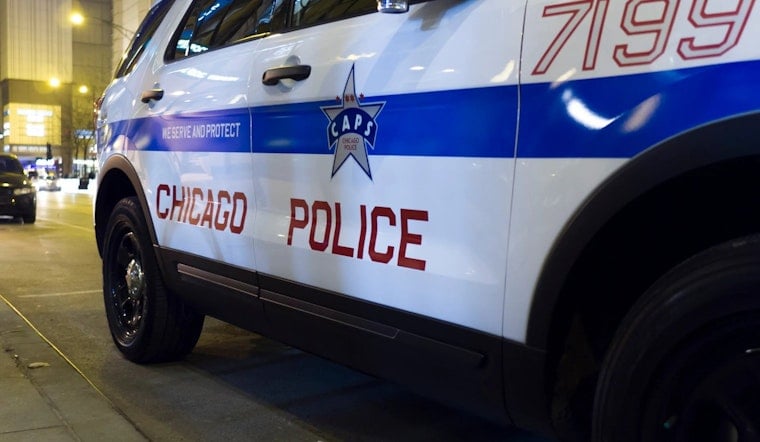
A 25-year-old man died Sunday after Chicago police spent 17 minutes searching for him following a 911 call that dropped before the caller could give an exact address. Devon Jones was found on the 13100 block of South Lankley Avenue and was later pronounced dead at University of Chicago Hospital, according to CPD and medical examiner records. His death is now fueling renewed criticism over the city's 2024 decision to shut down its ShotSpotter gunshot detection network.
The case is one of 93 instances of lengthy emergency-response waits that CWBChicago has identified since the city disconnected ShotSpotter. Jones was shot at Altgeld Gardens around 3:37 am Sunday, and a woman who called 911 to report hearing gunfire believed the shots came from a nearby lot, but her call disconnected before she could pinpoint the location. Officers searched the housing complex after hearing gunfire themselves, ultimately finding Jones 17 minutes after her initial call, per the outlet's reporting.
A Second Delayed Response Hours Later
A second shooting unfolded roughly two hours later, around 5:16 am, near the 8200 block of South Emerald Avenue in Auburn Gresham. A man called 911 to report he had been shot near 82nd Street and South Emerald Avenue, but officers didn't find him — on a porch in the 8200 block — until 10 minutes after his call. Officers located three shell casings and a gun in front of the house before beginning lifesaving measures. That victim, in serious condition, was taken to Christ Hospital. Both shootings occurred in areas that were formerly covered by ShotSpotter, the same report notes.
CWBChicago's analysis found that 60 percent of victims in its identified delayed-response cases died from their injuries — a fatality rate the outlet says is nearly three times higher than Chicago's overall rate, where about 21 percent of shooting victims die, according to HeyJackass.com data cited in the same account. The outlet attributes the delays in these cases to witnesses being able to provide police only general shooting locations rather than precise addresses — the exact gap ShotSpotter sensors were designed to close.
The Long Political Fight Over ShotSpotter
Mayor Brandon Johnson disconnected Chicago's ShotSpotter network in September 2024, following through on a 2023 campaign pledge, with the contract formally ending on September 23, 2024, shortly after that year's Democratic National Convention. At the time, the system had been deployed in 12 of the city's most violence-impacted neighborhoods. Johnson promised to find a better gunfire detection system, but the city has announced no replacement and installed none in the nearly two years since.
Ald. Peter Chico, a former Chicago police officer who represents the Altgeld Gardens area, urged Johnson to retain ShotSpotter during the 2024 debate and continues to argue the technology helped families of shooting victims. “[Even] a one-to-three-minute delay [in emergency response] could affect outcomes,” Chico has said, according to the CWBChicago report. Not every alderman agrees: Ald. William Hall, who represents the 8200 block of South Emerald Avenue, backed Johnson's decision to remove the system and has said the city should focus on preventing shootings rather than simply receiving alerts about them. Hall separately sent an ordinance to the City Council Rules Committee that could have kept ShotSpotter active, though the measure's fate reflects the same divide.
Why a Replacement Is Still Years Away
The political standoff over gunshot detection technology has played out publicly since the network went dark. In September 2024, the City Council voted 33-14 on an ordinance granting Police Superintendent Larry Snelling authority to extend or contract for gunshot detection technology, but Johnson announced he would veto the measure, calling it illegal executive overreach, according to Axios. Chicago has since received proposals from multiple companies, but a permanent fix remains distant: Chief Procurement Officer Sharia Roberts told the City Council Public Safety Committee in June that finalizing a new contract could take until February 2027, according to CBS News — nearly two and a half years without automated detection.
Budget records add another wrinkle. Chicago originally set aside $8.975 million for gunshot detection in 2025, but Johnson's 2026 budget quietly reduced that line item to $5 million, folded into general software maintenance and licensing, leaving the 2025 funds unspent, per Southwest Regional Publishing. Aldermen have criticized the mayor's office over the reduction, the outlet reports.
Competing Data on Lives Saved and Resources Wasted
The debate over ShotSpotter's value has never been simple. City Council Public Safety Committee Chairman Brian Hopkins has cited CPD data showing 71% of verified gunshot incidents detected by ShotSpotter between 2018 and 2024 had no corresponding 911 call from residents — evidence, advocates argue, that bystander calls alone leave major gaps in police awareness. A University of Chicago Crime Lab analysis calculated a 3-in-4 probability that the system saved roughly 85 lives per year in Chicago by speeding emergency medical response to gunshot victims, even as it found the system pulled police patrol resources away from higher-priority 911 calls.
Critics point to different numbers. A 2021 Chicago Office of Inspector General review of more than 50,000 ShotSpotter alerts found only 9.1% led police to physical evidence of a gun-related crime, and a MacArthur Justice Center study found 89% of dispatches over an 18-month period produced no evidence of any gun crime, resulting in more than 40,000 dead-end deployments concentrated primarily in Black and Latino communities. A 2024 Cook County State's Attorney's Office review found the system led to arrests in roughly 1% of cases over five years while costing the city more than $217,000 per incident arrestee. Separately, a UChicago Justice Project analysis found police beats with deactivated sensors saw a 32% drop in homicides through September 2025, complicating claims that removing ShotSpotter caused a surge in fatal shootings.
A Costly Misfire Still Looms Over the Debate
The system's track record includes at least one expensive misstep. In March, Chicago paid a $500,000 civil settlement to Michael Williams, a 65-year-old man who spent nearly a year in jail on a murder charge built on a mishandled ShotSpotter alert, despite the company's own warning that its sensors cannot reliably detect gunfire inside vehicles, as WTTW News reported — a case Hoodline covered in an earlier report on the settlement. Prosecutors had dropped all charges against Williams back in 2021 after reviewing the acoustic evidence.
For now, Sunday's two shootings sit alongside dozens of similar cases compiled since the shutdown, each one reigniting the same argument between aldermen who want the technology back and those who say the city's money is better spent elsewhere. With a new contract not expected until early 2027 at the soonest, Chicago police in former ShotSpotter zones remain dependent on callers like the woman near Altgeld Gardens and the man near South Emerald Avenue — callers whose connections don't always hold long enough to give an address.




