

























































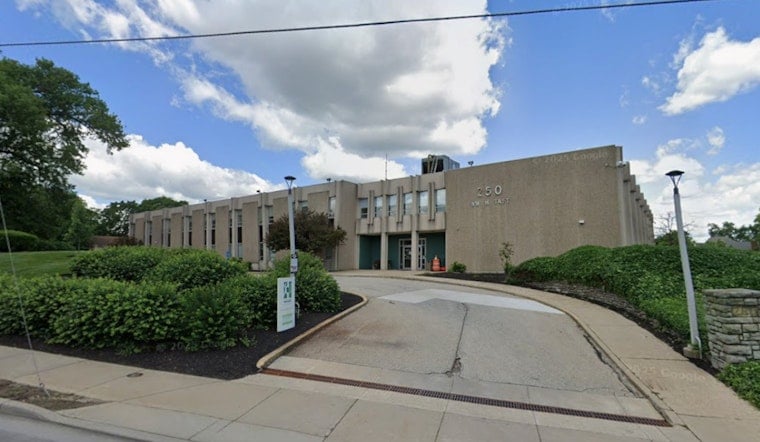
Hamilton County commissioners have voted to sell a 3.2-acre office complex in Corryville for $3 million, clearing the way for Bethany House Services and Urban Sites to build 89 units of affordable housing aimed at families. The vote, approved on August 27, sets in motion a plan to replace county administrative buildings at 250 and 264 William Howard Taft Road with apartments designed specifically for larger households.
The sale still requires due diligence work before it can close, and Bethany House has not yet determined the project's total capital cost, according to Peg Dierkers, as reported by Local 12 News. The nonprofit says it expects to need additional public and private funding to complete the project once those unresolved costs are worked out.
Why the County Freed Up the Land
The Corryville parcels currently house administrative operations for Hamilton County Public Health and Hamilton County ReSource Environmental Services. The county was able to declare the site surplus after purchasing a building from Mercy Health at 1701 Mercy Health Place in Bond Hill, consolidating those departments there, according to the Hamilton County Solid Waste Policy Committee. Hamilton County then designated its Community Improvement Corporation to market the property for disposition, per the Community Improvement Corporation of Greater Cincinnati.
County disposition documents show the 264 William Howard Taft Road parcel covers 0.407 acres zoned OG-T, or Office General/Transportation Corridor, while the 250 William Howard Taft Road site includes a multi-story office building spanning more than 122,000 square feet, according to filings from Alloy Development Co. Converting that office corridor land into high-density housing will require site plan approvals before any residential construction can begin.
Unit Mix Targets Larger Families
The 89-unit development will include 38 two-bedroom apartments and 51 three-bedroom apartments, according to Bethany House Services. That multi-bedroom focus is designed to address a local shortage of affordable options big enough for families with children, rather than the studio and one-bedroom units that dominate much of the region's existing affordable stock.
Bethany House is the region's largest family shelter provider, having served half of all families receiving homelessness services across Hamilton County in 2025, the organization says. In September 2022, the nonprofit consolidated seven aging, scattered shelter sites into a single $18.5 million family shelter facility on Reading Road in Bond Hill, a project that expanded emergency shelter capacity by 100 families annually, according to WVXU. Earlier this year, Bethany House also partnered with SIMPY's Playhouse and Learning Center to add on-site child care at its primary shelter, an effort meant to help homeless parents keep jobs while they search for permanent housing.
A Developer With Tax-Credit Housing Experience
Urban Sites, the private developer partnering with Bethany House on the Corryville project, has a track record with Low-Income Housing Tax Credit developments in Cincinnati. The company completed The Barrister in 2024, a 44-unit adaptive reuse project that marked downtown Cincinnati's first new affordable housing development in decades, and co-developed the $18.9 million, 52-unit Vandalia Point complex in Northside, according to The Port.
The Scale of Cincinnati's Housing Gap
The project lands amid what housing advocates describe as a severe shortage of affordable homes in the region. Cincinnati faces a deficit of nearly 55,000 affordable and available rental units for extremely low-income households, according to the Coalition on Homelessness and Housing in Ohio's March 2026 Gap Report, while Ohio as a whole is short more than 266,000 affordable rental units statewide.
That scarcity translates into real financial strain for renters. Data from the National Low Income Housing Coalition shows that 76% of extremely low-income renters in the Cincinnati metro area spend more than half their income on rent, a level of cost burden that leaves working families vulnerable to homelessness after even a minor financial emergency.
The Corryville sale still needs to clear due diligence before closing, and key details, including the project's total capital cost and the specific state tax credits or municipal subsidies Bethany House and Urban Sites will pursue, remain unresolved. Those financing questions will likely shape how quickly demolition and construction can move forward on the Taft Road site.





