

























































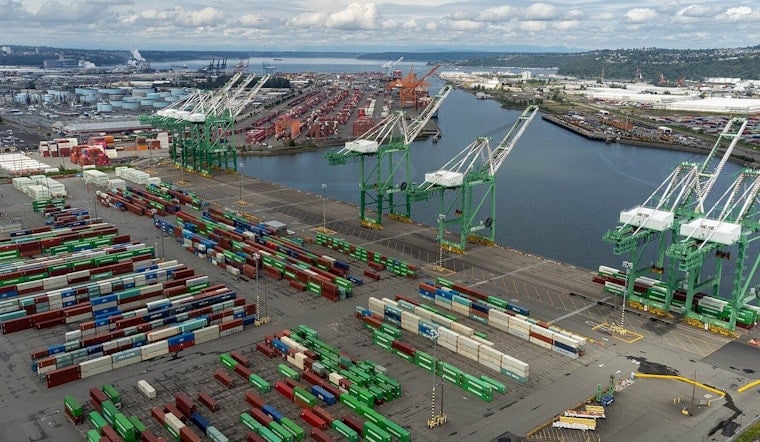
A decaying whale carcass turned up wedged on the bow of a cargo ship near the Port of Tacoma on Monday, prompting a multi-agency scramble to secure the animal, haul it ashore, and figure out how it died. Experts estimate the whale measures somewhere between 60 and 70 feet long, and a necropsy is scheduled for Wednesday to pin down its species, sex and cause of death.
The Washington Department of Fish and Wildlife responded to the initial report Monday, according to FOX 13 Seattle, which first reported the discovery. The Northwest Seaport Alliance said the carcass arrived on the bow of an Evergreen vessel that same day, though the alliance has not said the ship struck the whale itself — only that the carcass showed up lodged there. Responders secured the decaying animal in Commencement Bay to keep it from interfering with port operations, per WDFW.
Preliminary observations from Cascadia Research scientists suggest the whale may be a fin whale, according to MyNorthwest. Necropsy teams plan to inspect the animal's internal tissue for signs of hemorrhaging, a key marker that could reveal whether the whale was struck by a vessel while still alive or was already dead when a ship's hull encountered it.
Why Fin Whales Keep Turning Up on Ship Bows
That forensic question matters because of a quirk in fin whale anatomy. A study published by PubMed Central found that fin whales account for 100 percent of documented whale carcasses carried into U.S. West Coast ports lodged on vessel bows, including a previous fin whale brought into the Port of Tacoma the same way back in 1986. Their deep body structure tends to wrap around a large ship's bulbous bow when struck at speed, which is why distinguishing a pre-mortem strike from a post-mortem encounter requires careful tissue examination rather than a visual read of the carcass.
A contractor is now relocating the whale to a necropsy site on McNeil Island, where the Washington Department of Fish and Wildlife and the West Coast Marine Mammal Stranding Network are partnering on the post-mortem exam. McNeil Island currently serves as Washington state's civil commitment and treatment facility for violent sex offenders, but its isolation has made it a practical site for marine mammal necropsies before — the ocean update reported that officials also used it to examine a juvenile humpback in March 2017 and a gray whale in May 2007.
A Pattern of Vessel Strikes in the Salish Sea
The Tacoma case lands amid a documented rise in ship-related whale trauma across the region. Cascadia Research founder John Calambokidis noted this month that of 15 whale strandings recorded in the Washington portion of the Salish Sea over the past five years, seven showed signs of blunt force trauma consistent with vessel strikes, according to the same MyNorthwest report. Separately, Cascadia Research Collective data showed Washington had already logged 30 gray whale mortalities by mid-June, closing in on the record of 34 deaths set across all of 2019.
Federal and regional agencies have been building out safeguards to reduce these collisions. The U.S. Coast Guard's Sector Puget Sound launched a Cetacean Desk pilot program in February 2024, aggregating real-time whale sighting data and broadcasting warnings to commercial ship captains, as reported by gCaptain. NOAA Fisheries also oversees the voluntary Quiet Sound program, launched in 2022, which asks large container ships and cruise vessels to cap speeds at 14.5 knots in Puget Sound shipping lanes during seasonal slowdown periods. In January, Quiet Sound extended similar guidance to fast passenger-only ferries, which can travel up to 30 knots, to reduce whale strike risk in critical habitat zones.
Endangered Status Raises the Stakes
Fin whales are listed as an endangered species under the federal Endangered Species Act and are also protected under the Marine Mammal Protection Act, according to the Vashon-Maury Island Beachcomber. That legal status makes vessel collisions a significant regulatory concern for marine agencies overseeing Puget Sound traffic. Evergreen Line, the Taiwan-based carrier whose ship brought the carcass into Tacoma, has called at the port since 1991 and operates out of a dedicated terminal on the Blair Waterway, per Port of Tacoma records.
Once the necropsy wraps up on McNeil Island, experts say they'll release more details on the whale's gender, species and probable cause of death. Wednesday's exam will determine whether Commencement Bay's latest arrival became another entry in the region's mounting tally of vessel-linked whale deaths, or whether the animal was already gone before it ever met the ship's bow.





