

























































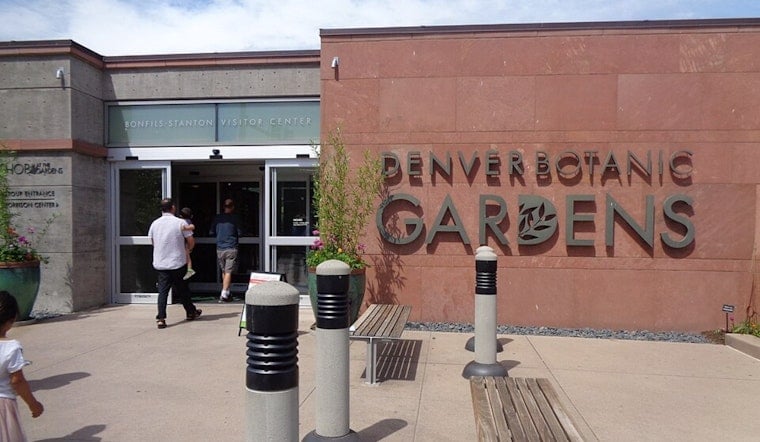
Denver Botanic Gardens is opening a new venue for weddings, a Victorian-style pavilion tucked into a quiet pine grove on the west side of its York Street campus, as the institution works through more than 220 wedding requests a year and booking waitlists that now stretch into 2028.
The new space, called the Ponderosa Glasshouse, can host around 50 standing guests for a ceremony and will become one of 18 wedding spaces at Denver Botanic Gardens, according to the Denver Gazette. Courtney Meihls, a spokeswoman for the gardens, is quoted in that report describing the pavilion's setting in south Jefferson County. Wedding demand at the gardens peaks on Fridays through Sundays from mid-April through early October, the outlet reports, and availability is offered throughout the year.
A Solarium With Disney Roots Sets the Bar
The gardens' most sought-after wedding site remains the Woodland Mosaic and its glass solarium, which the Denver Gazette's report notes can seat up to 40 guests indoors and hold 75 total for standing receptions. That solarium has an unusual backstory: it was originally built for Euro Disney before being relocated and installed at the York Street campus, according to Denver Botanic Gardens. The new Ponderosa Glasshouse mirrors that structure's scale, offering couples another glass-walled option with a similar guest capacity.
Typical wedding events at Denver Botanic Gardens average around $4,000, with the gardens charging roughly $750 or more just for the wedding itself, per the same account. Clients can choose to hold ceremonies in the Romantic Gardens or the Annuals Garden and Pavilion, with receptions held off-site, and every wedding package includes a photographer's permit. Event guests also receive complimentary admission to the gardens on their big day.
Other Venues Across Two Campuses
Beyond the new glasshouse, the gardens' roster of wedding venues includes the Woodland Mosaic, the Annuals Garden and Pavilion, the Orangery, Marnie's Pavilion, the Romantic Gardens and Mitchell Hall, spread across the 24 acres and 50 curated gardens at the York Street location at 1007 York Street in Denver. The nonprofit also operates Chatfield Farms in Jefferson County, a 700-acre site that has expanded its own event offerings with the Borgen Family Market Square, a food-truck reception space designed for open-air gatherings, according to Denver Botanic Gardens. Couples have also booked holiday-themed weddings during the gardens' Blossoms of Light show, the seasonal display Hoodline covered in its piece on the glowing jungle safari lighting up Denver's oldest house.
Record Attendance Meets a Crowded Calendar
The rush for wedding dates comes as overall attendance at Denver Botanic Gardens hit an all-time high across its campuses during its recent season, according to the Scientific and Cultural Facilities District. The gardens draw a combined 1.5 million visitors annually across York Street and Chatfield Farms. That surge in public interest lands alongside a private events business that has historically generated significant revenue for the nonprofit — more than $2.07 million in a single year between the two campuses, with York Street alone bringing in $1.56 million from 460 private events, per Denver Botanic Gardens' own annual reporting.
Regionally, metro Denver couples spent an average of $38,576 on weddings in 2025 across nearly 8,000 ceremonies, generating $306 million in local economic impact, according to The Wedding Report. Against that backdrop, the gardens' roughly $4,000 wedding packages sit well below the metro area's overall average spend, even as the median wedding cost in Denver ran to $19,160 last year.
Funding Ties to a 2028 Ballot Measure
Denver Botanic Gardens is one of Denver's five Tier I cultural institutions supported by the Scientific and Cultural Facilities District, which distributed a record $85 million in voter-approved tax revenue in 2024 and supplies roughly 30% of all funding for metro Denver cultural nonprofits, according to the Colorado Business Committee for the Arts. That tax, first approved by Denver-area voters in 1988 and drawn from a 0.1% sales tax across seven metro counties, is scheduled to face voter reauthorization on the Denver metro ballot in 2028 — the same year some of the gardens' current venue waitlists extend to, as Westword has reported.
The gardens also carry financial obligations tied to city capital financing. Denver Botanic Gardens deposited $1.73 million with a city trustee to fulfill annual lease payment obligations linked to municipal certificates of participation financing for facility capital improvements, according to the City and County of Denver, with the nonprofit agreeing to share admission and revenue streams to service those agreements. Westword also reported in 2022 that the gardens had petitioned Denver City Council to shift private event rental fees from site-specific pricing to capacity-based pricing, a move aimed at aligning costs with rising demand and facility maintenance expenses.
Recovering Gardens, Growing Waitlists
Not every outdoor ceremony space is currently at full capacity. Hoodline reported in April that the gardens had sidelined its signature tulip show in the Annuals Garden after a fungal disease known as tulip fire forced horticulture teams to replace the beds with other spring flora through 2028, with tulips not expected to return until fall of that year. The Annuals Garden and Pavilion remains one of the gardens' primary outdoor ceremony spaces even as that recovery continues.
With public attendance climbing, private event revenue growing, and venue waitlists already reaching years into the future, Denver Botanic Gardens is betting that a new glasshouse in a quiet pine grove will help ease some of the pressure on its calendar — even as it balances the demands of exclusive private rentals against its mission of public access to the gardens.



