

























































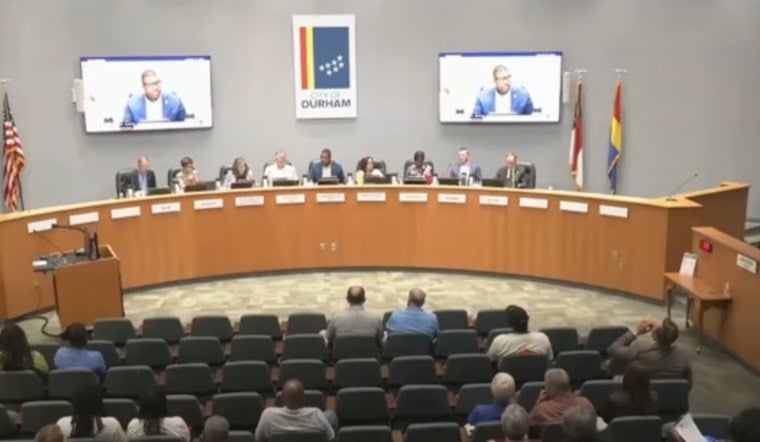
Durham City Council adopted a new three-year strategic plan on August 17, laying out five goals meant to steer city operations through 2029 as the city grapples with rapid growth, housing costs and persistent safety concerns. The plan focuses on Durham's built and natural environment, economic prosperity, and safety, among other priorities, and reflects input gathered from residents, city employees and Durham youth over the past year.
According to a video recap posted by the City of Durham, NC Government on Facebook, the FY 2027–2029 Strategic Plan will guide the city's priorities and work over the next three years, with implementation beginning this fall, per the post. The plan prioritizes parks, transit, infrastructure, jobs, housing, violence reduction and youth opportunities, building on a public engagement process that began nearly a year earlier.
A Year in the Making
The refresh kicked off in September 2025 with council visioning workshops, according to the City of Durham, NC Government. Public and employee surveys followed in late 2025, council members selected top priorities in February 2026, and staff spent the spring drafting initiatives ahead of the council's final vote. That process mirrors, though at a larger scale, the one behind Durham's outgoing FY 2024–2026 plan, which was shaped by more than 1,400 surveys completed by residents and city employees back in fiscal year 2023.
The Strategic Plan is managed by the Office of Performance and Innovation, a division within the city's Budget and Management Services Department that tracks performance metrics, runs annual resident satisfaction surveys, and publishes public progress dashboards, the city's website notes. City Manager Bo Ferguson, who took over Durham's top administrative post after Wanda Page's retirement at the end of December 2024, oversees the roughly 2,600-employee workforce tasked with carrying out the plan's initiatives.
Housing, Transit and Green Space Take Center Stage
Under the plan's Built and Natural Environment goal, council priorities include promoting walkable and bikeable neighborhoods, creating new parks and greenways, improving public transit, and upgrading infrastructure for flood and heat resilience, according to the city. The Economic Prosperity goal, meanwhile, emphasizes creating quality job pathways, supporting small businesses and entrepreneurs, and expanding local wealth ownership through affordable homeownership and youth savings strategies.
Those commitments come as Durham's population keeps climbing. The city's estimated population reached 317,467 residents as of January 1, 2025, with Durham County reaching 367,022, per the Durham Planning & Development Department — growth that has intensified demand on housing, transit and parks across the city.
Council Debate Over Youth Safety
During the August 17 adoption meeting, Council Member Nate Baker highlighted gun violence and traffic collisions as leading causes of premature youth deaths in Durham, according to a recording posted on SeeGov. Baker emphasized the need to fully fund violence reduction and affordable housing plans as part of the new framework.
The plan's safety goal builds on Durham's Community Safety Department and its HEART program, which expanded citywide in 2023 to dispatch unarmed clinicians to non-violent 911 calls. The program won the 2025 ICMA Community Health and Safety Award, according to the International City/County Management Association, giving council members a nationally recognized model to point to as they weigh non-police interventions for youth violence.
Budget Realities Behind the Ambitions
The plan's goals will play out against the backdrop of Durham's $767 million total budget for FY 2026–2027, adopted by council in June under Ferguson's administration, which left the property tax rate unchanged at 43.71 cents per $100 of assessed value, according to the city. That budget is meant to fund core services and infrastructure work without raising the tax rate, setting real fiscal limits on how quickly the strategic plan's housing, transit and safety priorities can move forward.
The adoption arrives amid a broader stretch of local governance debate, including Hoodline's coverage of a push to expand council to nine seats and a separate 4-3 council split over growth rules. Together, the debates underscore how Durham's elected leaders are wrestling with the same underlying pressures — growth, housing and infrastructure capacity — that shaped the new three-year plan.





