

























































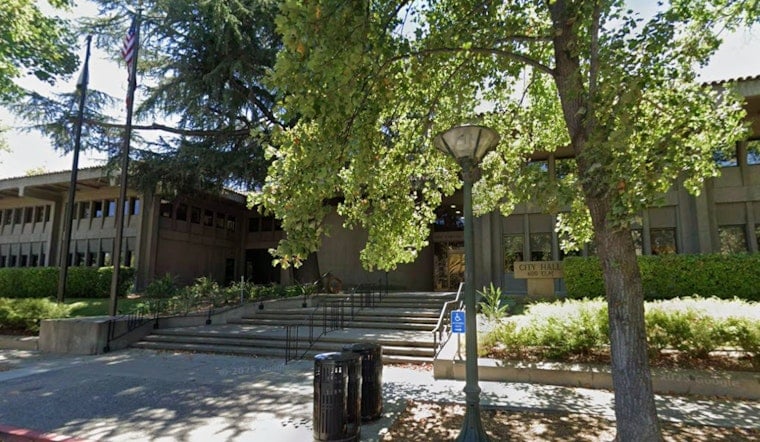
No developer has filed a Senate Bill 79 application in San Carlos, but that hasn't stopped neighbors on the city's east side from bracing for what could come next. The state housing law took effect on July 1, allowing multi-family buildings up to seven stories within a quarter-mile of Caltrain stations, and East San Carlos sits right in that zone.
As of July 31, the City of San Carlos had received zero formal SB 79 applications, city planner Rucha Dande told the San Mateo Daily Journal. That absence of paperwork hasn't eased concerns for Sam Herzberg and Jennifer, co-presidents of the Greater East San Carlos board, who are organizing to make sure residents understand how the neighborhood could change. The pair hope to inform people on the east side of San Carlos about the shifts SB 79 could bring, according to the same report.
What SB 79 Actually Allows Near Caltrain
Senate Bill 79, formally titled the Abundant and Affordable Homes Near Transit Act, was authored by San Francisco State Senator Scott Wiener, signed by Governor Gavin Newsom in October 2025, and took effect statewide this summer, according to the Association of Bay Area Governments. The law upzones parcels within a half-mile of qualifying transit stops, permitting buildings up to seven stories, or 75 feet, within a quarter-mile of a station and six stories, or 65 feet, within a half-mile, per guidance published by the City of San Mateo. Those thresholds override local zoning limits that fall short of the state minimums.
The law applies to urban counties with 16 or more passenger rail stations, including San Mateo, Santa Clara, San Francisco, and Alameda counties, and it requires that any project with more than 10 units set aside a share of them for lower-income households — 7% for extremely low-income units, 10% for very low-income, or 13% for low-income, per the regional planning agency's summary. San Carlos itself has already felt pressure to densify: the state ordered the city to plan for 2,735 new housing units in the current cycle, a steep jump from the 526 units required in the prior cycle, according to Scot Scoop News.
San Carlos Has a Local Rule, But No Applications Yet
San Carlos adopted Municipal Code Chapter 18.25A earlier this year specifically to govern how SB 79 standards apply, or could be excluded, around the San Carlos Caltrain Station. The law allows cities to temporarily exclude certain sites from its density mandates if state housing authorities sign off, but the city has yet to test that provision publicly. For now, the East Side remains a zone of anticipation rather than active development, even as the Greater East San Carlos board — which has previously pushed to cap residential heights at three stories during earlier transit-corridor debates — works to keep residents informed, per Scot Scoop's earlier reporting on the neighborhood association.
Nearby Cities Show What Could Be Coming
San Carlos doesn't have to look far to see SB 79 in action. San Mateo received its first application under the law in July: a five-story, 20-unit apartment building at 606 S. Delaware St. with zero parking spaces, using the law to boost allowed density from 36 to 100 units per acre, according to the San Mateo Daily Journal. In Palo Alto, developers filed nine SB 79 applications totaling 341 apartment units within weeks of the law taking effect, sparking neighborhood pushback over parking and building heights near Caltrain stops, as The Daily Post reported. Hoodline previously reported on a similar fight unfolding near Atherton's $10 million enclave, where 30 townhomes are proposed for a single acre near the Menlo Park Caltrain station.
Redwood City has taken a different path. Its city council voted unanimously in July to let SB 79 take effect around its downtown Caltrain station while staff prepares a local alternative transit-oriented development plan due by 2027, according to Patch. SB 79 permits cities to adopt such alternative plans as long as they preserve equivalent overall housing capacity, the outlet noted. Whether San Carlos follows that model or relies on its own municipal exclusion process remains an open question for city leaders.
Watching and Waiting on the East Side
For now, East San Carlos residents are left watching a wave of applications rise around them in San Mateo, Palo Alto, and Atherton without one landing on their own doorstep. Herzberg and Jennifer's outreach effort, as described to the San Mateo Daily Journal, is meant to get ahead of that possibility rather than react to it after the fact. Given how quickly neighboring cities have seen applications pile up once SB 79 took effect, the absence of a San Carlos filing so far may say more about timing than about whether the East Side will eventually see towers of its own.





