

























































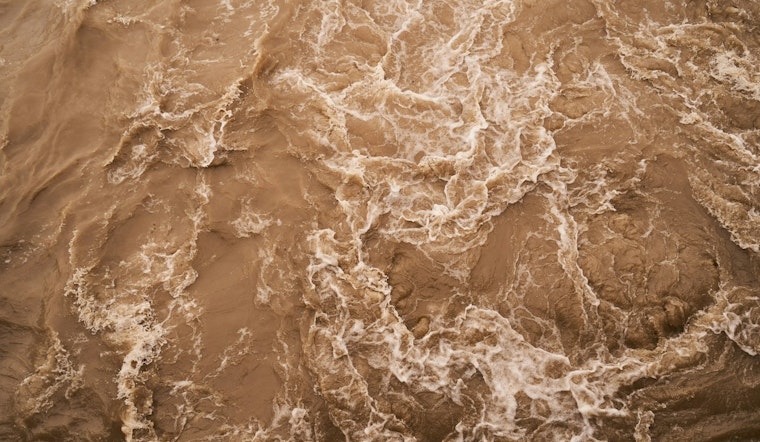
A glacier collapse high in the Himalayas has triggered a flash flood that has killed at least 160 people in Nepal. In Chicago's Edgewater neighborhood, families are anxiously waiting for word on relatives they fear may be among the dead. One Chicago family believes their grandparents are missing, according to Bala Ghimire, president of the Nepali Cultural Center Chicago, who has been fielding calls from worried community members since the disaster unfolded.
“It was so shocking and unexpected,” Ghimire said, describing the reaction among Chicago's Nepali community as reported by CBS Chicago. More than 400 people remain missing in Nepal, per the same report, and Nepal's tourism board has listed 341 foreigners as missing, including 33 U.S. nationals. Regional news outlets and social media footage have shown water torrents tearing down bridges and dams and sweeping away buildings across the flood zone.
Satellite analysis indicates the disaster began when an ice-rock mass broke off and crashed hundreds of feet into a mountain valley near the China-Nepal border, generating seismic waves that were initially mistaken for a magnitude 5.2 earthquake before the landslide source was confirmed, according to EarthSky. Experts think the ice avalanche set off the flash flood that followed. The flood originated along the Lhende Khola River before cascading into the Bhotekoshi and Trishuli river systems, and hydrological observations recorded the Trishuli River rising 9 meters, or 27 feet, in just 30 minutes at Galchchi, destroying multiple downstream monitoring stations in the process, ICIMOD reported.
Infrastructure Crippled Across the Border
The flash flood knocked four hydroelectric power plants offline along the Bhotekoshi River basin, wiping out roughly 200 megawatts of electricity, or about 8% of Nepal's total power supply, according to Channel 4 News. The outlet reported that Chinese state media confirmed three fatalities and 265 people missing across the border in Tibet's Gyirong County, along with the destruction of cross-border highways. Flash floods also damaged houses, roads, bridges and power plants throughout Nepal, decimating entire villages in the process.
Rescue operations remain challenging in Nepal's Himalayan mountains, and Ghimire said many people died in part because the government could not determine the death toll quickly enough. This is not the first time the Lhende Khola river basin has been hit by disaster. Nepal News notes that a glacial lake outburst flood struck the same corridor in July 2025, just 14 months earlier, killing nine people and destroying the Miteri Bridge linking Nepal and China. Steep terrain in Rasuwa district funnels water and rock debris at high speeds into populated valleys below, the outlet reports.
A Warning System Gap Between Two Countries
Disaster risk reduction experts point to a structural problem behind the recurring catastrophes: because key river headwaters originate across the border in Tibet, Nepali authorities lack an integrated early-warning monitoring system to track threats before they cross into Nepal, the same Nepal News report states. Remote triggers high in Tibet often occur entirely outside Nepal's hydrological monitoring network, leaving downstream communities with little time to evacuate.
The vulnerability is tied to a broader climate trend. A March 2026 report from the International Centre for Integrated Mountain Development found that glaciers across the Hindu Kush Himalaya have lost ice thickness at double the rate since 2000 compared to prior decades, shedding 12% of total glacier surface area between 1990 and 2020, according to ICIMOD. Roughly two billion people downstream rely on meltwater from the Hindu Kush Himalaya region, according to the same report.
Edgewater's Nepali Community Mobilizes
Edgewater is home to thousands of people with roots in Nepal, and Chicago's broader Nepali American population numbers about 15,000. The neighborhood held its inaugural street festival earlier this month, and a new mural depicting faces of Nepali culture now marks the area, while a Kathmandu cafe on Broadway displays videos of Nepal's mountains and glaciers on its walls. Nepali Americans across the city have been awaiting word from family members in Nepal since the flood hit.
Leaders from Chicago's Nepali community met this week to discuss how to help people back in Nepal and are planning to raise funds for flash-flood survivors. The Nepali Cultural Center Chicago, incorporated in Illinois in 2022, held joint executive assemblies with the Nepali American Center as recently as April to coordinate organizational planning, bringing together representatives from several Chicagoland diaspora groups, according to Nepalese Diaspora. The center had also unveiled plans last November for a regional Midwest diaspora hub intended to serve Nepali families across Illinois, Indiana, Wisconsin, Iowa, and Michigan.
Nationally, the Nepalese American population reached approximately 225,000 people in 2023, making it the 15th-largest Asian origin group in the United States, according to Pew Research Center. Chicago has long ranked among the top metro areas for Nepalese residents nationwide, alongside Dallas and New York. For now, families in Edgewater are left waiting for news, hoping the names of their missing relatives do not appear among the hundreds still unaccounted for in Nepal.




