

























































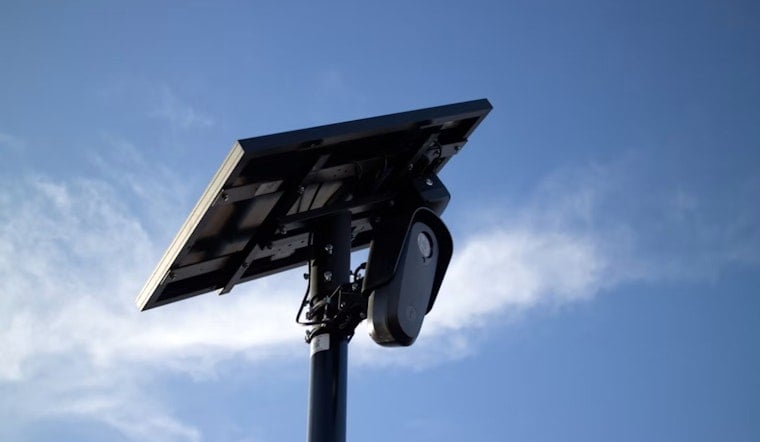
Nearly a dozen weeks after El Cerrito cut ties with Flock Safety, 23 of the company's license plate reader cameras are still bolted up around town, and fed-up residents have started covering the lenses themselves. Neighbors have taped over cameras, spray-painted lenses, and physically turned devices away from traffic, while city leaders now say they are considering fining the company for the drawn-out delay.
The frustration centers on a broken promise: Flock told the city it would finish removing the remaining equipment by August 18, but that deadline came and went with cameras still standing, according to KTVU. El Cerrito and Flock formally ended their agreement in early June, yet the station reports the company has now delayed full removal for more than 70 days. Flock has since removed several cameras that were still standing as of Monday, but about half of the original network remains scattered around the city, and the company has told city staff it will complete the job by the end of the week, per an email KTVU obtained.
El Cerrito Mayor Pro Tem Rebecca Saltzman told KTVU she is frustrated by the company's lack of progress, and city leaders say they now speak with Flock representatives multiple times a week just to track the removal timeline. The El Cerrito police chief and city manager have started conducting weekly inventories to keep count of which cameras are still standing. Adding to the confusion, Flock has sent work orders to city staff that they cannot even open, and the company has asked El Cerrito to simply cover the camera lenses with bags in the meantime, according to the station's report.
A Contract That Was Already on Shaky Ground
The city council voted in May not to renew its three-year, $315,000 contract with Flock, a 3-2 decision that set an official June 6 deactivation date for the 40-camera network, according to Contra Costa News. Mayor Gabe Quinto and Councilmember Carolyn Wysinger voted to keep the contract, while three of their colleagues sided with cancellation. The outlet reported that Councilmember Lisa Motoyama was especially skeptical of the vendor during deliberations, arguing that Flock had a pattern of only fixing configuration errors after they were publicly exposed, and citing last-minute contract revisions and past litigation as further reasons for concern.
That skepticism traced back to a February internal police audit, which Hoodline covered in a report on the audit's findings, revealing that configuration errors had let federal agencies, including the U.S. Postal Inspection Service and Veterans Affairs Police, access El Cerrito's plate data without authorization. City staff had launched that audit after media reports surfaced similar exposures in other Bay Area cities, the Richmond Standard reported. California law has barred exactly this kind of sharing since 2016, when Senate Bill 34 made it illegal for public agencies to sell, share, or transfer license plate data to federal or out-of-state law enforcement, according to the Electronic Frontier Foundation.
Crime Statistics Complicate the Debate
The cameras were not without a track record. El Cerrito police data cited by the Richmond Standard showed vehicle thefts dropped 52% and burglaries fell 41% during the three years the 40-camera system was active from 2022 to 2025, with robberies down 20% to near 40-year lows. Contra Costa News reported the cameras scanned roughly 12,280 vehicles a day and generated an average of 247 hotlist alerts daily, contributing to at least 64 arrests and 324 criminal cases, with police noting that about 88% of arrestees identified through the system lived outside El Cerrito.
Despite that record, residents organizing as Flock Out of El Cerrito say the privacy risks outweigh the benefits. Member Nakiesha Koss told KTVU that private for-profit companies do not keep residents' privacy and data safe, and that the cameras should have been switched off and removed immediately rather than left running past the contract's end. The group posted a viral video showing the cameras still blinking well after they were supposed to be gone, though members say they do not condone the vandalism some neighbors have resorted to, including spray-painting lenses and taping them over.
A Regional and National Pattern
El Cerrito's decision to walk away entirely makes it the first East Bay city to completely terminate its Flock contract, according to KTVU. Neighboring Richmond took a different path: it suspended its camera system in October 2025 over unauthorized out-of-state data sharing, then voted 4-3 in March to temporarily restore it through December under tighter privacy rules while it searches for a long-term vendor, the Richmond Standard reported. Richmond's initial shutdown was driven by concerns tied to its sanctuary city policy.
The scrutiny extends well beyond the East Bay. A class-action lawsuit filed in California in February alleged Flock let federal agencies access San Francisco Police Department camera data more than 1.6 million times over seven months without legal authority, according to SFist. In response to mounting pressure, Flock announced in August that it would shrink its default data retention window from 30 days to seven and roll out AI-driven audit tools by late 2026 to catch unusual search patterns, with company leadership maintaining its technical safeguards now block unauthorized inter-agency sharing, as Hoodline reported.
El Cerrito is far from alone in cutting the cord. Hoodline has documented a wave of municipalities dropping or rejecting Flock contracts this year, including Gardner, Kansas cutting Flock cameras and Hartford, Kentucky, with local groups in various states raising Fourth Amendment and mass surveillance objections. Privacy expert and Privacy Bee CEO Harry Maugans told KTVU that missed camera-removal deadlines like El Cerrito's only deepen public mistrust in these systems.
For now, El Cerrito residents are left watching for stray cameras and waiting on a company that has already blown past one deadline. City leaders say they are weighing fines to force the issue, even as Flock maintains removal will wrap up by the end of the week.





