

























































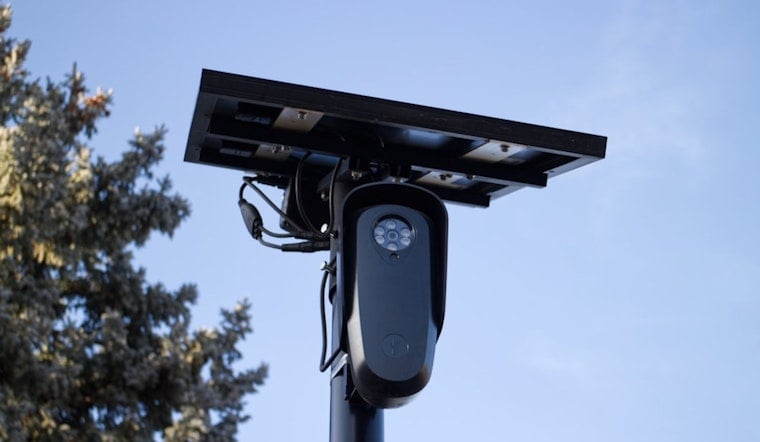
Gardner police have switched off all four of the city's Flock Safety license plate reader cameras after the Gardner City Council voted Monday night to cancel its contract with the surveillance vendor, ending a program that had quietly tracked vehicle movements across the Johnson County community. Police even covered some of the cameras to make sure they stopped recording, and the department has notified Flock that the contract is terminated.
The move came after resident Bradley Steinmetz pressed officials on exactly who could see the data those cameras collected. As reported by KMBC, Steinmetz said more than 1,200 vendors had access to information through the Flock system, and he told the council he did not know the identities of all the entities with that access. He questioned how broadly the system's information could be shared beyond Gardner's own police department.
City Council member Kelly Johnson said the council's action only applies to cameras actually controlled by Gardner — the city can make decisions about its own cameras and contracts, but it cannot turn off cameras owned and operated by Johnson County or the state. Johnson added that the city would examine its options regarding cameras operated by other jurisdictions. Gardner said the decision reflects an ongoing evaluation of technology and resources.
A $33,000 System And Questions About Oversight
Gardner's four fixed cameras, supplied by Flock Safety, are listed in tracking by the Atlas of Surveillance. The program carried an initial $33,000 deployment cost and a $13,000 annual recurring contract. The vendor agreement automatically renewed, prompting calls for policy and audits, per Citizen Portal.
The cameras themselves simply photograph license plates, but critics argue that networks of them stitched together create detailed records of people's movements, including trips to homes, workplaces and places of worship. Law enforcement agencies have credited the technology with real investigative wins — Blue Springs police, for instance, said it helped locate a suspect in an Amber Alert case in Missouri. But automated license plate readers are facing growing scrutiny nationwide over privacy and data access.
Flock Cuts Data Retention As Scrutiny Mounts
Gardner's cancellation lands just days after Flock Safety itself announced sweeping changes to its platform. CEO Garrett Langley said on August 13 that the company is cutting its default data retention window nationwide from 30 days down to seven, citing internal analytics showing that more than 90% of searches lacking a full license plate number happen within the first week after collection anyway. By the end of 2026, officers will also be required to attach a case code to every search and submit to automated audit lockouts flagging suspicious query patterns, according to Police1.
Those guardrails followed a damning investigation. An August 2026 Washington Post investigation found that at least 50 law enforcement officers across the country have been charged with or accused of misusing ALPR networks, including Flock's, to track ex-partners, romantic interests and acquaintances. In one Florida case surfaced in court documents, a deputy was investigated for using the Flock database 717 times between September 2024 and June 2026 to monitor his estranged wife's vehicle, allegedly entering various offense reasons during the lookups, per a report relayed on Reddit citing WTSP.
Kansas Lawsuit Adds Legal Pressure
Gardner's move also comes amid a constitutional fight already playing out in Kansas courts. The Kansas Justice Institute filed suit in Sedgwick County District Court on July 30 against the City of Wichita, alleging its 200-camera Flock network violates Section 15 of the Kansas Bill of Rights by conducting warrantless mass surveillance — a case Hoodline covered in Wichita's Flock lawsuit fight. Court documents from that case, examined by The Auto Wire, described an instance where a Kansas family was stopped by police at gunpoint after a city camera misread their minivan as a stolen pickup truck.
Kansas law offers little transparency into how these systems operate locally. Under K.S.A. 45-221(a)(55), captured license plate data and specific camera locations are exempt from disclosure under the Kansas Open Records Act, according to the Kansas Legislative Research Department. That statute protects camera locations and plate data from public records requests, while questions about retention limits and audit policies remain. According to the Kansas Secretary of State's Kansas Register, records containing captured license plate data or information about the location of an automated license plate recognition camera are exempt from disclosure under Kansas law.
Part Of A Broader Retreat From Flock
Gardner is far from alone. Several U.S. cities and local agencies have ended or reconsidered Flock contracts over privacy, security and oversight concerns, Route Fifty reported. Not every nearby city is following suit — Hoodline previously reported that Bartlesville kept its ALPR cameras running while swapping out two Flock units for a different vendor.
The City of Redmond said all 24 of its Flock Safety ALPR cameras were suspended and were not collecting data while the city evaluated its contract with the company.
For now, the Gardner Police Department has discontinued all of its Flock cameras and formally notified the company that the contract is over. Whatever happens with cameras run by Johnson County or the state remains an open question, one Gardner officials say they still need to sort out.




