

























































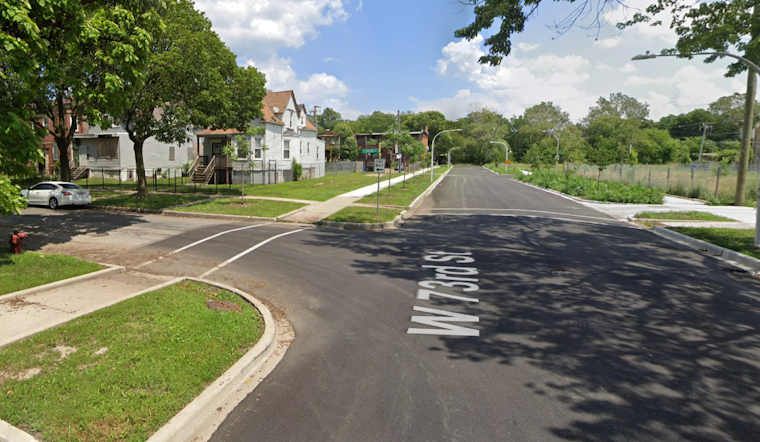
An argument among three men on Chicago's South Side ended in gunfire just before 9:45 p.m., leaving one of them dead and two others wounded. The shooting unfolded in the 700 block of West 73rd Street in the Englewood neighborhood, where police say another person opened fire during the dispute.
The 34-year-old man shot multiple times was taken to University of Chicago Hospital, where he died, according to CBS News Chicago. He was later identified as Arvell Lyons per the medical examiner. A 50-year-old man suffered a gunshot wound to the back and a graze wound to the right arm; he self-transported to the same hospital and was listed in fair condition. A third man, 20 years old, also went to University of Chicago Hospital and was likewise listed in fair condition.
The 700 block of West 73rd Street sits within the jurisdiction of the Chicago Police Department's 7th (Englewood) District, an area that has historically logged some of the city's highest volumes of violent crime calls, according to the Chicago Police Department. Area One detectives are investigating the shooting, and as of the latest update, no arrests have been made.
Why Victims Went to Hyde Park
All three men wound up at University of Chicago Hospital, home to the South Side's only Level 1 Adult Trauma Center. The facility opened in Hyde Park in May 2018, ending what had been a three-decade trauma desert on the South Side and cutting down transport times for gunshot victims who previously had to be driven to North Side hospitals, per UChicago Medicine. That geography still shapes how South Side shootings play out for survivors today.
Anyone with information or video footage related to the shooting is asked to call CPD's Bureau of Detectives, Area One, at (312) 747-8380, or to submit anonymous tips at CPDTIP.com, the department said. Area One covers multiple South Side and Southwest Side police districts and has led other recent investigations in the immediate area.
A Familiar Stretch of West 73rd Street
This is not the first violent incident to hit this stretch of Englewood this year. In March, an SUV crashed after shots were fired at Chicago police near 73rd Street and South Peoria Street. In June, a vacant house on the 1300 block of West 73rd Street went up in flames during a heat wave. And in July, federal prosecutors' 2025 indictment of seven people accused of running an armed, open-air drug market on the nearby 1200 block of West 73rd Place remained part of the corridor's recent history, according to the U.S. Department of Justice.
Just over a month ago, a man was fatally shot on the sidewalk on the 7300 block of South Racine Avenue, only blocks away, and was also pronounced dead at University of Chicago Medical Center with Area One detectives leading that investigation as well. Days after that, a wave of overnight gun violence left 11 people shot and two dead across several South Side neighborhoods including Englewood and West Englewood.
Numbers Tell a Complicated Story
The latest shooting arrives amid a citywide statistical tug-of-war. Chicago closed out 2025 with 416 homicides, a 29% drop from the prior year and the city's lowest annual homicide total and rate since 1965, according to data compiled for the year-in-review published by chipublicsafety.org. But Cook County Medical Examiner and CPD data from July showed homicides in the first half of 2026 climbing roughly 5% year-over-year, with 219 recorded through June 30, and shooting incidents up about 3%, per Fox 32 Chicago.
A July poll from NORC at the University of Chicago found that 44% of Chicago residents believed violent crime had increased in 2026, even though overall figures remained near 60-year lows, according to WTTW News. Researchers tied that perception gap partly to social media exposure to crime content. A separate mid-year analysis from the Council on Criminal Justice found that while robberies and carjackings fell sharply compared to last year, gun assaults remained about 1% above pre-pandemic 2019 levels, suggesting gun violence specifically has proven more stubborn to bring down than other categories of crime.
What Comes Next
No suspect has been identified or arrested in Lyons's killing. If a shooter is eventually charged and convicted of first-degree murder under Illinois law, the offense carries a sentence of 20 to 60 years in prison, with a mandatory add-on of 25 years to life if the person personally discharged the firearm that caused the death, per state statute. For now, the investigation remains open, and detectives are relying on the public to help identify who fired the shots that killed Lyons and wounded two other men on West 73rd Street.





