

























































An explosion was reported Saturday at a Con Edison facility in Chelsea, the latest jolt to hit a Manhattan neighborhood that has already weathered a string of underground electrical failures over the past year. Details on injuries, outages, or the cause of the blast were not immediately available.
The explosion was first reported by CBS News New York, which identified the site as a Con Edison facility in Chelsea. The report did not specify the exact address, the scale of damage, or whether the explosion caused a broader power outage in the surrounding blocks.
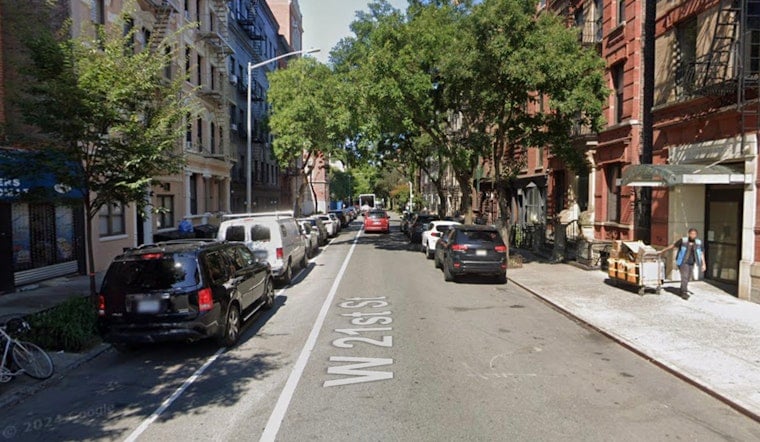
Chelsea is no stranger to trouble beneath its streets. In December 2025, FDNY firefighters responded to multiple manhole fires and explosions on West 21st Street between Eighth and Ninth Avenues, a series of incidents that set parked cars ablaze and cut power to nearly 580 Con Edison customers, according to footage shared by the office of State Senator Erik Bottcher. Emergency crews isolated the damaged equipment that night and had to transfer local students to an alternate school site.
A Citywide Surge in Underground Fires
Saturday's blast lands amid a broader spike in underground electrical failures across New York City. FDNY dispatch data cited by CBS News New York shows the city logged more than 4,000 reports of manhole fires, smoke, or underground explosions through early August, putting 2026 on pace for its highest annual total since 2015. That marks a sharp climb from roughly 1,300 manhole fire reports in 2023 to about 4,400 in 2025, per the same dispatch data.
The strain runs through a grid of staggering scale. Con Edison serves approximately 3.6 million electric customers and 1.1 million natural gas customers across New York City and Westchester County, running an underground distribution network of more than 89,000 miles of cable and 250,000 manholes, according to the utility. Con Ed supplies nearly 40 percent of New York State's overall electricity demand, per state grid data.
Regulatory Oversight and a Costly Fix
Con Edison's underground equipment operates under state safety rules that require annual contact voltage testing across all accessible distribution equipment, plus physical safety inspections of its facilities every five years, according to the New York Public Service Commission. Utility crews are required to immediately safeguard any detected voltage reading of 1.0 volt or higher under those standards.
The utility has acknowledged the scale of the challenge. Con Edison announced in May that it plans to spend $29 billion to upgrade grid infrastructure and reliability across New York City and Westchester County, a multi-year investment aimed at handling rising electrical load and clean-energy demand, as reported by Utility Dive. That commitment came just months after Con Edison agreed to scale back a proposed electric rate hike from 11.4 percent to 2.8 percent under a three-year plan, following pushback from state lawmakers and consumer advocates, as Hoodline previously reported.
A Neighborhood With a Long Utility History
Chelsea's relationship with Con Edison stretches back more than a century. The utility operated the former West 18th Street Gas Works between Tenth Avenue and the Hudson River from 1834 until 1912, a site later subject to environmental characterization and remediation, according to the New York State Department of Environmental Conservation. More recently, Con Edison designated Chelsea as a site for a Utility Thermal Energy Network pilot project, capturing waste heat from a local data center to provide heating and hot water to NYCHA's Fulton Houses, per the utility's own filings.
Transformer and substation failures elsewhere in the city have shown how dramatic and disruptive such incidents can become. A December 2018 explosion at a Con Edison substation in Astoria, Queens, turned the night sky bright blue and temporarily grounded flights at LaGuardia Airport, according to CBS News. In December 2023, a high-tension transmission line fault at a Con Edison substation in Vinegar Hill, Brooklyn, triggered a citywide voltage surge that briefly disrupted subways and caused scattered power flickers, per FOX 5 New York.
It remains unclear whether Saturday's explosion in Chelsea was tied to equipment failure, cable degradation, or heavy summer electrical demand. Con Edison has not yet released a cause, and neither injuries nor the extent of any power disruption have been confirmed.





