

























































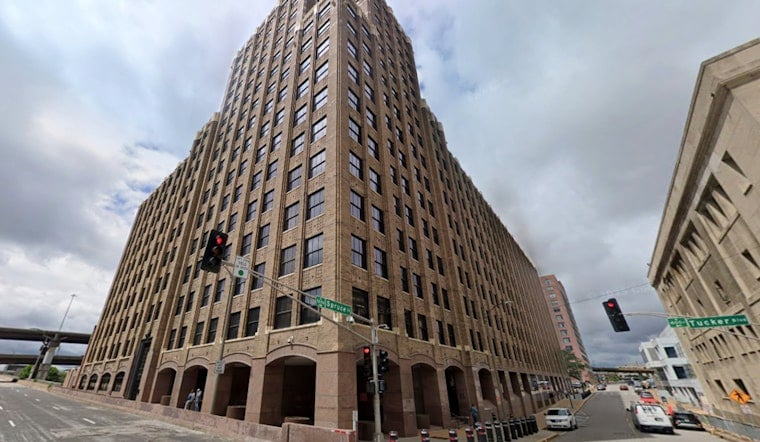
Dozens of people, including clergy and faith leaders, gathered outside the downtown St. Louis federal building that houses the ICE office on Monday, praying together and calling for independent, recurring oversight of four Missouri county jails that hold people in federal immigration custody. The group presented its demands to Missouri leaders and said the vigil was meant to make otherwise unseen community harm visible.
Sara Ruiz, executive director of the Ashrei Foundation, told those gathered that the Greene County Jail has reached its highest record of people detained by ICE, according to First Alert 4. Missouri has no federally operated ICE detention facilities of its own, which is why federal authorities rely on contracts with four county lockups — Greene, Ozark, Phelps, and Ste. Genevieve counties — to hold civil immigration detainees alongside local criminal inmates, according to St. Louis Public Radio.
Ruiz also said that roughly 60% of people currently in ICE custody in the region were first arrested by local law enforcement and then transferred into federal custody, per the outlet's report. That estimate lines up with a broader pattern advocates have flagged statewide: data presented by the Southern Missouri Immigration Alliance in April found that only 9 of 233 people detained for ICE at the Greene County Jail — about 3.86% — faced any criminal charges, while 224 were held solely on civil immigration grounds, according to KSMU.
Conditions Inside the County Jails
The stakes behind the oversight demand were laid out in stark terms in May, when U.S. Representatives Wesley Bell and Nikki Budzinski conducted a congressional oversight visit to the Ste. Genevieve County Detention Center. They reported overcrowded cells holding up to 48 detainees along with inadequate access to drinking water and medical care, according to a press release from U.S. Rep. Nikki Budzinski. The Ste. Genevieve County Jail holds up to 400 ICE beds serving detainees from both Missouri and Illinois.
Those conditions carry life-and-death consequences. In October 2025, 34-year-old Leo Cruz-Silva died at the Ste. Genevieve County Jail after being handed over by local police, a case advocacy groups have cited as an example of the medical neglect and isolation documented in county facilities holding ICE detainees.
A Statewide Pattern of Local Police Involvement
Missouri ranks fourth nationally in the number of local law enforcement agencies participating in ICE's 287(g) program, trailing only Texas, Florida, and Pennsylvania, with more than 60 police departments and sheriff's offices signing formal agreements, per the same KCUR account. Participating agencies include the Missouri State Highway Patrol, which certified 51 troopers for immigration enforcement under a 2025 agreement. That statewide trend has played out locally too: suburban departments including Breckenridge Hills and St. Ann signed their own 287(g) agreements with ICE earlier this year, a move Hoodline covered in a report on suburban ICE deals, while St. Charles County has moved toward creating its own 287(g) task force model.
Ruiz said this kind of voluntary cooperation with federal immigration enforcement — including local police assistance and jail contracts — makes communities less safe because it breeds distrust of police. Kate McCoy and Dede Coughlin, who attended Monday's vigil, said residents should keep showing up and witnessing even amid uncertainty about how much impact the demonstrations will have.
Surveillance Concerns and a Local Win
The group at the vigil also raised concerns about surveillance technology, pointing to Flock Safety license plate reader cameras as a tool that could feed a dragnet for federal agents. Those concerns aren't new to the region: the Dutchtown Community Improvement District in south St. Louis voted in March to end its Flock Safety contract and request a $7,000 refund, citing worries about federal ICE access to surveillance data, a decision Hoodline reported at the time.
Nearly six months after those cameras were removed, the group has reported no security issues, according to Monday's report. Ruiz has pushed for local leaders to go further and end voluntary cooperation with federal immigration enforcement altogether.
Why St. Louis Has Become a Flashpoint
The vigil's demands reflect a broader divide between city and suburban approaches to immigration enforcement across the region. St. Louis City leaders have moved to restrict new detention infrastructure — an aldermanic committee advanced legislation in March to prohibit new immigration detention facilities from operating within city limits — even as surrounding jurisdictions embrace federal partnerships. Neither St. Louis City nor St. Louis County has signed a 287(g) agreement or agreed to host an ICE detention cell.
That divide is unfolding against a backdrop of rapid demographic change. U.S. Census Bureau data released in 2024 showed the St. Louis metropolitan area recorded the highest percentage increase in foreign-born population among the 30 largest U.S. metro areas, growing 23.2% between 2022 and 2023, adding more than 30,000 foreign-born residents in a single year. The Ashrei Foundation's regional Rapid Response Hotline, established in early 2025 to track ICE activity across eastern Missouri, had logged over 5,000 calls by April, most from relatives seeking guidance for loved ones facing ICE custody.
Monday's gathering was, organizers said, meant to serve a purpose beyond the specific demands themselves — putting faces and names to a system that otherwise operates largely out of public view. Dozens of attendees shared personal stories during the vigil before the group presented its list of demands to Missouri leaders outside the federal building.



