

























































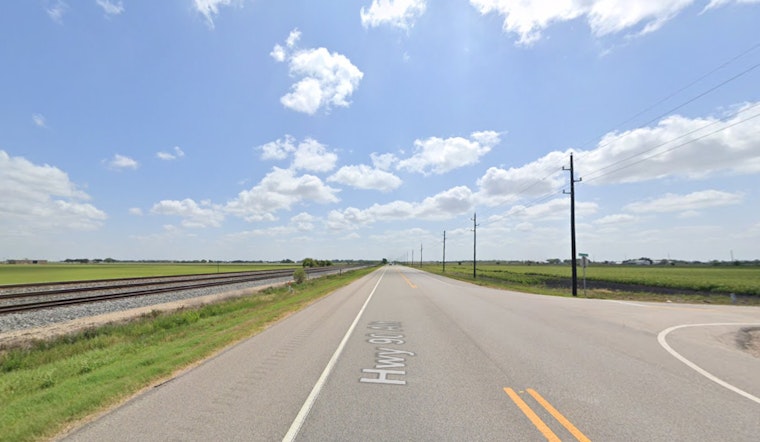
A tractor-trailer fuel spill has shut down the westbound lane of U.S. 90 Alternate in Fort Bend County, triggering a hazardous materials response Wednesday morning as crews work to contain the spill and clear the roadway. Officials have not said how long the closure will last, but they're urging drivers to expect delays and consider an alternate route through the area.
The spill happened near U.S. 90 Alternate and Behrens Road in Beasley, according to Click2Houston. The Fort Bend County Hazmat Response Team is assisting at the scene, but officials haven't determined what caused the spill, and there's no word yet on when the lane will reopen. Cleanup is expected to continue until the roadway can be safely cleared.
FEMA Type I Hazmat Team Leads Cleanup
The unit responding to the Beasley spill operates under the Fort Bend County Fire Marshal's Office and carries a FEMA Type I designation, the highest level of hazardous materials readiness, according to Fort Bend County. That status means the team maintains around-the-clock coverage for major chemical and transportation incidents across the county.
This isn't the team's first callout this year. In June, it was sent to nearby Rosenberg to manage traffic closures after a natural gas leak near FM 2218, the station's report notes. In March, a train derailment that released ethanol in Richmond required a full multi-agency response involving the hazmat team, the Texas Commission on Environmental Quality, the Texas Department of Transportation and the U.S. Environmental Protection Agency.
Spill Volume Could Trigger State Reporting Rules
Under Title 30 of the Texas Administrative Code, any petroleum or diesel discharge onto land exceeding 25 gallons must be reported to the Texas Commission on Environmental Quality within 24 hours. How much fuel actually spilled in Beasley, and whether it reached any nearby agricultural drainage ditches, hasn't been disclosed, leaving open whether that reporting threshold applies here.
If a carrier is found responsible for an uncontained release or fails to meet cleanup protocols, state environmental statutes allow civil penalties of up to $17,000 per day per violation, according to Texas Tech University Environmental Health & Safety. No such penalties have been announced in connection with Wednesday's spill.
A Rural Highway Turned Freight Corridor
Beasley is a small, rural community of under 1,000 residents sitting along U.S. 90 Alternate between Rosenberg and Kendleton, per Fort Bend County. Rural stretches like this one often lack extensive frontage road infrastructure, which is part of why a single-lane blockage can back up traffic so quickly.
A 2023 Texas Department of Transportation truck mobility study designated U.S. 90 Alternate as an essential freight corridor meant to absorb heavy commercial traffic away from congested Interstate 10 and Interstate 69. Beasley has felt the weight of that designation before: in May 2018, an overturned tanker carrying butane shut down I-69 in the area for more than 24 hours, forcing regional traffic to divert directly onto U.S. 90 Alternate, according to KHOU 11.
Suburban Growth Adds New Traffic to Truck Route
Southwest Fort Bend County is suburbanizing fast, with projects like the 933-acre Starbridge master-planned community set to add more than 2,000 homes near Highway 59 and Doris Road, per the Houston Chronicle. That growth is putting more everyday commuters on roads historically dominated by agricultural and freight traffic, raising the stakes of incidents like Wednesday's spill for local drivers.
Drivers looking to avoid the closure can use State Highway Spur 529 and State Highway 36, which connect U.S. 90 Alternate directly to I-69 and local surface roads near Rosenberg and Beasley, according to Wikipedia. Fort Bend County has seen a string of hazmat responses this year, including a hazmat spill gridlock near Katy in June. For now, drivers traveling through the county should expect delays until crews finish clearing the westbound lane in Beasley.





