

























































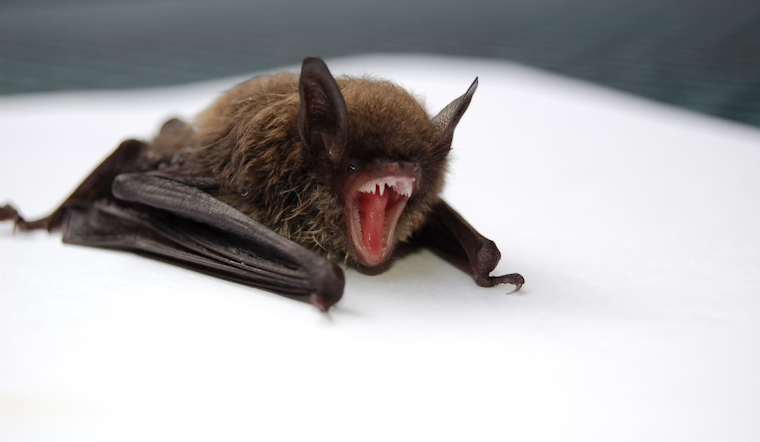
A Golden Valley homeowner who spotted a bat flying around the living room got a much bigger surprise once wildlife inspectors showed up: an entire colony of bats living in the attic, including one that later tested positive for rabies. The bats had gotten inside through a gap in the fireplace, and one of the animals removed from the home was seen repeatedly biting another bat before it was pulled from the property.
The homeowner called in Skedaddle Humane Wildlife Control for help removing the bat, according to Bring Me The News. Once inspectors arrived, they found the full colony roosting inside the attic and ultimately removed seven additional bats from the home. One of those bats stood out for displaying unusually aggressive behavior, repeatedly biting another bat before it was taken in for testing.
That aggressive bat was sent to the University of Minnesota Veterinary Diagnostic Laboratory, which confirmed it had rabies, the outlet reported. Statewide, the Minnesota Public Health Laboratory is the only facility authorized to issue an official rabies determination, and it only does so after the University of Minnesota's lab extracts the brainstem and cerebellum from a submitted bat, according to the Minnesota Department of Health. Submitting a bat for testing carries a standard $33 fee — a $23 testing charge plus a $10 accession fee — and requires the whole head or undamaged brain tissue to be shipped under refrigeration.
Why August Is Peak Bat Season in Minnesota
Skedaddle Humane Wildlife Control reported that August is the most active month for bats in the state, a timing tied to biology rather than coincidence. Young bats leave their maternal colonies in August, sending more of the animals wandering into buildings just as they're learning to fly on their own. The Golden Valley discovery also landed near the tail end of the state's maternity-season protections, which run from June 1 to August 15 and restrict professional bat exclusion specifically to keep flightless pups from getting trapped inside structures and starving, per the Minnesota Department of Natural Resources.
Bats are protected wildlife under Minnesota law, meaning homeowners and pest technicians cannot intentionally harm, kill, or destroy a roost without agency authorization; humane exclusion techniques are required once the maternity restrictions lift. The tension between wildlife protections and public health urgency is real, but state officials also point out that fewer than 1 percent of wild bats carry rabies, and the species delivers major ecological value, with a single bat capable of eating up to 1,200 insects per hour, according to the Minnesota Department of Natural Resources.
Rabies Cases Have Climbed for Three Straight Years
Statewide numbers show why health officials treat any indoor bat encounter seriously. Positive rabies cases in Minnesota rose to 68 in 2024, up from 48 in 2023 and 24 in 2022, with bats accounting for 63 percent of all rabid animals identified statewide, per the Minnesota Department of Health. Rabies is mostly found in skunks and bats in Minnesota, the department has said.
The stakes were made starkly clear in January, when the Centers for Disease Control and Prevention reported that a Minnesota resident died from rabies in September 2024 after an unmonitored bat encounter. That fatality prompted health officials to evaluate 384 people for possible exposure and recommend post-exposure prophylaxis for 45 of them, according to the Centers for Disease Control and Prevention. Once clinical symptoms of rabies appear, the disease is virtually 100 percent fatal, which is why the Minnesota Department of Health stresses that post-exposure treatment — one dose of Human Rabies Immune Globulin followed by a four-dose vaccine series — must begin before symptoms manifest.
Bat Bites Can Be Nearly Invisible
Anyone who may have had physical contact with a bat is urged to get evaluated for rabies exposure, per the health department, because bat bites are minuscule and may leave little or no visible wound. The department maintains a 24/7 consultation hotline, 651-201-5414, for healthcare providers, veterinarians, and the public to assess potential rabies risk and evaluate post-exposure options after a bite or any bat contact.
The Golden Valley case follows a broader pattern of rising bat activity and rabies concern across the Twin Cities metro. In September 2024, Minneapolis Animal Care & Control urged pet owners to update rabies vaccinations following a seasonal spike in bat sightings across Hennepin County, underscoring that pet vaccination remains one of the primary barriers against wildlife rabies spreading to humans.



