

























































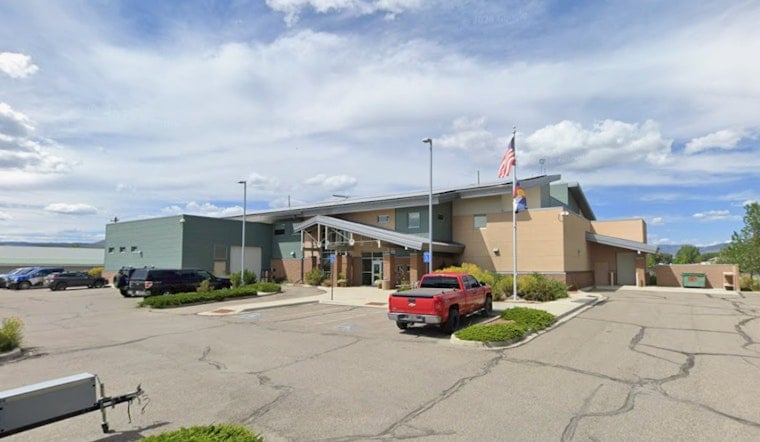
Gunnison County Sheriff Adam Murdie told a packed and emotional commissioners meeting Tuesday that his department will stop giving U.S. Immigration and Customs Enforcement advance notice of when inmates are set to be released from the county jail. “We are not going to deal with ICE,” Murdie said. “You guys talked me into it. I'm done dealing with them.”
The announcement came after roughly two hours of public comment during which residents denounced ICE's actions in the rural Colorado county and pressed the sheriff's department to end its cooperation with federal immigration agents, according to CBS News Colorado. As reported by The Colorado Sun, Murdie, who took office in 2022 after running as an unaffiliated candidate, also voiced fear of what might follow the reversal, saying he was “so afraid of what's going to happen when they find out that we're not allowing them to come do their job.”
Murdie predicted federal agents could respond by shifting away from orderly jailhouse handoffs toward something far more chaotic, warning ICE could “come into this community and just run rampant,” per the same account. That fear sits at the center of the sheriff's dilemma: ending cooperation may satisfy residents demanding change, but he suggested it could also push enforcement out of the jail lobby and into the streets of the Gunnison Valley.
Viral Jailhouse Arrests Sparked Months of Outrage
The policy shift traces back to May, when social media videos showed ICE agents waiting outside the Gunnison County Jail to arrest, handcuff, and load newly released individuals into unmarked vehicles, according to The Crested Butte News. Those clips led to confrontations between agents, residents and clergy, and set off months of organized protest that culminated in Tuesday's meeting.
Community organizers testified that as many as 60 Gunnison County residents have been removed from the community or deported by ICE over the past year and a half, with immigration agents making roughly weekly enforcement trips to the area, the Crested Butte News reported. In June, more than 400 residents marched down Main Street in Gunnison as part of national “No Kings” protests against aggressive immigration enforcement, according to the Colorado Sun.
An Eight-Point List of Demands
At Tuesday's meeting, local advocate Joe Burgess presented an eight-point demand list on behalf of demonstrators, calling for an immediate halt to law enforcement cooperation with ICE, a public investigation into past jail release handoffs, Spanish-language translations of the county's findings, and a formal apology to the community, the Crested Butte News reported. Gunnison County Undersheriff Josh Ashe defended the department's past practices at the same meeting, explaining that deputies had notified ICE of pending releases for public safety reasons involving people who had been arrested, and stressing that those past notifications were legally permissible under state guidelines.
Colorado law limits how far that cooperation can go in the first place. Under HB19-1124, enacted in 2019, civil ICE detainers are not recognized as judicial warrants under state law, so local jails cannot hold inmates past their scheduled release times or arrest them based solely on a civil immigration request, as Hoodline previously reported. That law left sheriffs' discretion over whether to share release schedules with ICE at all — discretion Murdie says he will no longer exercise.
A Statewide Divide Among Sheriffs
Gunnison County's reversal stands in sharp contrast to other Colorado jurisdictions. In El Paso County, Sheriff Joseph Roybal regularly publishes quarterly lists detailing inmates transferred to ICE custody and has actively petitioned state lawmakers to permit greater coordination with federal immigration authorities, Hoodline has reported.
The standoff in Gunnison also arrives as the federal government expands its immigration detention footprint statewide. In July, private prison operator GEO Group was awarded a $528.6 million, five-year federal contract to convert a closed facility in Hudson into a 1,200-bed immigration processing center, according to CBS News. That expansion underscores the stakes for a small mountain county now betting that pulling back from ICE will protect its residents rather than invite the rampant enforcement the sheriff says he fears.





