

























































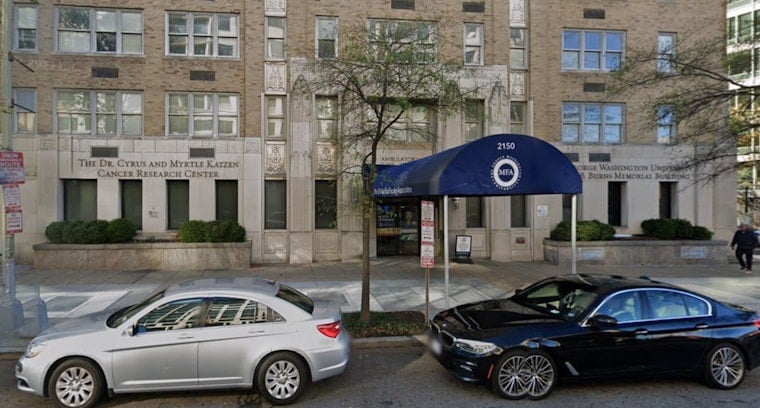
Eight physicians from GW Medical Faculty Associates Oncology & Hematology are set to transition into Maryland Oncology Hematology starting September 1, folding a Washington, D.C. cancer and blood disorder practice into a much larger Maryland-based network while those same doctors keep covering inpatient duties at GW Hospital.
The agreement, first detailed by The GW Hatchet, moves most of the practice's clinical and administrative staff over to Maryland Oncology Hematology while preserving their existing patient relationships. Maryland Oncology Hematology president George A. Sotos said in a statement carried by the Maryland Daily Record that the organization is “proud to welcome” the GW practice, and the network says patients will keep seeing their current physicians while gaining access to an expanded roster of specialists and resources.
Maryland Oncology Hematology, which the Daily Record describes as a cancer and blood disorder care provider operating more than a dozen locations across Maryland, was founded in 1986 as the first oncology and hematology provider in Howard County. The GW Hatchet reports the practice grew to more than 58 physicians across 17 locations before this move into the D.C. market, marking its first foothold in downtown Washington.
Why GW's Cancer Practice Needed a Partner
The transition isn't happening in a vacuum. GW Medical Faculty Associates had piled up roughly $450 million in total debt through fiscal year 2025, according to Becker's Physician Leadership, after losing $100 million in FY2025 alone. That financial strain preceded a broader restructuring: in May 2026, hospital operator Universal Health Services finalized an agreement with George Washington University to take over co-management of GW MFA's 750-physician multispecialty group, per the same report.
Folding the oncology and hematology division into Maryland Oncology Hematology lets GW MFA shed administrative overhead while keeping its clinical trials and inpatient coverage at GW Hospital intact, the outlet's reporting indicates. Dr. Pavani Chalasani, director of the MFA Division of Hematology Oncology, said joining Maryland Oncology Hematology will let the practice extend its academic, research-driven care model to a broader population while delivering care closer to patients' homes.
Clinical Trials and Research Access Expand
Beyond staffing, the deal is meant to widen access to research. As part of the expansion, Maryland Oncology Hematology will work with George Washington University to maintain and grow GWU's clinical trial portfolio, making academic research protocols available across MOH's outpatient locations, according to the GW Hatchet. The Daily Record's reporting on the announcement similarly frames the collaboration as a chance to integrate academic expertise and tertiary care capabilities, potentially increasing availability of clinical trials and expanded treatment options for patients across the region.
Maryland Oncology Hematology operates as an affiliate of The US Oncology Network, a McKesson-supported organization that backs more than 3,300 care providers across over 750 sites nationwide, according to Healthcare Digital. That corporate backing places the D.C. expansion within a much larger national pattern: Merritt Healthcare Advisors notes that major pharmaceutical distributors, including McKesson, Cencora and Cardinal Health, have been acquiring or partnering with independent and academic specialty practices to build integrated community oncology networks across the country.
Part of a Larger GW Health System Shift
This isn't the only recent change reshaping GW's medical footprint. D.C.'s public health infrastructure also expanded with the April 2025 opening of Cedar Hill Regional Medical Center, GW Health, a $400 million public investment operated by Universal Health Services and staffed in part by GW MFA clinicians, according to a report from the D.C. Council Committee on Health. Hoodline has previously noted UHS's move to take control of and employ clinicians from the financially troubled GW Medical Faculty Associates in connection with a separate story about the university.
The oncology transition also arrives against a backdrop of genuine progress in cancer outcomes nationally. Federal public health data published in 2026 show that 35 states and Washington, D.C. have recorded cancer mortality decreases of at least 25% since 1999, driven by earlier screenings and expanded access to advanced therapies, according to the Mesothelioma Center. For D.C.-area patients, the practical effect of the September 1 transition is that their physicians stay the same while the surrounding network they draw on grows considerably larger.





