

























































A speeding stop on a Gwinnett County road in May 2024 ended with officers finding a stolen pistol and a baggie of crack cocaine tucked into a driver's waistband — and more than two years later, that discovery has cost the driver 14 years of his life. Jesse James Williams Jr., 51, was sentenced Tuesday to 168 months in federal prison after being found guilty of unlawfully possessing a firearm as a convicted felon.
U.S. District Judge Steven D. Grimberg handed down the sentence on August 25, ordering three years of supervised release once Williams completes his prison term, according to CBS Atlanta. The case stemmed from a Gwinnett County Police Department traffic stop for speeding in May 2024, during which officers discovered the stolen weapon and drugs on Williams, per the outlet's report. Federal prosecutors said in court that the pistol was ballistically linked to a shooting in Decatur that injured a woman, one that Williams allegedly warned, “Bitch, I told you not to touch my stuff,” according to the U.S. Department of Justice.
A Long Criminal History Behind Bars
Williams had racked up more than a dozen felony convictions before his 2024 arrest, including drug trafficking, robbery, and burglary, the Justice Department said. Among those convictions is a 2011 voluntary manslaughter case, in which prosecutors say Williams shot and killed a man over a $10 drug debt. That history weighed heavily in the case prosecutors built against him, the same report notes.
FBI Atlanta Special Agent in Charge Marlo Graham said Williams “has demonstrated time and again that he has no regard for the law or the safety of others.” Graham added that “a violent convicted felon with a history of drug trafficking, robbery, and weapons offenses has no place on the streets with a firearm,” and said the sentence “ensures Williams will be held accountable for continued criminal conduct,” according to CBS Atlanta.
Federal Case Built on Local Police Work
The prosecution against Williams grew out of a joint effort between the Federal Bureau of Investigation, the Gwinnett County Police Department, and the DeKalb County Police Department, per the Justice Department. That collaboration allowed evidence gathered during a routine local traffic stop to be adopted into a federal firearm case, illustrating how municipal policing and federal task forces often intersect in Metro Atlanta.
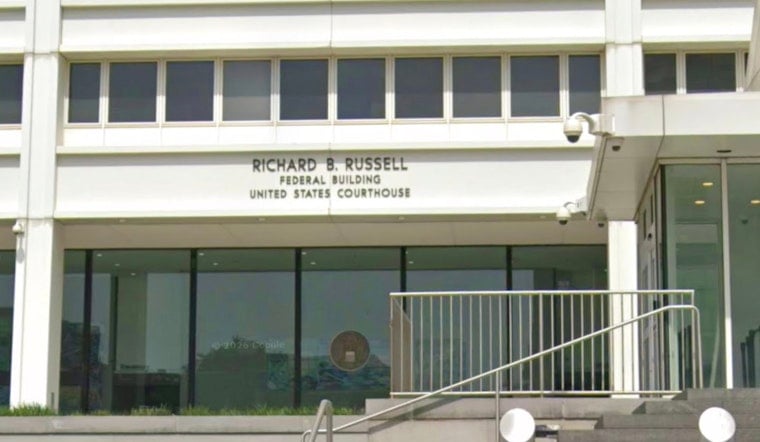
Before trial, Judge Grimberg denied defense motions to suppress physical evidence and statements, and to dismiss the indictment on speedy trial grounds, according to court records reviewed via GovInfo. That October 2025 ruling adopted a report and recommendation from Chief U.S. Magistrate Judge Russell G. Vineyard, clearing the way for the case to proceed to a four-day trial in December 2025 that ended in Williams's conviction.
A Tougher Federal Penalty for Repeat Offenders
U.S. Attorney Theodore S. Hertzberg, who was appointed in September 2025 to lead the Northern District of Georgia, cited the sentence as a warning that repeat violent offenders who arm themselves will face steep federal penalties, the Justice Department said. Hertzberg oversees federal prosecutions across 46 north Georgia counties.
The 14-year sentence reflects a change in federal law. Under 18 U.S.C. § 922(g), the statutory maximum for felon-in-possession charges was raised from 10 years to 15 years in June 2022 after passage of the Bipartisan Safer Communities Act, according to the Detroit Defense Law Guide. Unlike Georgia state sentences, federal prison terms carry no parole — meaning Williams must serve at least 85% of his sentence before becoming eligible for supervised release, per Atlanta Federal Defense.
It remains unclear whether DeKalb County prosecutors will pursue separate state charges tied to the Decatur shooting that injured a woman, since federal double-sovereignty rules would permit dual prosecutions. No such charges have been announced.





