

























































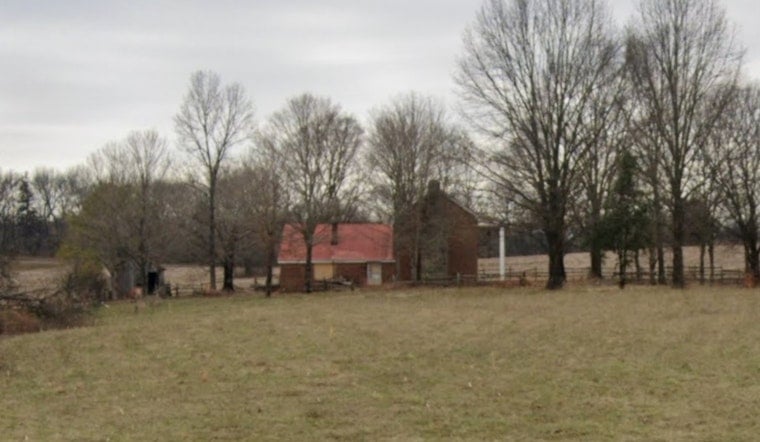
A nearly decade-old plan to save one of Sumner County's oldest surviving pioneer homes is finally moving forward, as county officials debate whether to hand the historic Latimer-Brown House over to a nonprofit or keep it under county control through a long-term lease. The 0.8-acre property sits at 212 Hunters Lane in Hendersonville, right next to the Liberty Creek elementary, middle, and high school campus. No major physical restoration has started yet, and which legal path county leaders choose could determine whether that finally changes.
Sumner County held a public town hall on August 3 to weigh proposals for the house's future, including County Mayor John Isbell's draft lease agreement, draft quitclaim deeds, and the proposed role of the nonprofit Friends of the Latimer House, according to Sumner County Government. Local officials and residents gathered in Gallatin after years of delays to hash out exactly how the site should be managed going forward. As WZTV reports, one proposal on the table would put the Latimer-Brown House under the control of a nonprofit organization responsible for its preservation and operation going forward.
Two Competing Paths for Ownership
The central question dividing commissioners is procedural but consequential: should the county execute a quitclaim deed transferring the parcel directly to the Friends of the Latimer House, or should it retain ownership while negotiating a long-term lease with built-in safeguards? Per Citizen Portal, advocates for the quitclaim deed argue it offers the quickest route to launching repairs, while opponents worry about losing long-term county oversight of the historic site.
The debate isn't new. Bureaucratic delays between county officials and school board trustees stalled the transfer of estate money for years, and the county's own commissioners took legislative action back in October 2024 to try to break the logjam. That month, the Sumner County Board of Commissioners passed Resolution 2410-15, demanding the transfer of a $500,000 bequest — plus accrued interest — into a county-held restricted fund, and authorizing grant applications for structural repairs, according to the Sumner County Clerk's records.
A Bequest With Strings Attached
The money at the center of the dispute traces back to the late Hendersonville property owner William Brown, who died in 2017 and left $8.5 million to Sumner County — the largest financial gift in the county's history. Within that gift was a restricted $500,000 fund, designated in a codicil to his will, specifically meant to preserve his home and establish the William and Martha Brown Park. County Clerk records show Brown explicitly wanted his 18th-century home to serve as the centerpiece of a public memorial park bearing his and his wife's names.
The broader park project has also drawn state support. It previously secured a $625,000 Tennessee state grant intended to help develop the surrounding parkland and a public cross-country running facility, according to a Sumner Schools video posted on Facebook. That funding has added pressure on commissioners to resolve the land governance question before grant deadlines pass.
Committee Overhaul After Public Pressure
Amid the ongoing wrangling, the county has also moved to fix its oversight structure. Following public testimony from local preservation advocates, the Sumner County Board of Commissioners voted to trim and reconstitute the Latimer-Brown House ad hoc committee down to seven members, Citizen Portal reported. The committee had previously been mired in membership disputes and administrative stalls while waiting on legal reviews, a pattern advocates said had slowed progress for too long.
What's Hidden Inside the Walls
Built in the late 1790s by Charles Latimer, son of Revolutionary War veteran Colonel Jonathan Latimer, the house is recognized as one of the oldest surviving pioneer structures in Sumner County, according to Main Street Media of Tennessee. Colonel Latimer and his family had migrated to the Tennessee frontier from Connecticut in 1790, following the Revolutionary War, and the surrounding land was once part of the original 640-acre tract the family settled.
Preservation experts brought in with county approval got a rare look at that history during architectural deconstruction work earlier this year. The work, done in early 2026, revealed original late-1790s hand-hewn logs, early cement chinking, and historic wallpaper hidden behind 20th-century interior wall paneling, the outlet's reporting notes. Cost estimates presented to the ad hoc committee in May 2025 identified hand-hewn log repair and stabilization as the single largest expense the restoration will require, with contractors also weighing in on timber testing, plaster, wide-plank flooring, and window restoration, per Sumner County Government records.
With the money designated, the state grant in place, and a reorganized committee now in charge of oversight, the remaining obstacle is the legal structure itself. Whether the county ultimately signs over the deed or opts for a lease, Hendersonville residents are still waiting for the fifth generation of restoration talk to finally translate into hammers on hand-hewn logs.




