

























































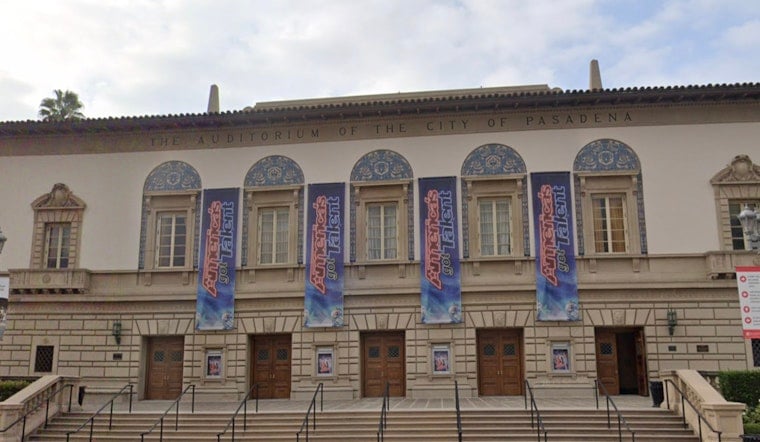
A 28-year-old freestyle rapper from Hialeah who beat childhood leukemia is now chasing a spot in the America's Got Talent semifinals, after his June audition earned him a rare Golden Buzzer from judge Howie Mandel. Luke Taleno performed his original song “Seat to Stage” during the Season 21 auditions, and he dedicated personalized lyrics to judge Sofía Vergara before Mandel hit the buzzer that fast-tracks a contestant straight past the rest of the judging panel.
Taleno's path to that stage began at Nicklaus Children's Hospital near South Miami, where he was treated for nearly two years after being diagnosed with acute lymphoblastic leukemia at age 13, according to the Miami Herald. It was during that hospital stay that Miami musician Pitbull visited patients in his wing, an encounter Taleno has said gave him “a vision of a future.” The Herald reports that a Make-A-Wish grant later gave him a custom recording studio inside his family's home, the same setup where he began shaping the songs that would eventually carry him to national television.
From Cuba to Hialeah, Learning English Through Hip-Hop
Taleno migrated with his family to Hialeah at age 3, and he says he learned English by listening to Eminem and 50 Cent, a detail that helps explain why his music moves fluidly between English and Spanish verses. Hialeah's population is roughly 95% Hispanic or Latino, according to Census Reporter, among the most culturally concentrated Hispanic municipalities in the country, and Taleno has leaned into representing that identity in his lyrics rather than away from it. His Vergara tribute during the audition fit that same instinct: he said Vergara is “an absolute legend” and that he wanted to pay homage to her, per the Herald.
The Golden Buzzer moment wasn't entirely a surprise to Taleno himself. He had predicted he would receive one the following year after meeting Simon Cowell outside the America's Got Talent studios in Los Angeles, where Cowell told him he would remember him. That promise, made roughly a year before his audition, closed the loop when Mandel pushed the buzzer on his behalf.
A Hialeah Homecoming Circuit
Long before the national spotlight, Taleno was building a grassroots following at home. He released the locally themed track “Welcome to Hialeah” in 2024 and has performed at community events including the city's 13th Annual Back to School Festival this month, alongside a July 4 headlining set at Milander Park. He's also thrown out the first pitch at a Marlins game at loanDepot park, performed at FIFA Fan Fest, and worked with Only in Dade, the South Florida digital outlet whose social presence exceeds 3 million followers and functions as a major regional pop-culture aggregator.
During his time in the AGT audience, Taleno also supported New Orleans street performer Jourdan Blue, who went on to finish in third place on the show. Taleno himself is set to return to the live rounds on August 18, competing for a place in the semifinals, where the Herald reports he plans to debut a surprise, triumph-themed original song written specifically for that stage.
What Winning Would Actually Pay
America's Got Talent advertises a $1 million grand prize, and Taleno has said he plans to use any winnings to pay off debt and invest further in his music, with hopes of eventually helping other children carve their own path in the industry. But the advertised prize doesn't translate to an immediate seven-figure check: according to Forbes, the prize is typically structured as a 40-year annuity paying $25,000 a year before taxes, or as a lump-sum cash option usually worth around $300,000 before taxes. That distinction matters for a performer who has described balancing several jobs to support his family while releasing independent music.
The show's finale is set for September, meaning Taleno's August 18 live performance could determine whether he advances toward that payout structure at all. Miami-Dade County Public Schools has already claimed him as one of its own, publicly highlighting the Hialeah Senior High School alumnus as an example of public school creative talent following his national broadcast. For a performer whose music once grew out of chemotherapy-ward recordings, the acknowledgment closes another loop between where he started and where he's now headed.





