

























































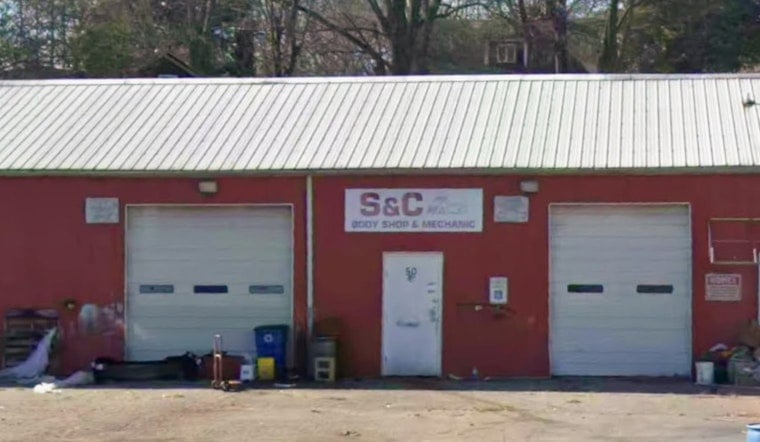
A Hickory auto repair shop that investigators say doubled as a front for a methamphetamine and fentanyl ring has cost its owner two decades of his life. Ronald Corrales-Arrieta, a 48-year-old Costa Rican national who operated S & C Body Shop at 50 12th Street SE, was sentenced to 20 years in federal prison followed by five years of supervised release, with no option for federal parole.
The announcement came Tuesday from U.S. Attorney Russ Ferguson's office, which said Corrales-Arrieta led a conspiracy to distribute methamphetamine and fentanyl out of the Catawba County shop. The case was also announced by the U.S. Attorney WDNC on social media, which described the sentence as the outcome of a Homeland Security Task Force investigation into the drug distribution conspiracy. S & C Body Shop is now listed as permanently closed following the federal enforcement action.
A Grim Discovery Started the Investigation
The case traces back to April 15, 2023, when Hickory Police Department officers responding to a missing person call found a deceased man inside the body shop, surrounded by hundreds of grams of fentanyl, according to the same DOJ account. That gruesome scene became the starting point for a much larger federal probe into who was running drugs through the shop and how far the operation reached.
After the discovery, federal agents and local officers deployed a confidential informant who made multiple controlled purchases of methamphetamine and fentanyl directly from the ring, per the DOJ. Those buys helped investigators build the conspiracy case that would eventually reach Corrales-Arrieta himself.
Running the Ring From Costa Rica
Federal prosecutors said Corrales-Arrieta personally made several drug sales, recruited undocumented Mexican nationals in the U.S. to handle local transactions, and managed the operation remotely while living in Costa Rica. The current legal status of those recruited associates remains an open question, and it is not yet clear what, if any, immigration proceedings Corrales-Arrieta himself will face once his prison term concludes.
Corrales-Arrieta was taken into federal custody on October 18, 2024. A search of his Hickory business at that time turned up two firearms, including a Bushmaster AR-15 rifle and a Taurus 9mm handgun, according to the DOJ.
Homeland Security Task Force Behind the Bust
The investigation was carried out by the federal Homeland Security Task Force, which combined resources from the U.S. Department of Homeland Security and the Catawba County Sheriff's Office, with prosecution handled by federal attorneys in Charlotte. That task force operates under Executive Order 14159, an administrative framework built to marshal federal and local law enforcement against transnational criminal organizations and illegal drug networks.
The same day Corrales-Arrieta was sentenced, the U.S. Attorney's Office in Charlotte announced a separate 15-year federal prison sentence for a Chinese national convicted of laundering drug trafficking proceeds, also a product of a Homeland Security Task Force prosecution. Taken together, the two cases show federal authorities hitting different points along the same transnational drug supply chains active in western North Carolina.
Part of a Regional Crackdown
Corrales-Arrieta's 20-year sentence fits into a broader pattern across the Western District of North Carolina, where federal prosecutors have been securing double-digit prison terms for fentanyl traffickers in recent weeks. That trend includes a 14-year sentence for a Morganton dealer tied to a Catawba and Burke County distribution case, and an 11-year sentence handed down against an Asheville fentanyl ring leader earlier this month.
The cases underscore how federal task forces have zeroed in on western North Carolina as a hub for synthetic opioid trafficking, with small commercial storefronts sometimes serving as unlikely fronts for international drug pipelines. For now, the origin point of this particular case remains the Hickory body shop where a man's fatal overdose first drew police attention more than three years ago.





