

























































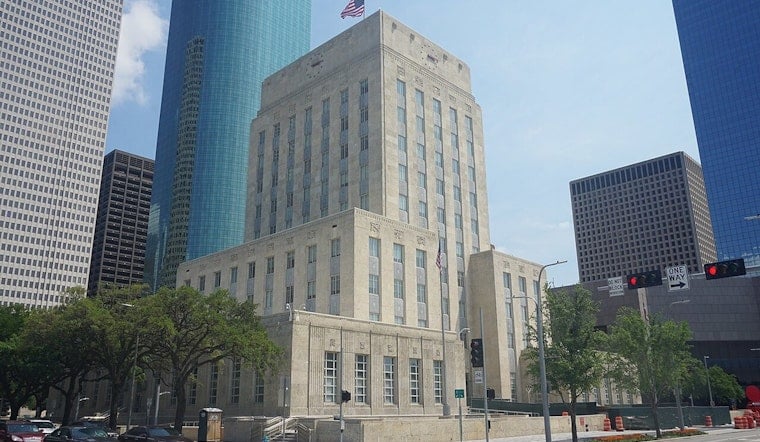
Houston City Council approved the Fourth Ward Tax Increment Reinvestment Zone's $15.2 million budget this week, but not before attaching a new string: the zone must now get the city's housing director to sign off before buying or developing property for affordable housing. The zone, which covers Freedmen's Town west of downtown inside Loop 610, plans to spend $8.3 million on affordable housing over the next five years.
The change came after Council Member Julian Ramirez delayed the budget vote, arguing that the Fourth Ward TIRZ lacked a coherent, detailed affordable housing plan, according to Community Impact. Ramirez told council that three TIRZs currently handle affordable housing work without coordinating with the city's Housing Department at all, even though TIRZ infrastructure projects already go through the city's Public Works Department. His proposal required Fourth Ward's affordable housing work to comply with and align with city requirements going forward.
Rather than force the Fourth Ward TIRZ board to re-vote its entire budget, City Council instead amended the ordinance governing affordable housing coordination with the Housing Department, per the same report. Assistant City Attorney Gwen Tillotson-Bell said the city could document that endorsement through the housing director rather than reopening the TIRZ's budget itself, noting the agreement required changing the city ordinance rather than the TIRZ budget. The Fourth Ward TIRZ board would otherwise have had to vote separately on any budget amendment.
A Precedent Already Set By Midtown
The push for tighter oversight echoes a bigger scandal across town. In October 2025, Mayor John Whitmire overhauled leadership at the Midtown Redevelopment Authority after felony corruption charges and news investigations found $22 million in affordable housing funds had gone toward an office building while more than 450 housing lots sat vacant in Third Ward for two decades, according to the Houston Chronicle. Midtown's TIRZ already works with the city's Housing Department on affordable housing for all of its lots, making it something of a model for the standard Ramirez wants applied elsewhere.
That episode set a citywide precedent, prompting Council to demand similar oversight of other independent tax zones. It also lands amid a broader financial debate: an analysis of City Controller data in January found Houston diverted more than $200 million in municipal property tax revenue into its network of reinvestment zones in a single year, a figure Hoodline reported sparked a City Hall showdown over whether that spending shortchanges general city services.
What The Zone Has Already Bought
The Fourth Ward TIRZ, formally Tax Increment Reinvestment Zone Number Fourteen, was created by the City of Houston in June 1999 with a 30-year term set to expire in 2029, intended to revitalize the area through public infrastructure, historic preservation, and affordable housing, according to city budget documents. In January 2025, the Fourth Ward Redevelopment Authority closed on $30 million in Series 2024 contract revenue bonds to fund capital projects and land acquisitions, including site purchases along Andrews and Saulnier streets, city records show. The zone's Street Reconstruction Project Phase III entered construction in the fourth quarter of fiscal year 2025 and is projected to finish by the fourth quarter of fiscal year 2026.
State law gives zones like this one their spending authority. Under Chapter 311 of the Texas Tax Code, Texas municipalities can use captured property tax increments specifically for affordable housing, public infrastructure, and historic building rehabilitation, per the Texas Comptroller of Public Accounts. Houston's Housing and Community Development Department has leaned on that authority too, outlining in its March annual action plan that TIRZ Affordable Housing Set-Aside funds remain a primary local funding source alongside federal CDBG grants and tax credits.
Why Freedmen's Town Carries Extra Weight
The stakes in this particular zone go beyond budget mechanics. Freedmen's Town was settled in 1865 by roughly 1,000 formerly enslaved people, making it Houston's oldest African American neighborhood and a historical cultural hub built with its own churches, schools, and hand-paved brick streets, according to The Cultural Landscape Foundation. The neighborhood was placed on the National Register of Historic Places in January 1985 with 530 historic structures identified, but private development and gentrification have since demolished roughly 79 percent of those buildings over the following four decades, the Houston Defender has reported.
Preservation work continues alongside the housing debate. Hoodline reported in June that plans were approved for a new Fourth Ward living history pavilion designed to house salvaged Freedmen's Town bricks, temporarily storing more than 20,000 historic hand-made bricks as part of a $5.7 million heritage campus project. That effort sits alongside a separate push covered by Hoodline in July, when Mayor Whitmire toured the fire-damaged Harper School as the city weighed how to save historic structures in the adjacent Sixth Ward.
For now, the immediate change is procedural rather than financial. The Fourth Ward TIRZ's $15.2 million budget stands as approved, and its $8.3 million affordable housing commitment over the next five years remains intact. But every future property acquisition or development tied to that money will now need the city housing director's endorsement first. Community Impact reported that the Fourth Ward TIRZ had not responded to a request for comment by publishing time.





.jpg)