

























































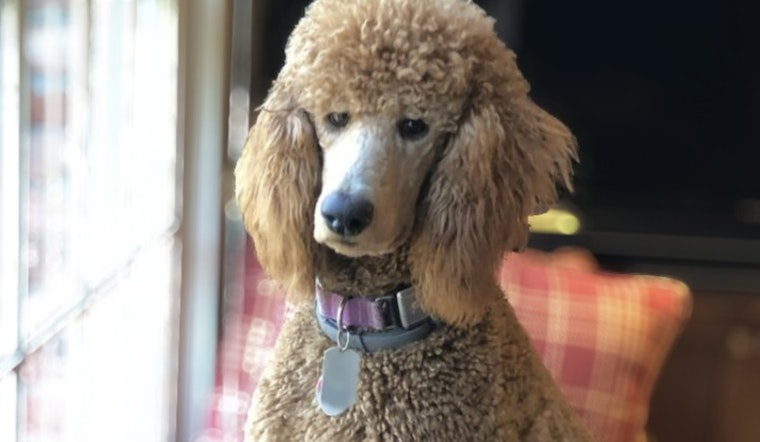
Celeste Henry-Kemper spent two weeks driving supplies through a smoldering downtown Manhattan after the September 11, 2001 terrorist attacks, and she spent years afterward avoiding crowds because of what she saw there. Today the 66-year-old former National Guard worker from Harlem credits a poodle named Titan with pulling her out of that isolation. She calls him a lifesaver.
Henry-Kemper was activated by her National Guard unit in upper Manhattan on the day the World Trade Center towers burned and fell, according to the New York Post. She helped clear the Church Street post office near the destroyed site, made repeated trips to the morgue, and described the scene bluntly: “It was horrible down there,” she said, adding that debris was everywhere and it looked like a war zone. The following year she was sent to Kuwait, where she served for a year along the border with Iraq.
The physical toll came fast — sinusitis, acid reflux, a mild form of lupus, and eventually two hip replacements. The psychological toll took longer to name. Henry-Kemper developed post-traumatic stress disorder and grew more reclusive over time, avoiding crowded places long before she ever met Titan, even while working at a substance-abuse treatment program at Kingsborough Psychiatric Center in Brooklyn.
A Nationwide Health Crisis Behind One Woman's Story
Henry-Kemper's dual burden of respiratory illness and PTSD mirrors a pattern seen across the responder community. Peer-reviewed research on the federal World Trade Center Health Program found that aerodigestive conditions such as chronic sinusitis and acid reflux account for 56 percent of certified member illnesses, while mental health conditions, led primarily by PTSD, make up roughly 22 percent, according to research published on PMC. As of late 2025, more than 136,000 emergency responders and survivors were enrolled in the program nationwide, with over 90,000 certified for at least one 9/11-related condition, per the Citizens for the Extension of the James Zadroga Act. Congress permanently extended healthcare monitoring and treatment funding for those responders through the year 2090 under the James Zadroga 9/11 Health and Compensation Reauthorization Act, the CDC notes — a commitment that echoes Hoodline's earlier report on a fuel tanker driver's cancer fight.
Henry-Kemper applied to K9s For Warriors, and in 2024 she was paired with Titan, a specially trained poodle. The nonprofit provides trained service dogs at no cost to veterans suffering from what it calls the wounds of war, per the same Post report. K9s For Warriors was founded in 2011 in Ponte Vedra, Florida, by Shari Duval after her son developed severe PTSD following two tours in Iraq, and the organization rescues the majority of its service dogs from high-kill animal shelters, according to Charity Navigator. The nonprofit now operates campuses in Florida and Texas and, as of March 2024, had paired its 1,000th veteran with a trained service dog, providing each dog along with a three-week residential training program at no cost, per DVM360. Training and equipment costs for a single dog-and-veteran team can reach $25,000, the outlet reports.
How Titan Interrupts a Panic Attack
Henry-Kemper now takes Titan everywhere, including on a cruise ship. She leans on him to get up from a seat, and when panic sets in, she holds him until she calms down. Titan serves as a buffer during her panic attacks and, she says, opens conversations between her and other people she would otherwise avoid. “Titan is therapeutic and he helps me socialize more,” she said, per the Post's account of her experience.
That anecdotal relief lines up with what researchers have documented in service dogs trained for combat and disaster trauma. A 2020 study from Purdue University's OHAIRE Lab identified disrupting anxiety and interrupting panic attacks or nightmares as the most frequent and effective tasks performed by PTSD service dogs, with the animals trained to physically buffer handlers in public and anchor them during panic episodes, according to Purdue University. A separate nationwide clinical trial published in July 2024 in JAMA Network Open by researchers from Purdue and the University of Arizona found that post-9/11 veterans paired with K9s For Warriors dogs had significantly less severe PTSD symptoms and lower odds of meeting diagnostic criteria for the disorder than veterans on a waitlist, per the University of Arizona's summary of the three-month study, which evaluated 156 post-9/11 veterans.
A Legislative Shift That Made Dogs Like Titan Possible
Before August 2021, the Department of Veterans Affairs provided veterinary health insurance support only for service dogs assisting veterans with physical disabilities such as blindness or mobility impairment, excluding mental health conditions entirely, according to VA Atlanta Health Care. That changed when President Joe Biden signed the bipartisan Puppies Assisting Wounded Servicemembers for Veterans Therapy Act, establishing a five-year pilot program directing the VA to provide canine training therapy to eligible veterans diagnosed with PTSD and authorizing $10 million for VA medical centers to partner with accredited service dog organizations, the American Legion reported at the time.
Federal rules still draw a sharp legal line between service dogs and emotional support animals. Under 38 CFR 1.218(a)(11) and Title II/III of the Americans with Disabilities Act, a service animal is defined strictly as a dog individually trained to perform specific tasks for a person with a disability, while emotional support animals provide comfort without that task training and lack the same public access protections, according to the U.S. Department of Veterans Affairs. That distinction is why formal accreditation through organizations like K9s For Warriors matters so much for veterans trying to move through public life again.
For Henry-Kemper, the outcome is simpler than the policy history behind it. She says she is grateful she was able to get Titan, and that he changed her life. The pairing is part of a broader trend Hoodline has tracked in recent weeks, including a recent Orlando graduation of 13 service dogs for disabled veterans and children.





