

























































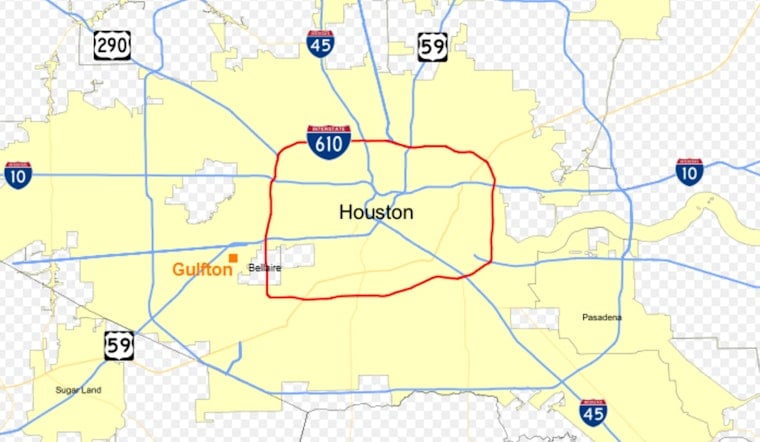
Gulfton was mostly farmland until the 1960s, when Houston's oil shocks sent young workers pouring into the city and developers rushed to build apartment complexes to house them. Decades later, that same stretch of apartments south of the Southwest Freeway and outside the West Loop has become home to roughly 40,000 people who speak more than 50 languages, earning the neighborhood a nickname: Houston's Ellis Island.
The transformation traces back to a housing boom built for a very different population than the one Gulfton serves today. According to the Houston Chronicle, apartment complexes in Gulfton were built quickly to serve young oil-industry professionals, and some complexes even marketed specifically to single men, with certain buildings prohibiting families altogether and adults-only rules keeping the neighborhood geared toward bachelor renters. When the oil bust hit, thousands of those units emptied out, and landlords slashed rents to fill vacancies.
That shift opened the door for a new wave of residents. Gulfton apartment landlords began advertising units in Spanish and dropped their adults-only rules once oil workers left the area, per the Chronicle's reporting. The neighborhood went on to receive families fleeing poverty in Mexico and civil wars in Central America, along with families from Afghanistan, Ethiopia, Vietnam and Pakistan, and its population nearly doubled between 1980 and 2000.
A Dense, Vibrant Immigrant Gateway
The legacy of that rapid, density-first construction is still visible today. A 2017 analysis from the Kinder Institute for Urban Research found Gulfton is the most densely populated neighborhood in both Houston and Texas, holding between 14,600 and 17,500 residents per square mile — a density level that exceeds major cities like Chicago, Boston and Philadelphia. A separate housing analysis found that single-family detached homes make up less than 6 percent of housing in Gulfton's 77081 ZIP code, while large multifamily complexes account for over 90 percent of local residential units, compared with Harris County's overall 61 percent single-family home average.
That density shows up block by block. Napoleon Square alone has nearly 1,400 units, and with most of Gulfton's 40,000 residents lacking yards, many grow gardens and fruit trees on their second-floor balconies instead. The neighborhood today includes ethnic grocery stores, cafés, restaurants and nightclubs, along with a story trail featuring 12 murals that reflect its layered immigrant history.
Not every corner of that history was positive. Some Gulfton apartment complexes became hubs for vice as the neighborhood absorbed waves of new arrivals, the Chronicle reports, even as it simultaneously grew into a genuine cultural anchor for immigrant families building new lives in the city.
Community Center Fills Gaps Left By Sparse Green Space
With so little private outdoor space, the Gulfton Community Center has become a critical gathering point. The center runs ESL classes, keeps children's books in several languages on its shelves, and provides newly arrived seniors a place to gather — services aimed squarely at a population still adjusting to a new country and, often, a new language.
The neighborhood's only real green space is Burnett Bayland Park, a 32-acre park off Chimney Rock that includes fields for soccer and cricket. Sandra Rodriguez, a lifelong Gulfton resident and advocate who formerly served as president of the Gulfton Super Neighborhood Council, said the park is essential for youth to find a safe place to release daily stresses. Rodriguez has urged continued investment in Gulfton alongside greater attention to residents' own perspectives on what the neighborhood needs.
That advocacy has deep roots. The grassroots group Madres del Parque was founded in 2016 by local mother Maria Hernandez and other neighborhood women, who organized to clean up Burnett Bayland Park, plant community gardens and push for safety lighting, according to the Houston Parks Board. Their organizing predated the official government investment that has since followed.
Public Investment Catches Up To Grassroots Push
That investment has been substantial in recent years. Harris County broke ground in 2025 on the first phase of a multimillion-dollar Burnett Bayland Park revamp, and Harris County Commissioners Court officially accepted an $11.35 million grant from Texas Parks & Wildlife to support the park's comprehensive expansion, according to Harris County Precinct 4. The revamp will bring a new community center, retention pond, upgraded skating areas, sports facilities and garden spaces to the site.
Commissioners Court also approved an $8 million grant from the Texas Health and Human Services Commission to construct the county's first Crisis Respite Facility for Children Without Placement, which will be located at Burnett Bayland Park, per Precinct 4's announcement. The severe heat pressures facing the neighborhood add urgency to the park expansion: a heat-mapping campaign by NOAA and local researchers identified Gulfton as the hottest neighborhood in Houston, recording localized temperatures up to 17 degrees Fahrenheit higher than cooler parts of the city due to low tree canopy and heavy concrete cover, according to the Houston Advanced Research Center.
The park upgrades follow other recent public commitments to the neighborhood. Hoodline previously reported on transit investment after the Federal Transit Administration awarded a $1.2 million grant to METRO for transit-oriented housing and infrastructure planning in Gulfton, where residents rely on public transit at five times the rate of the average Houstonian. METRO's long-range plans include a proposed 4.1-mile extension of the METRORapid Silver Line Bus Rapid Transit route from Westpark/Lower Uptown south into Gulfton along Hillcroft and Bissonnet streets.
The current wave of funding builds on a policy push that began nearly a decade ago. Former Houston Mayor Sylvester Turner launched the city's Complete Communities initiative in April 2017, selecting Gulfton as one of five original pilot neighborhoods designated to receive targeted municipal planning and private investment. Under that framework, the City of Houston Housing and Community Development Department funded construction of South Rice Apartments, a 115-unit complex that set aside 86 units as affordable housing for households earning 80 percent or below the Area Median Income.
The Chronicle's account of Gulfton's history was reported by Jhair Romero, host of Houston Explained, a twice-weekly newsletter designed to answer questions about Houston. Romero, who has called Houston home since 2015 and joined the Chronicle newsroom as a full-time reporter in December 2022, was part of a team that won first place in investigative reporting at the 2024 National Headliner Awards.





