

























































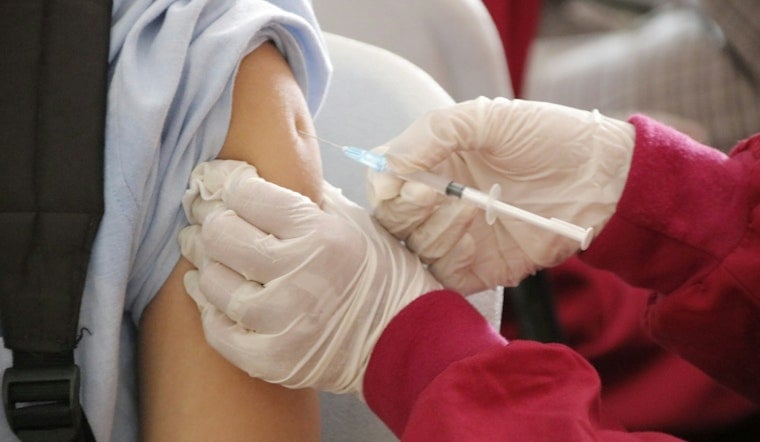
Illinois kindergartners entering classrooms this fall carry a vaccine exemption rate nearly double what it was during the 2023-24 school year, with 4.2% of incoming students claiming at least one exemption compared to 3.6% the previous year. The increase comes as measles cases nationwide have soared to their highest levels since the disease was declared eliminated in the United States in 2000, and as families and school nurses alike try to sort fact from confusion following a new federal executive order on childhood vaccines.
State epidemiologist Dr. Brian Borah told NBC 5 Chicago that Illinois has seen religious exemptions climb steadily over the past several years. Religious exemptions among Illinois students numbered 14,644 during the 2023-24 school year, then rose to 18,577 the following year, and reached 22,994 last year, according to the outlet's reporting. Borah said the state is exploring every avenue to address vaccine hesitancy and exemptions statewide.
A Confusing Environment for Parents
Much of the current unease traces back to August 10, when President Trump signed Executive Order 14420, titled “Delivering Gold Standard Childhood Vaccine Recommendations for Americans.” The order calls for narrowing the list of universally recommended childhood vaccines from 17 to 11 and directs federal health officials to draft plans splitting the combined MMR shot into three separate doses given at separate doctor visits, according to Healthcare Dive. The order drew sharp criticism from pediatricians and public health experts in Illinois, per NBC 5 Chicago's report, and the outlet noted that no scientific evidence supports splitting the MMR vaccine into separate shots. The administration has said the order is meant to give parents choices.
“Right now, it's a very confusing environment, and there is a lot of conflicting information,” Borah said, according to the station's report. Complicating matters further, standalone monovalent vaccines for measles, mumps, and rubella individually have not been manufactured or available in the United States since 2009, when Merck discontinued single-disease shots in favor of the combined MMR formula, per The Washington Post. That means the executive order's call to split the shot cannot be implemented in doctors' offices anytime soon, since reintroducing single-disease vaccines would require new manufacturing lines and fresh regulatory review.
Illinois Says It Answers to State Law, Not the White House
Despite the federal directive, Illinois' current vaccine recommendations remain tied to the schedule published by the American Academy of Pediatrics, not to federal or national guidance, the outlet's report notes. The Illinois Department of Public Health, or IDPH, provides vaccine guidance based on science and has a mechanism to make an independent vaccine recommendation regardless of what changes at the federal level. That independent authority was reinforced in May 2026, when Illinois lawmakers approved the state's own disease-guidance framework, granting state health officials statutory backing to issue independent communicable disease guidance tailored to local conditions.
Illinois' school entry rules also remain governed by state statute rather than federal policy. Under Section 27-8.1 of the Illinois School Code, students must present proof of required immunizations or an approved exemption by October 15 each school year, and local school authorities are legally required to exclude non-compliant students until that proof is presented, per FindLaw. Illinois districts may set an earlier exclusion deadline if they provide parents 60 days' notice. General philosophical or moral objections to immunization are not legal grounds for exemption in Illinois; parents seeking a religious exemption must submit an official Certificate of Religious Exemption signed by both the parent, detailing specific religious grounds, and a licensed healthcare provider confirming that mandatory counseling on vaccine benefits and public health risks took place, under Illinois Public Act 99-0249.
Measles Numbers Climbing Nationally and Locally
The stakes behind those paperwork requirements have grown sharper this year. Two unvaccinated people died of measles in Pennsylvania, marking the first measles deaths of the year, according to NBC 5 Chicago's reporting, and an unvaccinated person was reported with a measles case in Kane County. Hoodline previously reported on that Kane County measles case as part of a national surge that has pushed U.S. measles cases to 2,777 as of August 21, the highest annual total since 1991, with 94% of cases occurring in unvaccinated or unknown-vaccination-status individuals.
Illinois itself has continued to see comparatively low measles case counts, and statewide childhood immunization rates sit above 95% for all students in almost all counties, though nine counties fall at or below that 95% threshold considered necessary for herd immunity. Students were vaccinated against measles at a 96.8% rate during the 2025-2026 school year, and immunization rates were higher than the previous school year for 10 of the 11 tracked vaccines. Illinois experienced its largest measles outbreak since 1990 between March and May 2024, when 67 confirmed cases occurred in the Chicago area, including 57 concentrated at a Pilsen migrant shelter, before public health workers administered more than 9,300 MMR doses to contain the spread, according to WTTW News.
State Expands Access as Exemptions Climb
IDPH has responded to rising exemption numbers by expanding how families can get their children vaccinated, increasing access to vaccines statewide through mobile clinics and expanding access for children to receive immunizations at pharmacies, per NBC 5 Chicago's account. State-regulated insurers are required to cover vaccines recommended by IDPH, and the department tracks school vaccination coverage on a public dashboard that parents and school officials can consult.
The debate over the federal executive order unfolds against a backdrop of broad medical consensus favoring the existing combined-vaccine schedule. The American Academy of Pediatrics published its 2026 childhood immunization schedule in January, continuing routine recommendations against 18 diseases and securing endorsements from a dozen major health organizations representing more than a million clinicians, including the American Medical Association, the American Academy of Family Physicians, and the American College of Obstetricians and Gynecologists, according to AAP Publications. For now, Illinois officials say that consensus, not the executive order, remains the basis for what happens in the state's classrooms this fall.





