

























































Southern Illinois is still dealing with the fallout from an oil operation that produced little fuel but a lot of pollution: repeated spills, thousands of regulatory violations and a company whose remaining wells are now under outside oversight. The mess is raising a familiar question in oil country: who pays when aging wells stop making money but keep making problems?
Indian Liberty LLC received more than 1,200 Illinois Department of Natural Resources violations after acquiring its wells, and a new Chicago Tribune investigation reports at least 11 spills in 2024. Most of the company’s wells were transferred to another operator in April, its Illinois business license was revoked in July, and KIEC Inc. was appointed receiver to preserve equipment and maintain regulatory compliance.
Florida corporate records list Brad Delp as Indian Liberty’s manager and place the company’s principal address in Vincennes, Indiana. Delp had worked as a Nazarene pastor and drug-and-alcohol support-group leader in southwestern Indiana before moving into the oil business, and the company eventually operated roughly 1,400 Illinois wells and attached flow lines.
A major spill traveled toward the Wabash
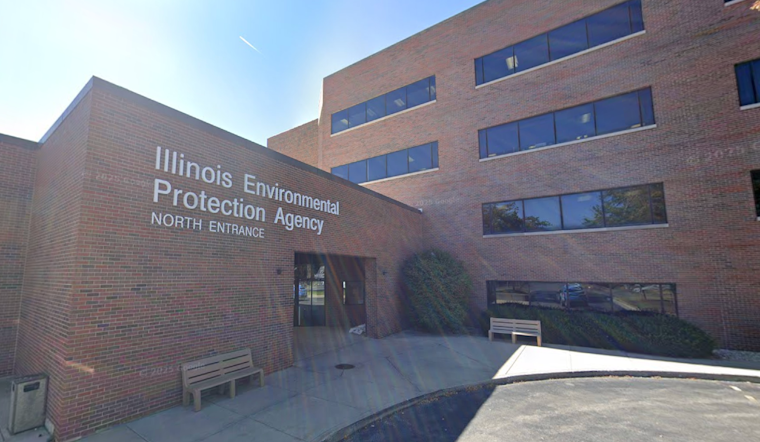
The most serious documented release began at Indian Liberty’s Boyd Facility in Lawrence County in March 2024, when about 250 barrels of crude oil and 1,000 barrels of saltwater brine escaped from an oil-and-water separation pit. According to the Illinois Environmental Protection Agency, the pollution moved through a roadside ditch, Muddy Creek and the Embarras River for roughly 11 miles before crews contained it about 1.5 miles upstream from the Wabash River.
That response involved hard booms, sorbents, vacuum trucks and the removal of contaminated vegetation and soil. Hoodline previously reported that unknown quantities of crude and brine remained in affected land and water after the initial containment effort.
Cleanup claims became a court fight
In April 2024, the Illinois Attorney General’s Office filed a civil complaint seeking an injunction, cleanup and recovery of the state’s response costs. The Illinois Attorney General’s Office also sought civil penalties of $50,000 for each alleged violation, plus $10,000 for every day the violations continued.
The complaint says Indian Liberty could be held responsible for petroleum released from the Boyd Facility and for the costs incurred by Illinois EPA in responding to the discharge. Those allegations remain part of a legal case; the filing itself is not a final judgment against the company.
Illinois already has thousands of wells needing attention
The Indian Liberty case lands on top of a much larger state cleanup problem. The Illinois Department of Natural Resources says more than 3,991 wells are covered by its Plugging and Restoration Fund, which handles abandoned and leaking wells through fees and forfeited bonds.
Illinois’ marginal wells can be especially difficult to justify economically: a state geological survey plan puts the average cost of plugging an Illinois well at about $40,000. That makes a low-producing well less like a hidden energy jackpot and more like an environmental liability waiting for the next owner, operator or taxpayer to inherit it.
Receivership is the latest turn
The Tribune reports that Indian Liberty transferred most of its wells after production declined sharply, while Illinois DNR plans follow-up and annual inspections of the company’s remaining 17 wells. KIEC’s appointment as receiver is intended to keep the equipment and wells from simply becoming unattended infrastructure while regulators sort out compliance and responsibility.
For Lawrence County, the immediate concern is preventing another sheen from reaching local waterways. The broader Illinois question is whether bonds, enforcement and operator transfers can keep a struggling oil field from becoming an orphan-well bill with a pollution history attached.





