

























































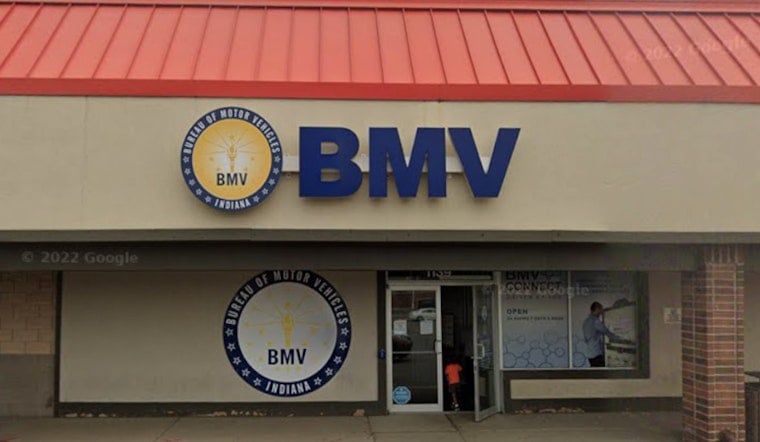
Two former Indiana Bureau of Motor Vehicles employees are facing criminal charges after investigators say they fabricated 388 written driving tests, allowing customers to obtain learner's permits and licenses without ever taking the exam. Gabriella Perry and Winters VanDyke are each wanted on active warrants, according to online court records, and both face charges that include bribery and official misconduct.
The scheme allegedly unfolded at the BMV's Midtown branch in Indianapolis, where Perry worked as a team leader starting in 2020, according to WTHR. Investigators with the Indiana Office of Inspector General found that Perry produced 334 of the fake tests herself, while Perry identified VanDyke as the person who paid her for issuing the fraudulent results. Perry admitted accepting payments ranging from $75 to $100 for the fake tests in mid-2024, while VanDyke told investigators he was paid a couple hundred dollars per test.
Court documents describe how customers who had repeatedly failed the written exam in other languages would suddenly pass in English at the Midtown branch, drawing suspicion from staff. Many of the customers involved were known to speak English as a second language, and the two customers investigators interviewed are from Haiti. Instead of sitting for the actual 50-question exam, which the state requires test-takers to pass with a score of at least 80%, those two customers reportedly received their permits after only a vision test and a photo.
How Branch Staff Noticed the Pattern
The alleged fraud came to light in 2024 after employees at the BMV's McCordsville branch noticed something odd: customers who had failed multiple written tests were suddenly showing up seeking permits or licenses. BMV representatives told WTHR it was unusual for a customer to take a written test at one branch and then obtain a license or permit at another, and that raised additional red flags for staff.
According to the BMV, tests are rarely administered before a branch opens because supervisor approval is required, yet investigators found multiple tests entered outside the Midtown branch's normal operating hours. The agency also confirmed that the fabricated exams were never printed on paper as required — instead, Perry and VanDyke allegedly created digital versions of the tests and entered them into the system as passed exams without actually administering them.
Perry was fired in 2024 for falsifying records connected to the fake tests, and VanDyke allegedly admitted in February 2026 to entering fake tests into the system. Perry told investigators she sometimes did not get paid for the tests she fabricated. The two interviewed customers said they were told they could call a person named Patrick to obtain a license for $500, though the dossier does not clarify Patrick's role or connection to Perry and VanDyke.
Charges Carry Felony Exposure
Under Indiana Code § 35-44.1-1-2, bribery is a Level 5 felony carrying a sentence of one to six years in prison and a fine of up to $10,000, according to Banks Brower LLP. Official misconduct, the other charge Perry and VanDyke face, is a Level 6 felony under Indiana Code § 35-44.1-1-1 — the lowest felony tier in the state's criminal code — punishable by six months to two and a half years behind bars, according to Keffer Hirschauer LLP.
The case adds to a string of credential-fraud prosecutions tied to Indiana's motor vehicle system over the past decade. In 2013, a joint operation by ICE Homeland Security Investigations, the U.S. Postal Inspection Service, and Indiana State Police — dubbed Operation Title Check — resulted in federal prison sentences ranging from 24 to 84 months for five people convicted of submitting false paperwork to the BMV, according to U.S. Immigration and Customs Enforcement. More recently, a federal judge in February 2025 sentenced an Indianapolis man to three years of probation after he admitted manufacturing and mailing more than 30,000 fraudulent driver's licenses and IDs from USPS collection boxes, per the U.S. Attorney's Office for the Southern District of Indiana.
Language Access and Oversight Questions Linger
The BMV already offers its written knowledge exam in 20 languages, including Haitian Creole, Spanish, Arabic and Burmese, a policy that traces back to a 2018 settlement of an ACLU lawsuit filed on behalf of a South Bend refugee support organization, according to the ACLU of Indiana. That accessibility framework makes the alleged Midtown scheme especially notable: rather than a language barrier being addressed through legitimate translated testing, court documents suggest intermediaries offered cash workarounds to customers who had repeatedly failed.
Public accountability around the case may be harder to track going forward. In July, the Indiana Office of Inspector General announced it would stop publishing investigative report summaries on its website, citing legal risks and due process considerations, shifting disclosures primarily to court filings and ethics commission proceedings, as reported by the Indianapolis Business Journal. It remains unclear how many of the 388 fabricated tests resulted in licenses that are still valid on Indiana roads today, or what steps the BMV has taken to invalidate credentials connected to the Midtown branch scheme. The BMV's Fraud and Security Enforcement division operates a confidential Submit a Fraud Tip portal for reporting suspicious motor vehicle transactions, though it is not stated in court records how the current investigation was first flagged to that unit.





