

























































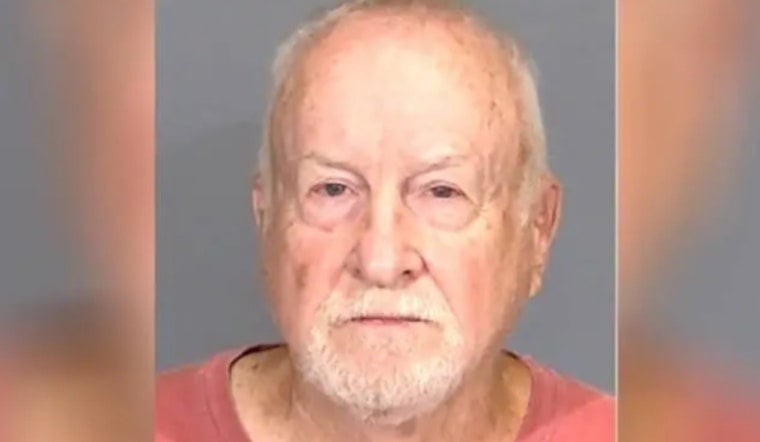
A 75-year-old Indianapolis photographer who spent years shooting weddings, sporting events and photos for a local church now faces 11 felony charges after investigators say he used artificial intelligence software to strip clothing from images of children as young as four or five. Harold Holland was arrested following a monthslong investigation that began after a cyber tip flagged more than 1,600 suspected files of child sexual abuse material tied to his account.
According to court documents cited by Fox 59, the Indianapolis Metropolitan Police Department received a cyber tip about an ArtSpace.ai user who had created 1,631 suspected CSAM files. Detectives traced the account to Holland and, on August 24, obtained a search warrant for his home in the 7000 block of Feather Run Circle. As reported by WTHR, the probable cause documents allege Holland uploaded regular photographs of at least 14 to 17 known young girls, ranging in age from 4 to 14, that he had sourced from his local church photography work as well as his commercial wedding and sports photo business.
Investigators say Holland used written prompts instructing the AI software to remove clothing from the images without making other changes, and that the resulting files paired the original clothed photos with the altered, unclothed versions. Many of the image files depicted individuals who appeared to be under 18, and Holland allegedly knew many of the victims through his photography work. One file, per court documents, showed three individuals who appeared to be minors holding a plaque naming a local high school.
Detectives Say Suspect Admitted to the Activity
Detectives interviewed Holland on August 25, according to court records, and he provided his address, phone number and email address, all of which matched the contact information listed in the original cyber tip. During that interview, the station's report indicates Holland acknowledged that several of the individuals depicted were under 18 and said he was curious about the activity. He described it as “fun and exciting,” and when asked why he had used ArtSpace.ai, he reportedly answered simply, “stupidly.” He was unable to provide any further explanation for his continued interest in the images.
The AI platform named in the court documents, ArtSpace.ai, is operated by Nico Engler IO, a software business based in Osterode am Harz, Germany, according to the company's own terms of service. That foreign registration illustrates one of the recurring hurdles facing local investigators: the platforms used to generate this kind of material are often based overseas, complicating digital forensics and search-warrant execution even after a suspect has been identified domestically.
Charges Carry Years in Prison and Registry Requirements
Holland faces 11 charges of child exploitation. Under Indiana Code § 35-42-4-4, child exploitation charges involving the creation or distribution of sexually explicit material depicting minors are classified as Level 4 or Level 5 felonies, according to Razumich & Associates, carrying sentences of one to six years in prison per count, fines up to $10,000, and mandatory sex offender registration. Indiana's statute explicitly covers computer-generated or AI-edited images depicting people who appear to be under 18, meaning synthetic, non-physical manipulation is prosecuted under the same child exploitation and child sexual abuse material laws as traditional abuse imagery, per Banks & Brower. Holland is expected to appear in court Monday at 1 p.m., according to online court records.
A National Surge in AI-Generated Abuse Reports
Holland's case fits into a rapidly growing national pattern. CyberTipline reports involving generative AI submitted to the National Center for Missing and Exploited Children grew from 4,700 in 2023 to 67,000 in 2024, and surpassed 400,000 in 2025, according to MissingKids.org. The organization documented more than 275 direct victims of generative AI child sexual abuse material across 2024 and 2025, and noted that offenders were frequently trusted acquaintances or community members with direct access to the children's authentic photos — a pattern that mirrors the allegations against Holland, whose church and photography work gave him access to years of images of local children.
A 2026 U.S. Senate Judiciary Committee oversight inquiry found that eight major tech platforms submitted more than 17 million child exploitation reports to NCMEC in 2025, accounting for 81% of all CyberTipline reports received nationwide. Those automated detection systems are what typically trigger cases like Holland's, funneling tips through NCMEC to specialized local units such as IMPD's Internet Crimes Against Children Unit, which coordinates digital forensics with traditional investigative work to build felony cases. As of August 2026, 46 states have enacted statutes explicitly criminalizing AI-generated or computer-edited CSAM, according to child advocacy organization Enough Abuse, with more than half of those laws passed within the last two years.
Part of a Broader Wave of Indiana Cases
Holland's arrest follows a string of similar cases across Indiana this year. Hoodline previously reported on a New Castle candidate jailed over AI abuse images, as well as a Lebanon high schooler accused of generating AI nudes of classmates and an NIU student charged over Grok AI-generated child abuse images. IMPD's Internet Crimes Against Children Unit has also been active in broader online predator investigations, including a January triple arrest tied to an online sting. Open questions remain in Holland's case, including the total number of victims affected and whether additional charges could follow as digital forensic analysis continues.




