

























































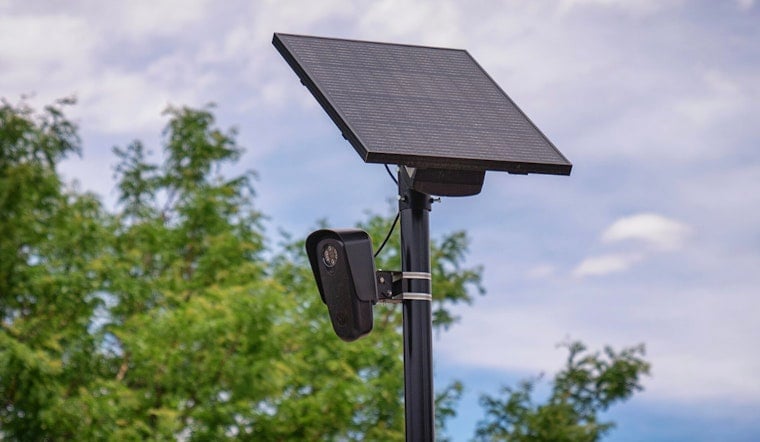
A Jefferson Parish Sheriff's Office deputy has been fired after admitting he used the agency's Flock Safety license plate cameras to search his former fiancée's plate several thousand times over several years. Sheriff Joseph Lopinto terminated the employee this week following an internal investigation, though officials say no criminal charges were filed because the woman does not consider herself a victim.
Deputy Says the Two Stayed Friendly
According to deputies cited by WGNO, the deputy told investigators on August 18 that the license plate belonged to his former fiancée and that he continued running the searches because the two remained on friendly terms after their relationship ended. His former fiancée reportedly confirmed she knew about the searches and had even asked that he keep his job, telling investigators she did not consider herself a victim. As reported by WWL-TV, the deputy admitted during questioning to running the searches thousands of times, and he was terminated the day after confirming that account.
JPSO officials called the former employee's actions regrettable and said misusing the camera system amounts to a serious violation of department policy, per deputies. The office also said privacy concerns surrounding the technology remain important, adding that it will keep striving to meet residents' expectations daily even as it continues deploying new and emerging technology to fight crime.
Kenner Chief Warns of Felony Charges for Tampering, Hours Before Firing
The timing landed the case in the middle of an already tense week for automated surveillance in Jefferson Parish. Just hours before JPSO announced the firing, neighboring Kenner Police Chief Keith Conley held a press briefing warning that anyone who tampers with or disables local Flock cameras faces felony prosecution and state prison time, the same WWL-TV report notes. Under Louisiana Revised Statutes 14:57.1, enacted in 2024, intentionally vandalizing, tampering with, or altering the focus or functionality of a crime camera system — which explicitly includes license plate readers — is a state crime, according to a criminal law update from Gilmer & Giglio.
Kenner Police lean heavily on the technology: the department operates more than 70 state-funded Flock cameras costing roughly $250,000 a year, which officers have credited with helping solve more than 100 criminal cases in early 2026, as Hoodline previously reported. JPSO has expanded its own surveillance footprint even further, pairing its Flock network with a Drone First Responder program that automatically launches rooftop drones from a fleet of more than 20 docked units to camera alert locations in under 90 seconds, according to entity background cited by Axios.
A National Vendor Scrambles to Curb Misuse
The firing also comes just six days after Flock Safety itself announced sweeping platform changes. On August 13, the company cut its default data retention window from 30 days to seven and mandated audit monitoring across all police clients, a shift the ACLU says was driven by misuse scandals nationwide; Flock's own internal data reportedly showed that 90 percent of legitimate police searches occur within a week anyway. The update, detailed by Police1, also introduced mandatory case-code tagging for every search by the end of 2026 and a proactive lockout feature designed to automatically suspend an officer's access when the system detects anomalous search patterns — a shift from previous safeguards that relied on voluntary department-level auditing.
The Jefferson Parish case fits a pattern researchers have been tracking for years. An ongoing national review by the Institute for Justice, updated in April, documented dozens of cases nationwide in which law enforcement officers misused license plate reader databases to track romantic partners, and it found that most of those cases surfaced through victim reports rather than internal agency audits. A national investigation cited by The 19th News found that at least 50 officers nationwide have been accused or charged with misusing Flock or similar technology, with more than half of those cases involving surveillance of romantic partners — a notable figure given that Flock systems are now used by more than 5,000 law enforcement agencies.
Not JPSO's First Brush With Surveillance Trouble
This isn't the parish's first run-in with the fallout from advanced policing technology. In 2025, Jefferson Parish agreed to a $200,000 legal settlement after deputies improperly relied on Clearview AI facial recognition software to arrest a Georgia man who had never set foot in Louisiana, holding him in jail for six days on a wrongful warrant tied to a 2022 false arrest, according to the Tenth Amendment Center. That history adds weight to the tension now playing out as JPSO leans further into automated tools while trying to police how its own officers use them.
No criminal charges were filed against the deputy, since his former fiancée declined to be treated as a victim. But the case underscores a broader challenge facing agencies like JPSO: preventing unauthorized personal searches when thousands of routine plate lookups happen daily without mandatory pre-approval, even as new vendor-side safeguards like Flock's lockout feature aim to catch that kind of misuse before it becomes a scandal.





.jpg)