

























































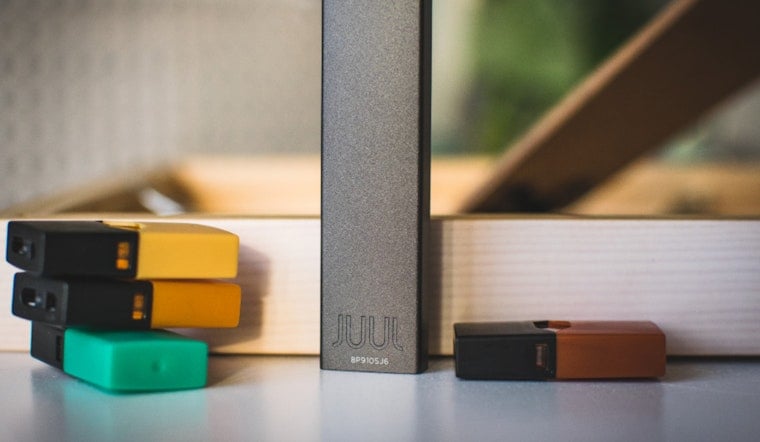
More than a decade after Juul Labs launched the vaping device that would come to define an entire youth nicotine panic, the U.S. Food and Drug Administration has allowed the company to sell an updated version with an optional age-verification system built in. The new device, which Juul plans to market under the name JUUL2, lets users require age checks through an online app before the e-cigarette will even unlock.
The federal go-ahead marks a striking turnaround for a company that laid off hundreds of employees and paid roughly $3 billion to settle government and private lawsuits over teen use of its products, according to the Associated Press. The app-based lock pairs Bluetooth-enabled devices with microchipped “PodID” cartridges designed to block counterfeit or non-age-gated pods, a system Juul first rolled out in the United Kingdom in September 2021 before bringing it to Canada, according to C-Store Dive. Juul reported that more than 32% of U.K. adult smokers who bought the JUUL2 system had completely switched away from combustible cigarettes within six months, real-world data the company used to support its case to U.S. regulators, per the same outlet.
A Company That Fell From $38 Billion to Layoffs
The approval lands at the tail end of a brutal financial collapse for Juul Labs. Tobacco giant Altria surrendered its entire 35% stake in the company in March 2023 — a stake it had originally purchased for $12.8 billion in 2018 when Juul was valued at $38 billion — writing the asset down to just $250 million before exchanging it for rights to Juul's heated-tobacco patents, according to a filing with the Securities and Exchange Commission. Altria later pivoted to acquire rival brand NJOY instead.
Juul's steep decline had a San Francisco footprint, too. The company's 29-story former headquarters tower at 123 Mission Street sold for under $100 million in debt in March, a 75 percent haircut from the $400 million Juul paid for the building back in 2019, as the company had already vacated the property amid its mass layoffs.
Juul Is No Longer Even the Top-Selling Vape
Perhaps most telling: Juul is no longer the top-selling e-cigarette brand in the United States, a title now held by Vuse, sold by Reynolds American, the maker of Newport and Camel cigarettes, per the Associated Press. Teens have shifted away from Juul specifically, and vaping among teens overall has experienced a wider decline. Company co-founder K.C. Croswaite said Juul plans to market the new system with a portfolio of flavors beyond tobacco and menthol targeted at adult nicotine consumers, according to the AP's reporting.
That marketing pitch arrives alongside a broader federal shift. In May 2026, the FDA approved the first fruit-flavored electronic cigarettes intended for adult smokers, a move the AP describes as a major policy shift that followed months of appeals to President Donald Trump from the vaping industry. Juul plans to market updated tobacco- and menthol-flavored cartridges under the new system, notably leaving out the mango, mint and creme flavors it discontinued in 2019 after those flavors were found to be favored by teens and drove most of the company's early sales.
What the FDA's Authorization Actually Means
Federal regulators have been careful to frame the decision narrowly. The latest FDA announcement is not an approval or endorsement, and the agency has authorized marketing for only 39 specific e-cigarette products nationwide as of July 2025 under its premarket tobacco product application pathway, according to an FDA press release. Under the 2009 Family Smoking Prevention and Tobacco Control Act, the agency weighs whether the population-wide public health benefit of helping adult smokers fully switch from combustible cigarettes outweighs the risk of youth initiation or non-smoker uptake — the FDA does not deem authorized devices safe, per the same release.
Company studies reviewed by the FDA found that smokers using Juul products were able to stop smoking at rates between 20% and 50% at the end of six weeks, though quitting rates varied based on the flavors and nicotine strengths used, the AP reports. Regulators determined that smokers who switch completely to Juul can reduce their exposure to carcinogens and other chemicals found in traditional cigarettes — but people who do not smoke should not use Juul or any other e-cigarettes, according to the agency's own guidance.
The Youth Vaping Landscape Has Already Moved On
Even as Juul re-enters the market with tighter controls, the youth vaping crisis that made the brand notorious has largely shifted elsewhere. Federal survey data show current e-cigarette use among middle and high school students fell from a peak of more than 5 million youth in 2019 to 1.44 million, or 5.2%, in 2025, according to the FDA. Public health officials credit regulatory enforcement and awareness campaigns for that multi-year decline.
But the products teens are actually using have changed dramatically. The 2024 National Youth Tobacco Survey found 55.6% of youth e-cigarette users chose disposable devices such as Elf Bar, Breeze, and Mr. Fog, while prefilled cartridge devices like Juul accounted for only 15.6% of middle and high school vaping, according to the Centers for Disease Control and Prevention. Teens who continue to vape mostly use unauthorized disposable e-cigarettes imported from China, the AP notes, which come in fruit and candy flavors that remain widely available despite lacking federal authorization.
Federal authorities have leaned harder into enforcement against that unauthorized supply chain. A joint task force between the FDA and U.S. Customs and Border Protection seized nearly $34 million worth of illegal e-cigarettes in a single coordinated operation in 2025, focusing on points of entry and mail facilities, according to the U.S. Department of Health and Human Services. Part of the legal fallout from Juul's earlier era has also funded public health efforts: the company's $462 million settlement with six states and Washington, D.C., over youth marketing claims has since helped pay for digital anti-vaping campaigns, including one Massachusetts effort aimed at young adults.





.jpg)