

























































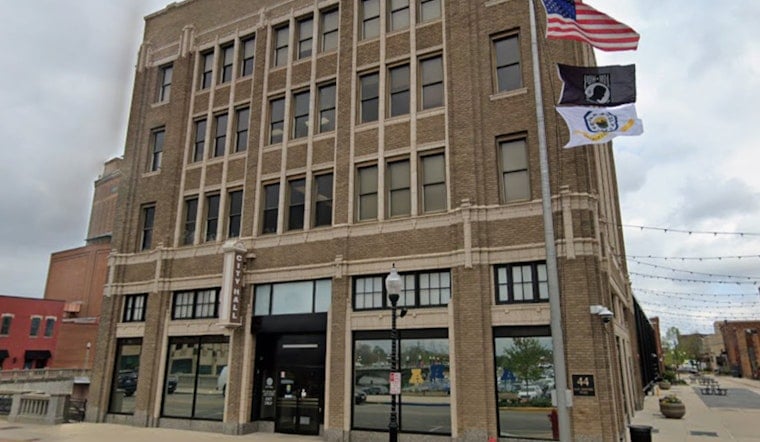
Homeowners, renters and business owners across Kane County who are still cleaning up after early-July's flash flooding now have a direct path to federal disaster loans, with in-person help available at outreach centers in Aurora and Elgin. Businesses can borrow up to $2 million for physical damage and economic losses, while homeowners and renters can qualify for up to $500,000 in home repairs and $100,000 for personal property losses. The U.S. Small Business Administration has declared Kane County a disaster area following the flooding that struck July 2 through July 4.
The City of Aurora announced the assistance this week, pointing residents to a Disaster Loan Outreach Center at the Prisco Community Center, 150 W. Illinois Avenue, open Monday, August 10 through Saturday, August 22. The center runs Monday through Friday from 9 a.m. to 7 p.m. and Saturday from 9 a.m. to 2 p.m. Federal recovery assistance is also available to affected residents and businesses in contiguous counties, including Cook, DeKalb, DuPage, Kendall and McHenry. Applicants can apply online at lending.sba.gov, by calling 1-800-659-2955, or in person at the outreach center, and the City of Aurora Emergency Management Agency is encouraging eligible residents and businesses to seek recovery support.
A Second Center Opens in Elgin
Northern Kane County residents will get their own dedicated stop later this month. A second Disaster Loan Outreach Center opens at the Elgin Township Building, 729 S. McLean Blvd., running August 17 through September 1, according to the Daily Herald. That location will keep the same weekday hours as Aurora's, 8 a.m. to 6 p.m. Monday through Friday, with Saturday hours from 9 a.m. to 2 p.m. Together, Aurora and Elgin represent the two population centers hit hardest by the flooding, and the newspaper's report notes both cities give county residents complete scheduling options for in-person loan help.
Kane County has the highest concentration of Hispanic residents of any county in Illinois, at 33.5% of its population, with most living in Elgin and Aurora, per Wikipedia. That demographic reality underscores why placing outreach centers directly in both cities matters for reaching working-class and Spanish-speaking households affected by the storms.
Deadlines and Loan Terms
Residents seeking help with physical damage must apply by October 5, while businesses filing for economic injury loans have until May 5, 2027. Reporting damage earlier is not a requirement for eligibility, and the seed announcement notes that residents who did not report damage or were not contacted during the field survey may still be eligible for assistance. Anyone who did already report damage during the county's earlier survey must still apply directly through the SBA.
The loans carry favorable terms designed to ease repayment. Fixed interest rates run as low as 2.875% for homeowners and renters without credit available elsewhere and 4.000% for small businesses and nonprofits, according to a filing in the Federal Register. Rates climb to 5.750% for homeowners and 8.000% for businesses that do have access to credit from commercial lenders. The Will County Emergency Management Agency notes that SBA disaster loans can also feature repayment terms of up to 30 years, keeping monthly payments manageable for affected homeowners and small business owners.
Building Back Stronger
Approved applicants have an added incentive to rebuild with future storms in mind. Ready Illinois says borrowers can qualify for a loan increase of up to 20% above their verified physical damage amount specifically to fund mitigation upgrades such as storm shelters, wind-rated doors and improved drainage, with those add-ons evaluated and approved directly by SBA damage inspectors.
The storms that triggered this declaration were extreme by local standards. Sugar Grove and the area near Aurora Municipal Airport saw more than 8 inches of rain, while Batavia received over 5.5 inches in less than 48 hours, according to Kane County Connects. Four distinct thunderstorm clusters moved through the region between July 2 and July 4. On July 4 alone, more than 4 inches of rain fell in under two hours across southern Kane County, exceeding local 100-year storm drainage design thresholds and washing out pavement on Scott Road between Kaneville and Big Rock — a stretch of damage the county's report ties directly to standard stormwater systems built for far smaller, 10- to 30-year storm events.
How the Federal Declaration Came Together
Before any federal aid was unlocked, the Kane County Office of Emergency Management moved quickly, launching an online damage assessment survey just two days after the storms, on July 6, to collect uninsured loss data and build the case for state and federal disaster requests, the Daily Herald reported at the time. That grassroots data-gathering effort helped demonstrate to state officials that uncompensated losses met federal criteria. Governor J.B. Pritzker then submitted a formal administrative request, and the SBA disaster declaration for Kane County was officially signed on August 5, the Federal Register confirms, noting that SBA declarations like this one are issued when damage levels fall short of the threshold for a major FEMA presidential disaster declaration.
This marks the second major SBA disaster declaration affecting Kane County in 2026. A separate severe weather declaration covering 16 northern Illinois counties followed storms on June 10 and 11, according to a release from Senator Dave Syverson's office, which points to a pattern of back-to-back severe weather events compounding repair costs for businesses and residents across the region.





