

























































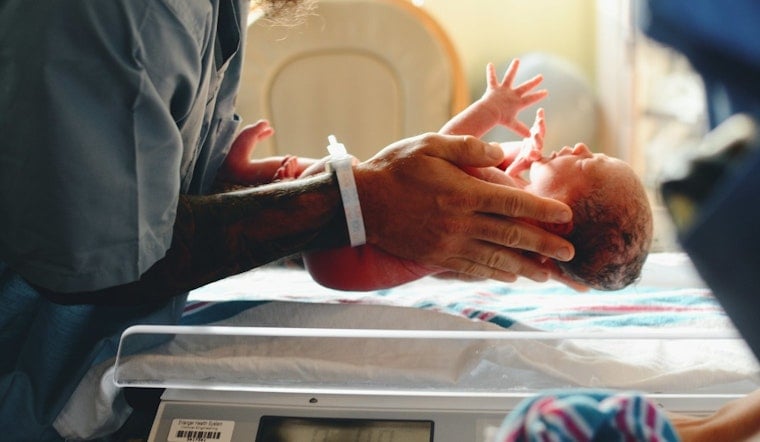
Kennedy-King College is set to launch a Licensed Certified Professional Midwifery associate's degree program, becoming what organizers describe as the 14th accredited direct-entry midwifery program in the country and the first located within a predominantly Black urban community. The program, based at the Englewood campus, is accepting applications for its first cohort now, with classes beginning in spring 2027 and running six semesters.
The initiative is a partnership between Kennedy-King College and the Black Midwifery Collective, a South Side nonprofit focused on transforming maternal outcomes, according to the Chicago Tribune. Star August Ali, the collective's executive director and founder, said the program provides access to life-giving training for community service and hopes it will produce midwives of color who go on to practice on the South Side. Black Midwifery Collective, per its own account, worked with Kennedy-King and City Colleges of Chicago to develop the curriculum, which includes a simulation lab built around a home birthing center.
Kennedy-King, part of the City Colleges of Chicago system, sits in a region the college system has specifically targeted for the program's impact: Englewood, Washington Park, South Shore, Auburn Gresham, Roseland, and South Chicago — six neighborhoods designated as perinatal care deserts. Between 2016 and 2023, Illinois lost 32 obstetric hospitals, a 27% net reduction statewide, leaving the South Side with only three birthing hospitals serving majority-Black neighborhoods, according to the Black Midwifery Collective. The 2021 closure of Mercy Hospital was among the losses that deepened those maternal care deserts — areas where women-centered health and prenatal and postnatal care are scarce.
A Response to Preventable Deaths
The stakes behind the program are stark. Per a 2025 Illinois report, Black women in the state are three times as likely to die from pregnancy-related medical conditions compared with white women, and more than twice as likely to die from any pregnancy-related condition. A separate Illinois Department of Public Health report released in November 2025 found that 91% of pregnancy-related deaths in Illinois during 2021 and 2022 were potentially preventable, with substance use disorder listed as the primary cause, drawing on an analysis of 219 pregnancy-associated deaths occurring during pregnancy or within one year postpartum.
Ali and other organizers worked for years to offer holistic birth options and combat deaths of Black birthing people, according to the Tribune's reporting. Midwifery offers a holistic approach to pregnancy and giving birth, and a certified midwife can provide more hands-on care during childbirth than is typical in many hospital settings. Ali said she hopes the Kennedy-King program will be a blueprint for the rest of the country and could serve as a replicable model for states that lack accredited midwifery programs of their own.
Legal Groundwork and New Medicaid Coverage
None of this would be legally possible without a multi-year push in Springfield. In December 2021, Governor JB Pritzker signed House Bill 3401, the Licensed Certified Professional Midwife Practice Act, making Illinois the 37th state to license non-nurse Certified Professional Midwives and legalizing out-of-hospital birthing care starting in October 2022, according to Illinois.gov. Before that law, attending out-of-hospital births without a nursing license carried significant legal risk in the state. The act also created a nine-member Illinois Midwifery Board, requiring five licensed CPMs, one OB/GYN physician, one certified nurse midwife home-birth provider, one pediatric professional, and one public member, per the Illinois Department of Financial and Professional Regulation, which oversees the board.
The financial picture shifted again this summer. In July, the Illinois Department of Healthcare and Family Services announced that Medicaid will now cover services provided by Licensed Certified Professional Midwives, allowing them to bill for out-of-hospital birth care in home and birth center settings — coverage that took effect retroactively to May 1, 2026, following federal approval. That change means future Kennedy-King graduates will be able to serve lower-income patients across South Side communities where Medicaid coverage is common.
Students Bring Personal Stakes to the Classroom
For some applicants, the pull toward midwifery is deeply personal. Emmaline Jones, who is applying to join the inaugural class, has ancestry that includes multiple midwives, healers and wellness practitioners, and she hopes to continue her family's midwifery tradition while supporting safe options for Black women. Ashli Watts, a doula also applying to the program, became interested in midwifery after challenging pregnancy experiences involving her and her sister.
Earline “Mekazin” Alexander, co-founder and executive director of Ba Nia Inc., a Chicago-based reproductive justice organization, said the Kennedy-King program is a declaration of community autonomy. Graduates who complete the six-semester program will need to apply for a state license to practice as midwives, joining a small but growing corps of licensed providers meant to fill the gap left by hospital closures. A doula, unlike a midwife, provides physical, emotional and educational support during pregnancy and postpartum rather than delivering clinical care.
Part of a Broader South Side Investment
The midwifery program builds on a broader push to expand healthcare training at Kennedy-King. In March 2024, Mayor Brandon Johnson announced a healthcare workforce partnership between City Colleges of Chicago and UChicago Medicine aimed at expanding clinical education at the Englewood campus and generating 600 South Side jobs, as Hoodline previously reported. The state has also backed maternal health equity efforts more broadly, including $4.5 million in grants distributed to community groups working on Black maternal mortality.
Organizers say the program is ultimately about giving South Side families more control over how and where they give birth, at a moment when hospital beds for delivery are increasingly scarce and preventable deaths remain common. The midwifery program aims to address the need for maternal healthcare options across Chicago and to support practice specifically on the South Side and in other vulnerable communities. Whether the new pipeline of community-based midwives will integrate smoothly with hospital systems during emergencies remains an open question as the first cohort prepares to enroll.





