

























































A person was seriously injured Sunday evening after being bitten by a shark off Key West, according to the U.S. Coast Guard. The incident happened around 5 p.m. local time, and a dispatcher told paramedics there was a “very bad shark bite,” reporting that the victim had an arterial bleed.
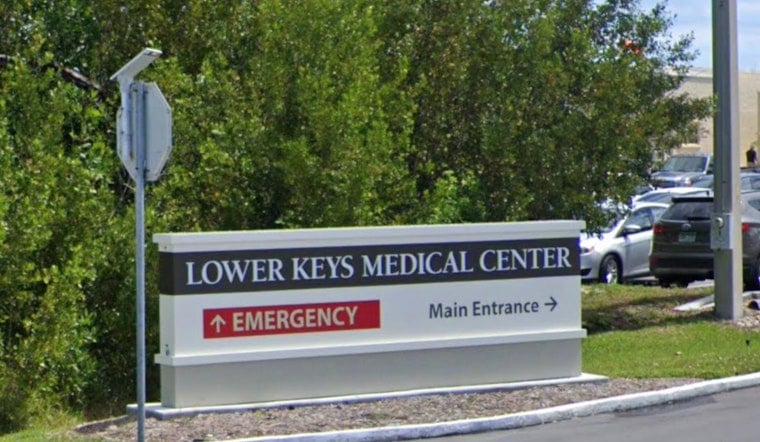
A good Samaritan boater rescued the victim and ferried them to land, with a Coast Guard Station Key West small boat crew escorting the vessel in, per a Coast Guard post described by the Miami Herald. Paramedics then took the victim to a local hospital, and Lower Keys Medical Center was identified as the likely facility receiving the patient. The Herald reports it will update the story as more information becomes available.
Why Every Minute Matters in the Keys
An arterial bleed is a life-threatening emergency anywhere, but the geography of the Florida Keys adds urgency. Lower Keys Medical Center in Key West runs a 24-hour emergency department across 167 beds, yet it lacks Level I trauma services and transferred 143 trauma patients to mainland Miami hospitals between May 2024 and May 2025, according to Lower Keys Medical Center. Those trauma cases made up 14 percent of all emergency transfers out of the Keys during that span.
For the most critical injuries, Monroe County relies on Trauma Star, a joint air ambulance program run by Monroe County Fire Rescue and the Monroe County Sheriff's Office with bases in Key West and Marathon, according to Monroe County. The program has air evacuated more than 5,000 patients to Miami trauma centers since 2001. Flight times from Lower Keys Medical Center to Miami-Dade Level I facilities like Jackson Memorial's Ryder Trauma Center and Jackson South Medical Center run 50 to 55 minutes by helicopter, keeping evacuations within the so-called Golden Hour that doctors consider vital for survival after severe blood loss, per Monroe County.
Shark Bites Remain Rare in Monroe County
Despite Sunday's attack, shark bites off the Keys remain uncommon compared with other parts of Florida. Monroe County has logged just 21 unprovoked shark bites and four fatalities since record-keeping began in 1882, according to The Daily Jaws. Most of Florida's shark activity happens along the Atlantic coast, where Volusia County alone records more than half the state's annual bites due to turbid surf and inlet feeding conditions, per WJXT News4JAX.
Statewide, Florida still leads the nation in shark encounters. The International Shark Attack File's 2025 summary counted 11 unprovoked bites in Florida out of 65 worldwide, according to the Florida Museum of Natural History, with global totals holding close to the five-year average of 61. It remains unknown what activity the Key West victim was engaged in at the time of the bite, a detail that would determine whether researchers classify the incident as provoked or unprovoked.
Recent Attacks and a New Alert Law
Sunday's bite follows other recent shark encounters in the Keys. In September 2025, an 8-year-old boy suffered severe injuries from a shark bite while snorkeling off Key Largo and was airlifted to Jackson Memorial Hospital, as Hoodline previously reported. In July 2024, a spearfisherman was airlifted to Miami after a bull shark attack near Key West, and in January 2023, a 34-year-old swimmer suffered deep leg lacerations from a large shark near Fort Zachary Taylor Historic State Park, according to WFTV.
Coastal officials now have a new tool for alerting the public after severe bites. In June, federal legislation known as Lulu's Law was signed, authorizing local and state authorities to issue geofenced Wireless Emergency Alerts to nearby phones following a severe shark bite, according to CBS News. The law is named for Lulu Gribbin, a teen survivor severely injured off the Florida Panhandle in 2024. It remains unclear whether Monroe County officials plan to use the new alert protocol in connection with Sunday's incident off Key West.



