

























































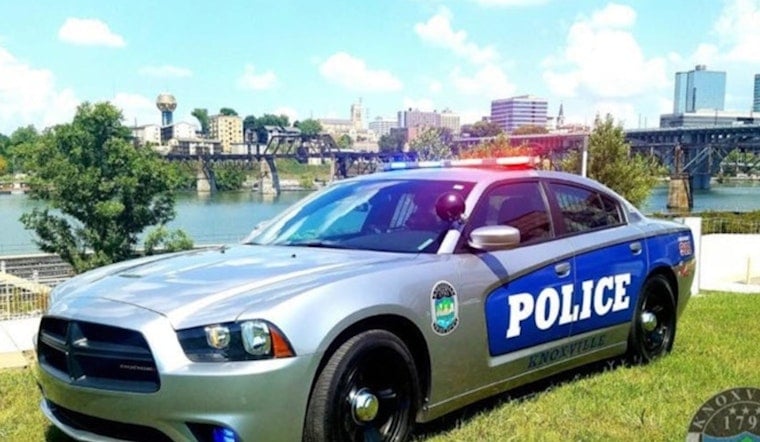
A one-month-old baby who had stopped breathing in Knoxville began crying again within 25 seconds of being handed to a police officer, according to body camera footage released by police this week. Officers Clayton McWilliams and Victoria Jackson responded to a 911 call about an unresponsive infant around 6:30 p.m. on August 19, and the footage shows the moment a group of people rushed the baby into their hands as Jackson ran toward them after stepping out of her patrol car.
The Knoxville Police Department released the body camera video on August 21, showing McWilliams and Jackson working together to clear the baby's airway after the infant was placed in McWilliams' arms, according to WKRN News 2. The baby cried roughly 25 seconds after being placed in the officer's arms, the outlet reported. An adult on scene told officers they would be taking the baby to the hospital following the resuscitation.
A Week of Heavy Scrutiny for Knoxville Police
The infant rescue video landed just two days after the department released a very different piece of body camera footage. On August 19, the Knoxville Police Department released body-camera and in-car camera footage from the August 5 in-custody death of 49-year-old Patrick Allen at a Sutherland Avenue convenience store. That release drew heightened community scrutiny on the department in the same stretch of days it shared the footage of officers saving the baby's life.
Requests for body camera footage from Knoxville police are governed by Knoxville City Code § 2-362(a)(4), which sets a base cost of $10 for the first hour of production and a minimum turnaround time of 10 working days for the public to obtain such video. The back-to-back releases meant Knoxville residents were processing two very different portraits of the same department within a matter of days.
How Officers Are Trained to Save an Infant's Life
The rapid intervention reflects mandatory statewide training requirements for Tennessee law enforcement. Under guidelines enforced by the Tennessee Peace Officer Standards and Training Commission, officers must complete a POST-approved basic recruit academy of at least 488 hours, plus 40 hours of annual in-service training that includes hands-on CPR and emergency first aid instruction, according to the UT County Technical Assistance Service.
Updated pediatric resuscitation guidelines published in October 2025 by the American Heart Association and the American Academy of Pediatrics advise responders clearing an infant's obstructed airway to alternate cycles of five back blows and five chest thrusts, while avoiding abdominal thrusts that could injure an infant internally. The American Heart Association also cautions that when opening an infant's airway, responders should only remove a visible foreign object and avoid blind finger sweeps, since an infant's narrow trachea can be damaged or the obstruction pushed deeper.
Child and baby CPR methods differ from adult CPR methods, a distinction that shaped how McWilliams and Jackson approached the unresponsive infant. Per the Cleveland Clinic, parents should seek emergency help if a baby stops breathing for longer than 10 seconds, though newborns may naturally pause breathing for 5 to 10 seconds in a pattern known as periodic breathing before resuming on their own. The Cleveland Clinic also notes that parents should inform their pediatrician if periodic breathing continues after a baby turns 6 months old.
Recognizing the Warning Signs
Medical guidance cited by WKRN News 2 notes that babies show oxygen distress differently depending on their skin tone: babies with lighter skin tones may develop blue skin or lips when blood-oxygen levels drop, while babies with darker skin tones may develop gray, yellow-gray, or white skin under the same conditions. Per the American Red Cross, parents should consider signing up for a child and baby CPR class to prepare for exactly this kind of emergency.
The Knoxville case arrives amid a documented rise in infant respiratory emergencies across the region. Sleep-related infant deaths and acute respiratory suffocations in Knox County rose from 14 cases in 2024 to 24 cases in 2025, a 71% increase, according to findings from the Knox County Regional Forensic Center reported by WBIR. Statewide, Tennessee recorded an infant mortality rate of 6.5 deaths per 1,000 live births in 2023, with 538 infant deaths total, ranking the state 38th nationally according to the 2025 March of Dimes report card — above the U.S. national average of 5.6 per 1,000 live births.
Choking remains a leading cause of unintentional injury and death among children under four nationally, with an estimated 34 children treated daily in U.S. emergency departments for food-related choking alone, per data cited by Utah Valley Pediatrics. Tennessee's Good Samaritan laws provide civil liability protection for emergency responders and bystanders who render CPR or first aid in good faith, encouraging exactly the kind of immediate intervention McWilliams and Jackson carried out.
A Department With a History of Field Rescues
Knoxville Police officers who perform life-saving resuscitation or emergency medical interventions are eligible for departmental commendations such as the KPD Lifesaving Award, which the department has used before to recognize officers for field rescues. Hoodline previously reported on Knoxville officers being honored for an overdose response on Skyline Drive in 2025, after they administered CPR and emergency intervention during a critical call. Whether McWilliams and Jackson will receive similar recognition for the August 19 rescue has not been announced.





