

























































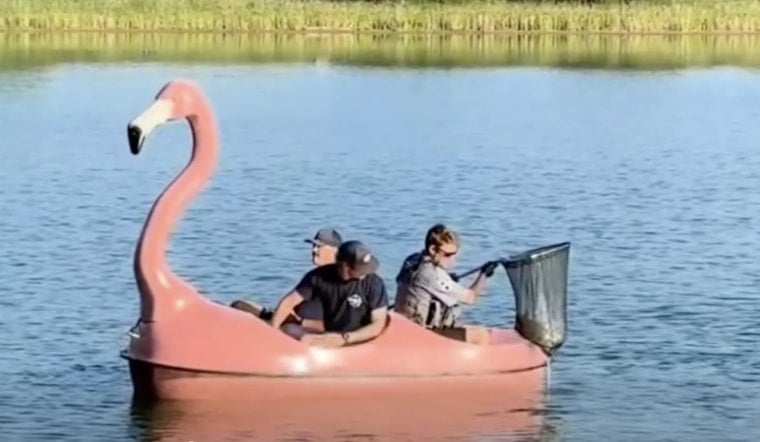
A snapping turtle tangled in fishing line at Waneka Lake in Lafayette, Colorado, got an unlikely lifeline last week: two firefighters and an animal protection officer paddling out on a rented pink flamingo pedal boat to reach it. The turtle is now headed to a rehabilitation center for care, according to officials.
Dispatchers Fielded a Call About a Snagged Turtle
Lafayette Police Chief Brian Rosipajla said dispatchers received a report of a snapping turtle snagged in fishing line at Waneka Lake, prompting two Lafayette Fire Department firefighters and an Animal Protection Officer to respond, as reported by Axios. The Lafayette Colorado Police Department said the team rescued the turtle from the fishing line it was tangled in on July 29, working alongside the animal protection officer to free the animal. The department confirmed the snapping turtle would go to a rehabilitation center for further care, according to WPBF, whose report noted CNN also contributed to the coverage.
Getting to the turtle required some improvisation. Because the city bans all personal, non-rented watercraft on Waneka Lake — including private paddleboards, kayaks, and canoes — to prevent the introduction of invasive aquatic species, responders had no option but to borrow one of the boathouse's rental vessels instead of deploying a private or dedicated rescue boat, per city regulations. The boathouse happened to have exactly one option suited to the job: a pedal boat shaped like a giant pink flamingo.
A Lake Built for Both Recreation and Wildlife
The Waneka Lake Boathouse operates seasonally from early July through Labor Day weekend, renting out kayaks, canoes, stand-up paddleboards, and novelty pedal boats shaped like flamingos, ducks, and dragons, according to Uncover Colorado. The 147-acre park doubles as a wildlife refuge, wrapped by a 1.2-mile fitness trail that circles the reservoir, per the City of Lafayette. That dual identity — bustling recreation hub and protected habitat — is part of what put fire crews in a flamingo boat in the first place.
Waneka Lake and the adjacent Greenlee Wildlife Preserve are part of an officially recognized Bird City ecosystem in Lafayette, serving as nesting and resting habitat for native aquatic species along with resident and migratory birds, according to Environment for the Americas. Public fishing is also permitted for licensed anglers 16 and older, with the lake stocked with rainbow trout, catfish, and largemouth bass subject to a 15-inch minimum size limit for retention, per city guidelines. That popularity with anglers helps explain how discarded or snagged tackle ends up entangling wildlife in the water.
Fishing Line Remains a Known Hazard for Turtles
Colorado Parks and Wildlife's 2026 fishing guidelines explicitly instruct anglers to pack out all trash, including monofilament fishing line, warning that discarded line poses severe entanglement hazards to native turtles, waterfowl, and other aquatic animals across the state's waters. Common snapping turtles, like the one pulled from Waneka Lake, are classified under state wildlife law as a small game species rather than protected nongame wildlife, with an open statewide harvest season running from April 1 to October 31 and no bag or possession limits, according to Colorado Parks and Wildlife.
Boulder County's primary wildlife rehabilitation facility, Greenwood Wildlife Rehabilitation Center in nearby Longmont, admits more than 4,000 injured or orphaned animals annually across over 130 native species, according to the center. It is the kind of facility where local animal control agencies typically send rescued wildlife for medical care, though it has not been confirmed whether the Waneka Lake turtle was sent there specifically.
The rescue turned an ordinary dispatch call into a small showcase of how far Lafayette officials will go to protect the wildlife sharing space with paddlers and anglers at Waneka Lake. With the boathouse open through Labor Day weekend and fishing season running into the fall, officials' reminders about packing out fishing line are likely to keep circulating as more visitors head to the water.



