

























































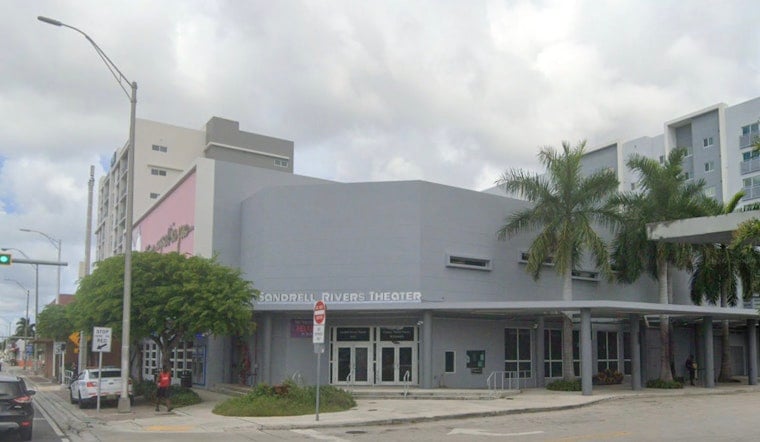
A four-day dance and music festival born from a casual conversation between two artists is now underway at Sandrell Rivers Theater in Liberty City. Carne Viva Dance Theatre's inaugural VIDA Festival runs Thursday, Aug. 6 through Sunday, Aug. 9, bringing workshops, choreographic labs and performances to the 6103 NW 7th Ave. venue, with a lineup that includes Grammy-nominated Afro-Cuban singer Daymé Arocena and members of a nationally recognized California dance collective.
The festival is presented by Carne Viva Dance Theatre, which was founded by Chachi Perez and David Velazco, according to WLRN Public Media. Perez said a cross-disciplinary event would serve Miami and align with the company's goal to build community, and added that the festival aims to foster an intergenerational and intercultural atmosphere. The idea began taking shape in 2024 in Hialeah, and it crystallized further in 2025 when Perez and Velazco discussed creating a Miami festival while attending the Philadelphia Fringe Festival, envisioning a space where artists could learn, experiment and build creative relationships.
Carne Viva operates as a dual Miami- and Lenapehoking-based collective of queer and trans BIPOC artists that centers movement as a tool for cultural liberation, having performed at venues including the Pérez Art Museum Miami and Judson Memorial Church in New York, according to Urban Movement Arts. The company's flagship production, “Dame La Receta,” premiered in October 2024 at Salamander Miami in historic Overtown, fusing Afro-Cuban rhythms and kitchen-based community rituals to explore first-generation immigrant identity and transgenerational trauma, as reported by ArtburstMiami. An excerpt of that show appeared in May 2025 during the annual “Miami Dances!” event alongside Miami City Ballet dancers and Karen Peterson and Dancers, signaling the company's growing footprint in the city's established dance scene.
Grant Funding Gave the Idea a Home
Carne Viva's creation of “Dame La Receta” was supported by a MAP Fund grant, which backs artists making new, experimental performance work, per the seed reporting. That national funding source, sustained by the Doris Duke Foundation and the Andrew W. Mellon Foundation, provides unrestricted support for live performing arts projects that challenge traditional cultural norms in dance and theater, according to background compiled by ShaLeigh Comerford. Carne Viva was also accepted into the Cultural Arts Partnership Residency at Sandrell Rivers Theater, which provided the venue and production support that made the inaugural festival possible.
That residency, known as CAP@SRT, was launched by managing organization Fantasy Theatre Factory using a $100,000 Pérez CreARTE grant awarded by the Jorge M. Pérez Family Foundation at The Miami Foundation in late 2025, ArtburstMiami reported. The two-year grant gives emerging Miami-Dade performing arts groups free rehearsal, performance and administrative space along with capacity-building mentorship. Fantasy Theatre Factory, which has managed the county-owned theater since 2016, was established in 1977 and reaches more than 150,000 audience members across Florida each year through over 400 touring and in-house programs, per its own history.
A Roster Built on Friendship and Mentorship
Velazco and Perez invited friends and arts-world partners to teach classes and workshops, filling out a schedule that runs 10 a.m. to 5 p.m. Thursday through Saturday. Adriel Martinez and Malena Mieri, both members of Bombe Dance Academy, are offering an Afro-Cuban dance workshop, while Fernanda Romero and Nicole Machado lead reggaeton and introductory Cuban dance classes. Gaiya leads a meditative movement class, and choreographic labs give participating artists a chance to develop new work throughout the festival.
Irvin Gonzalez and Patricia “Fonzy” Fernando, who lead a class and take part in the choreographic labs, are members of Primera Generación Dance Collective, a Mexican American dance group formed at UC Riverside in 2015 that was named to Dance Magazine's “25 to Watch” list for 2025, according to Ohio State University's dance department. The collective focuses on first-generation Latine storytelling through social dance, satire and rasquache aesthetics. Daymé Arocena is presenting a dance, movement and vocal workshop of her own; Velazco serves as her co-band director and drummer, and Arocena recently earned a 2026 Grammy nomination for Best Latin Jazz Album for her collaboration with the Afro-Latin Jazz Orchestra.
Michelle Grant-Murray, coordinator of dance at Miami-Dade College's Kendall campus, provided education, mentorship and support to Perez and Velazco as they built the company, the seed report notes. That mentorship thread runs through much of the festival's guest roster, which draws heavily on personal relationships forged across Miami, Philadelphia and California dance scenes.
A Community Finale at Sandrell Rivers Theater
The festival culminates Sunday at 6:30 p.m. with Noche de Vida, a finale performance open to the public that presents works in progress developed during the choreographic labs. The evening also features a Cuban rumba jam session with Clave y Cuba, opening the celebration to community participation rather than keeping it confined to a formal stage show.
Pricing for the festival varies by access level: a general admission four-day pass costs $249.50, a student and industry four-day pass runs $167, a daily pass is $73.50, and a single class costs $29.50. Public admission to Noche de Vida alone costs $18.75. More information is available at carnevivadancetheatre.com.
The venue itself carries its own local history. Sandrell Rivers Theater is named for Chief Sandrell Rivers, a longtime Miami-Dade County Parks administrator who was conferred as a Nigerian chief in 2004 and spent decades expanding arts programming in historically underserved Black communities, according to ArtburstMiami's account of the theater's namesake. The theater sits within the Audrey M. Edmonson Transit Village in Liberty City, a neighborhood that has sought long-term revitalization after economic disinvestment tied to mid-20th-century highway construction and the 1980 McDuffie riots, per background compiled by HUD User. For a festival built on first-generation and intergenerational storytelling, the setting adds another layer to what began as an offhand idea between two friends.





